BERKELEY SCHOOL OF BUSINESS, ARTS & SCIENCES

Trade Facilitation for Practitioners & Policy Makers

The "Trade Facilitation Masterclass for Practitioners & Policy Makers" is an intensive program designed to equip participants with practical knowledge and strategic insights into modern trade facilitation practices. It focuses on streamlining trade processes, enhancing compliance, and fostering economic growth through improved policy-making and implementation strategies. Ideal for professionals involved in trade regulation, customs, and international trade policy, the masterclass combines expert-led sessions, case studies, and interactive discussions to empower attendees with the tools needed to drive efficiency and innovation in trade operations.

Overview

This is one of our flagship offerings. The masterclass is particularly well suited for those who need to quickly gain an advanced understanding of what trade facilitation is about, and then apply that knowledge in a practical context. We are delighted to present our Trade Facilitation Masterclass, tailored specifically for practitioners and policy makers in the field. This comprehensive program aims to equip participants with advanced knowledge, strategies, and practical tools to enhance trade facilitation efforts and promote economic growth.

The Trade Facilitation Masterclass covers a wide range of topics relevant to practitioners and policy makers, including international trade agreements, customs modernization, digitalization of trade processes, risk management, public-private partnerships, and stakeholder coordination. Through a combination of interactive lectures, case studies, and group discussions, participants will gain insights into global best practices and innovative approaches to trade facilitation.

Offered by

Berkeley School of Business, Arts & Sciences

What is Eligibility?
  • Professionals in Trade Facilitation: Individuals working in customs, trade, and border management roles.
  • Policy Makers and Regulators: Government officials involved in creating or implementing trade policies.
  • International Trade Specialists: Experts working in trade compliance, logistics, and international business.
  • Private Sector Representatives: Executives from industries engaged in import/export activities, including logistics, manufacturing, and retail.
  • Academics and Researchers: Scholars focusing on international trade, economics, or public policy.
  • Minimum Experience: Some programs may require a certain level of professional experience in trade or related fields.
  • Educational Background: A degree in international trade, business, law, or a related field is often preferred.
Who Can do?
anyone who is interested to learn about following concepts can pursue Trade Facilitation for Practitioners & Policy Makers:
International Trade Policies, Customs Procedures & Regulations, Supply Chain Management:, Trade Finance:, Digital Trade Facilitation:, Risk Management in Trade:, Regional Trade Agreements:, Trade Data Analytics:, Public-Private Partnerships:, Sustainable Trade Practices:.
individuals with the following designations:
Members of National Trade Faciliation Committees from the public or private sector, Officials with responsibilities for effective border management (Customs and Non-Customs), Trade, logistics and supply chain management professionals who wish to encourage reforms that reduce the impact of trade and customs procedures on their business operations, Operators of trade enabling infrastructure and service (eg. ports, IT systems, banks), Managers tasked with projects that have a strong trade facilitation component, Lawyers and public affairs specialists, Trade economist and researchers.

Course structure

Day 1: Trade Facilitation Concepts and Principles

This session provides an overview of trade facilitation, its objectives, and its significance. It examines the topic from both a policy perspective and an operational viewpoint, covering contemporary trade and customs policies, cross-border logistics, supply chain dynamics, and border control requirements. Key principles and concepts are outlined, focusing on:

  • Enhancing efficiency, reducing costs, and simplifying international trade processes.
  • Leveraging data-sharing technologies and equipment effectively.
  • Strengthening coordination and cooperation between public and private sector stakeholders.
  • Identifying opportunities, adopting best practices, ensuring accountability, and fostering innovation.

Day 2: Approaches to Trade Facilitation

There are many approaches to trade facilitation. Here we take a closer look at: the economic and operational case for trade facilitation; getting to grips with making that case by drawing on standard assessment approaches from the bottom-up; and how to best draw inspiration from best practices and innovations from the top-down. Attention is drawn to the work of National Trade Facilitation Committees and similar public-private sector organisations. This session also covers funding requirements, pathways towards improving trade facilitation, and the need to make best use of limited financial resources.

Day 3: Getting Things Done – Delivering trade facilitation

Trade facilitation is a very practical subject and while concepts and ideas may appear straight forward, their adoption and implementation can be riddled with challenges. In this session we take a closer look at the obstacles to trade facilitation and how they may be overcome. We also explore how reform power can be harnessed to good effect, take a look at common project implementation approaches, and consider the need for the public and private sector to effectively engage and coordinate. Assessment and evaluation approaches are discussed to ensure that scarce resources are put to good use, hold relevant parties accountable, and to make sure that future projects benefit from any lessons learnt.

Lecture plan

Learning methodology

Berkeley offers expertly developed learning materials tailored to meet participants' needs, ensuring comprehensive coverage of the syllabus and optimal exam preparation.

‣ Tailored Material: Guides are designed to cover the entire syllabus, offering full preparation and deep understanding.

‣ In-Depth Content: Unlike superficial outlines, our materials provide fully developed theories and concepts, equipping participants with complete knowledge.

‣ Strategic Study: We help participants prioritize study time by indicating the weight of each topic, allowing efficient focus on crucial areas.

‣ Difficulty Levels: Topics are labeled as "Awareness" or "Proficiency," guiding participants to allocate time based on the required depth of knowledge.

‣ Comprehensive Coverage: Our materials include detailed theory and a glossary of technical terms to clarify complex concepts.

‣ Effective Learning Techniques: Visual aids and memorization techniques ensure long-lasting retention, helping candidates succeed.

Berkeley’s methodologies equip participants with the essential knowledge and tools for both exams and future success.

Lecture Image
Lectures

Our lecture plan integrates structured learning with interactive teaching methods, promoting engagement and collaboration. This approach ensures a comprehensive understanding of concepts, fostering critical thinking and practical application in real-world scenarios

Practice session

Practice sessions offer hands-on experience through guided exercises, enhancing skills and reinforcing knowledge. This practical approach ensures mastery of concepts, promoting confidence and competence in real-world applications

Mock examination

Mock examinations simulate real test conditions, providing valuable practice and assessment. This helps identify strengths and weaknesses, ensuring thorough preparation and boosting confidence for actual exams

berkeley's performance standards

Evaluates and ensure the quality of the training program and all its deliverables.  This is measured through the following indicators:
‣ Instructors' experience and style in presenting and explaining topics.
‣ Variety and balance of teaching methods (such as discussions, case studies, mock exams and videos) used in the course to ensure retention and to match the learning objectives.
‣ Level of interactivity.
‣ Feedback from program participants
‣ Full compliance with Institute standards and guidelines for preparation and study requirements and methodology.
‣ Progress reports from the training program provider.

Fee Structure

Self-Study Program

AED 5500.00

Ideal for disciplined learners who prefer flexibility

  • Access to Berkeley Study Materials (eBook)
  • Lecture Recording

Live Online Classes

AED 9000.00

Learn from expert instructors in real-time

  • Interactive live sessions
  • Full syllabus coverage and doubt solving
  • Study materials

One-to-One Face-to-Face Coaching

AED 18300.00

Personalized, intensive learning experience

  • Individual attention and customized pace
  • Direct mentorship with an expert trainer
  • Complete study package included
Success Stories

“As a strong advocate for education and human development, I commend Berkeley for its exceptional commitment to empowering future leaders. The institution stands as a symbol of excellence, innovation, and opportunity. Students who walk its halls are nurtured with knowledge, values, and vision—qualities that contribute to building a stronger and more prosperous future for our nation.”- H.H. Shaikh Khalifa Al Hamid

Visit our Alumni

Alumni Benefits

‣ Exclusive Networking Events: Access invitations to industry-leading events and thought-leadership gatherings featuring renowned speakers.


‣ Monthly Updates: Stay informed with a newsletter highlighting the latest research, events, and activities from the school.


‣ LinkedIn Community Access: Join the Executive Education LinkedIn group for networking and professional development opportunities.


‣ Educational Discounts: Enjoy a 20% discount on open-enrollment programs and access to workshops focused on emerging trends.


‣ Global Alumni Network: Connect with a diverse alumni community through the Berkeley School’s online network and engage in country and interest groups.

what you earn

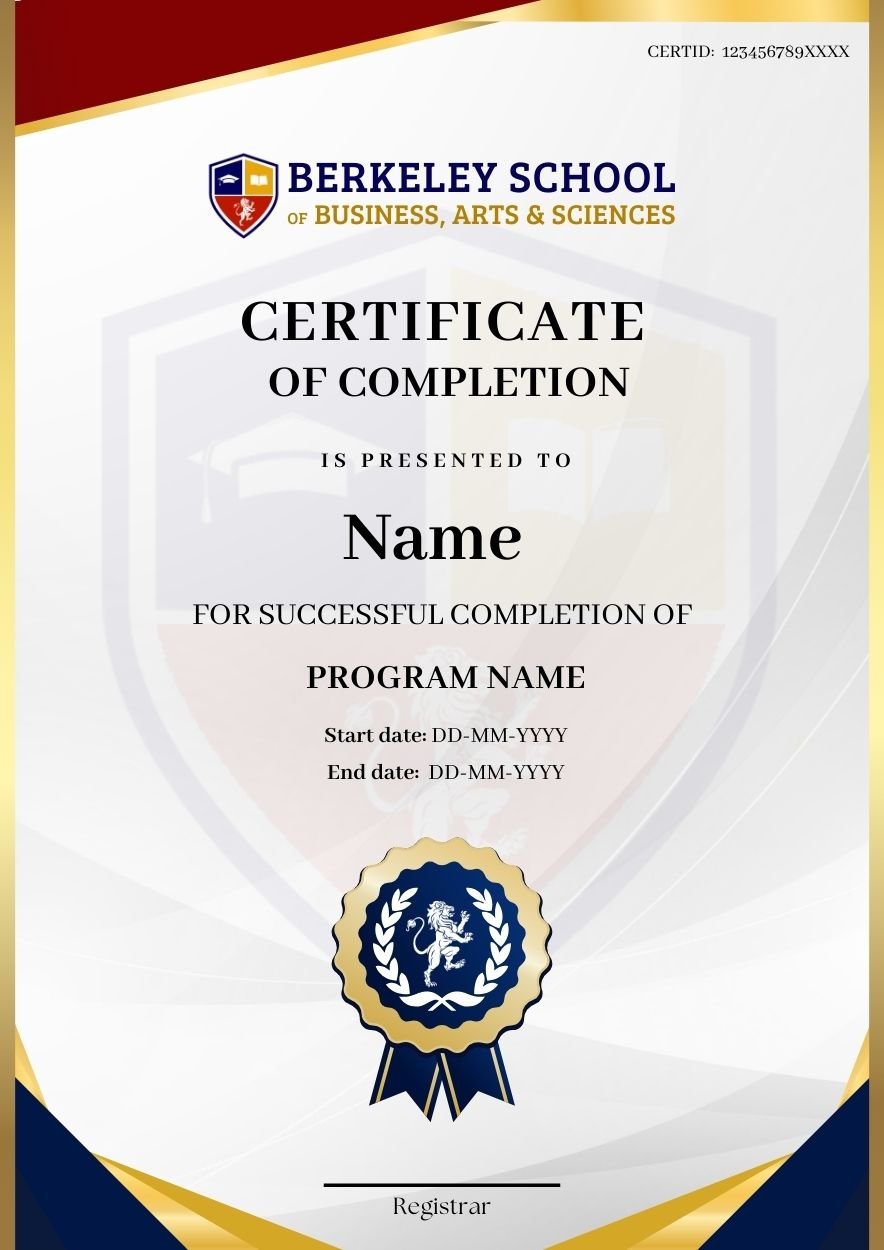
You will get a certificate of completion, which is highly reputed and accepted by employers.

Efficiency Improvement

Gain strategies to streamline trade processes, reducing delays and costs in global trade operations.

Risk Management

Understand how to manage risks associated with cross-border trade and logistics.

Networking Opportunities

Connect with trade professionals and experts to expand your global network and share best practices.

Related courses

Trade Facilitation Training - United Arab Emirates

The Trade Facilitation Training course focuses on simplifying international trade processes to enhance efficiency and reduce barriers. It covers key topics such as customs procedures, technology integration, and compliance with international trade agreements. Participants will learn best practices in logistics and documentation, equipping them to streamline trade operations and support the smooth flow of goods across borders, ultimately contributing to more efficient global trade.

Read More
Customs and Trade Compliance Management

Upon completion of the crash-course, participants will have a solid understanding of customs and trade compliance management, enabling them to effectively navigate regulatory requirements, mitigate risks, and ensure compliance within their organizations.

Read More
Supply Chain for Customs and Border Management Professionals

We take pride in offering a specialized masterclass in supply chain management specifically designed for customs and border management professionals from both the public and private sectors. This comprehensive program equips participants with the advanced knowledge and skills needed to navigate the complexities of modern supply chains while effectively managing customs and border procedures.

Read More
Certificate in International Trade and Export Management

Certificate In International Trade & Export Management provides students with the skills required to effectively manage and/or work in businesses or organizations involved in cross-border trading of goods in a global economy. This Certificate reflects the importance of understanding global trade and supply chain/logistics management and is built on foundational knowledge in international trade, global supply chain and logistics, and cross-cultural management skills. 

Read More

FAQ: Trade Facilitation for Practitioners & Policy Makers

contact us for more information or to apply for admission. Seats fill up quickly, so we encourage early registration!

Cart

Cart (0)