Project Management Professional (PMP) with Musa Shaikh provides comprehensive project leadership, predictive, agile and hybrid project management and examination preparation for professionals across the United Arab Emirates, Saudi Arabia, United States of America, United Kingdom and Europe.
Project Management Professional preparation with Musa Shaikh connects project knowledge with practical judgement. The course covers leadership, planning, stakeholders, risk, quality, governance and business value. It also explores predictive, agile and hybrid ways to deliver work.
First, identify what a project needs to achieve. Next, understand the people involved and the limits on time, cost and resources. Then, choose an approach that fits the work. Finally, review progress and explain the next step.
Consider a team introducing a new customer service system. First, agree on the result the organisation wants. A list of features is useful, but the team also needs to understand how those features help users.
Next, identify who will use the system and who can approve a change. Ask about their needs before fixing the plan. For example, staff may need training before a new process can work. Therefore, connect the technical work with the people who will use it.
Then, review risks and the information needed to make decisions. A missed supplier date may affect testing and launch. In addition, a change in scope may affect cost or resources. State the effect clearly before recommending an action.
Project Management Professional practice helps you compare responses to these situations. First, read the scenario and identify the immediate issue. Next, consider the project approach and the role of the team. Then, explain why a response fits the facts.
A predictive approach plans work using defined requirements. An agile approach supports short cycles and feedback as needs develop. A hybrid approach combines elements to suit the project. However, an approach is useful only when it fits the work and its constraints.
For example, a team may plan a fixed installation date while refining a service process through feedback. Therefore, explain which parts need stable plans and which parts need learning. Avoid choosing an approach only because its name sounds familiar.
| Lectures | Study focus |
|---|---|
| 1–4 | Value, delivery approaches, leadership, teams and communication |
| 5–6 | Scope, requirements, schedules, resources and financial management |
| 7–8 | Risk, quality, procurement, execution, monitoring and change |
| 9–10 | Business environment, governance, AI, sustainability, closure and exam integration |
After a practice task, check the reasoning behind your answer. First, identify the fact that guided your choice. Next, explain why another option is less suitable. Finally, record what you need to review and try a fresh question.
In addition, connect each topic with a project example. This helps Project Management Professional learners move from recalling a term to explaining a decision.
The Project Management Professional (PMP) certification is awarded by the Project Management Institute (PMI).
Pennsylvania, United States of America.
Project Management Institute is a global professional organisation supporting project, programme and portfolio professionals through certification, standards, education, research and professional development.
Berkeley's Project Management Professional (PMP) training with Musa Shaikh develops professionals who can lead teams, manage complex projects, respond to changing business environments and deliver measurable organisational value.
For PMP eligibility under the July 2026 requirements, candidates must meet one of these pathways: Secondary School Qualification: 60 months (5 years) of project leadership experience; Associate Degree or Vocational Qualification: 48 months (4 years); Bachelor's Degree or Higher: 36 months (3 years); or PMI GAC-Accredited Degree: 24 months (2 years). Project experience must be gained within the previous 10 years and demonstrate project leadership and direction. Candidates must also complete 35 hours of qualifying project management training, unless they hold an active CAPM certification, which satisfies this training requirement.
Project Management Professional (PMP) preparation with Musa Shaikh consists of 10 focused teaching lectures aligned with the updated 2026 examination.
Musa Shaikh is an internationally recognised academic, lecturer and executive educator with over two decades of teaching and industry experience across the UAE, Saudi Arabia, UK and USA. He has taught and mentored thousands of students, professionals and executives, combining academic rigour with real-world expertise in finance, investment, governance, risk, audit, strategy and leadership.
First, study the project concepts and the purpose behind each method. Next, apply them to predictive, agile and hybrid situations. Then, compare possible responses and explain your choice.
For example, a team conflict may need a different response from a change in scope. Therefore, identify the problem before choosing an action. In addition, check how the decision affects people, risks and business value. Finally, review errors through fresh practice.
The 10 instructor-led lectures cover Project Management Professional topics. First, build the core ideas. Next, connect them with project examples. Then, bring the topics together in exam preparation.
The 2 practice sessions use project scenarios and calculations. First, read the facts and identify the issue. Next, compare responses to leadership, risk and stakeholder situations. Then, practise agile and hybrid decisions. In addition, review how you use time.
The 3 mock examinations help assess knowledge, judgement and time management. First, complete the questions under timed conditions. Next, review the reasons behind errors. Finally, use the results to plan your remaining PMP study.
Berkeley reviews teaching quality and course delivery to support PMP preparation. First, consider how clearly instructors explain each topic. Next, review the balance of discussions, project cases, mock exams and videos. In addition, assess how these methods support the learning goals.
For example, progress reports can highlight topics that need further practice. Therefore, use feedback and study results to guide the next stage of preparation.
The PMP examination is a computer-based assessment featuring 180 questions over 240 minutes (4 hours), with 170 scored and 10 unscored questions. It may include multiple-choice, multiple-response, drag-and-drop, case-study, data-based and practicum-style questions, with two 10-minute breaks during the exam.
The PMP examination is available throughout the year, subject to application approval and appointment availability. After approval, candidates can pay the exam fee and schedule their examination, with up to three attempts permitted within the one-year eligibility period.
The Project Management Institute (PMI) does not publish a fixed percentage passing score for the PMP examination. Instead, candidates are assessed against PMI’s established psychometric standards, which evaluate overall performance rather than relying on a simple published percentage.
The PMP examination can be taken at authorised Pearson VUE Testing Centres worldwide or through an online proctored exam, subject to PMI and Pearson VUE requirements. Candidates can select available appointments in Dubai, Abu Dhabi, Riyadh, Jeddah, London, New York, and other international locations, providing flexible access across the UAE, Saudi Arabia, USA, UK, Canada, Europe, and beyond.
Number of Lectures: 10
Delivery: Live Online Instructor-Led | Location: International
Dates: Start 25 Oct 2026 – End 27 Dec 2026
Number of Lectures: 10
Delivery: Live Online Instructor-Led | Location: International
Dates: Start 29 Nov 2026 – End 31 Jan 2027
Number of Lectures: 10
Delivery: Live Online Instructor-Led | Location: International
Dates: Start 27 Dec 2026 – End 28 Feb 2027
Project Management Professional
“As a strong advocate for education and human development, I commend Berkeley for its exceptional commitment to empowering future leaders. The institution stands as a symbol of excellence, innovation, and opportunity. Students who walk its halls are nurtured with knowledge, values, and vision—qualities that contribute to building a stronger and more prosperous future for our nation.”- H.H. Shaikh Khalifa Al Hamid
‣ Exclusive Networking Events: Access invitations to industry-leading events and thought-leadership gatherings featuring renowned speakers.
‣ Monthly Updates: Stay informed with a newsletter highlighting the latest research, events, and activities from the school.
‣ LinkedIn Community Access: Join the Executive Education LinkedIn group for networking and professional development opportunities.
‣ Educational Discounts: Enjoy a 20% discount on open-enrollment programs and access to workshops focused on emerging trends.
‣ Global Alumni Network: Connect with a diverse alumni community through the Berkeley School’s online network and engage in country and interest groups.
PMP preparation develops skills used to lead teams and deliver projects. For example, risk planning helps you respond when conditions change. In addition, stakeholder skills help you understand needs and keep people informed.
First, consider which project tasks you want to develop. Next, connect the course topics with those tasks. Then, review the experience and certification requirements for your career goals. Project roles and pay vary by employer, industry, location and experience. Therefore, assess opportunities against your own background.
The PMP with Musa Shaikh supports career progression from project coordination and project management roles toward senior leadership positions. Candidates can advance into roles such as Project Manager, Senior Project Manager, Program Manager, Portfolio Manager, PMO Manager, Project Director, and Head of Projects, while developing expertise in leadership, strategic alignment, stakeholder management, risk, governance, and business value.
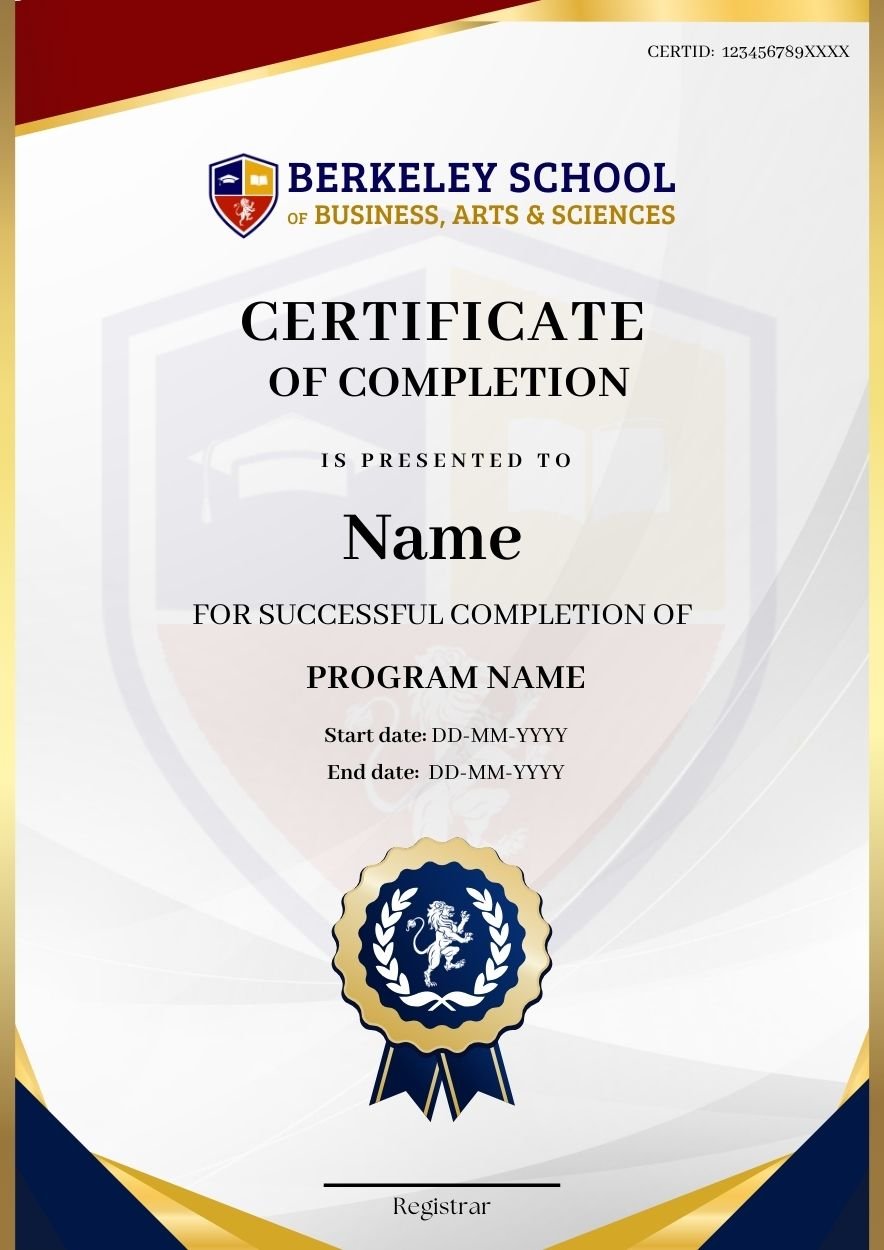
You will get a certificate of completion, which is highly reputed and accepted by employers
Develop practical expertise in predictive, agile and hybrid approaches, project planning, delivery, risk, change and stakeholder management.
Strengthen examination performance through scenario-based practice, dedicated practice sessions, mock examinations and focused exam techniques.
Prepare for the globally recognised PMP certification and strengthen your professional profile across international project-management environments.
Contact Us