Develop practical skills in warehouse operations, inventory planning, stock control, materials handling, order fulfilment, and performance improvement.
The Warehouse and Inventory Control course provides a comprehensive understanding of how warehouses and inventory systems support efficient supply chain operations. It covers warehouse layout and organization, receiving and inspection, storage methods, materials handling, stock classification, inventory recording, order picking, dispatch, and workplace safety.
Participants learn how to determine appropriate inventory levels, reduce stock shortages and excess inventory, improve stock accuracy, conduct cycle counts, manage replenishment, and monitor warehouse performance. The course also introduces essential inventory techniques, including ABC analysis, economic order quantity, reorder levels, safety stock, and stock turnover.
Through practical examples and operational scenarios, learners develop the skills required to improve space utilization, control warehouse costs, minimize losses, and support timely order fulfilment. The course is suitable for warehouse supervisors, storekeepers, inventory controllers, logistics coordinators, procurement staff, supply chain professionals, business owners, and graduates seeking practical warehouse and inventory management expertise.
| Course Information | Details |
|---|---|
| Delivery Mode | Classroom, Live Online, or Corporate Training |
| Course Duration | 8 Sessions |
| Skill Level | Beginner to Intermediate |
| Assessment | Practical Exercises and Knowledge Assessment |
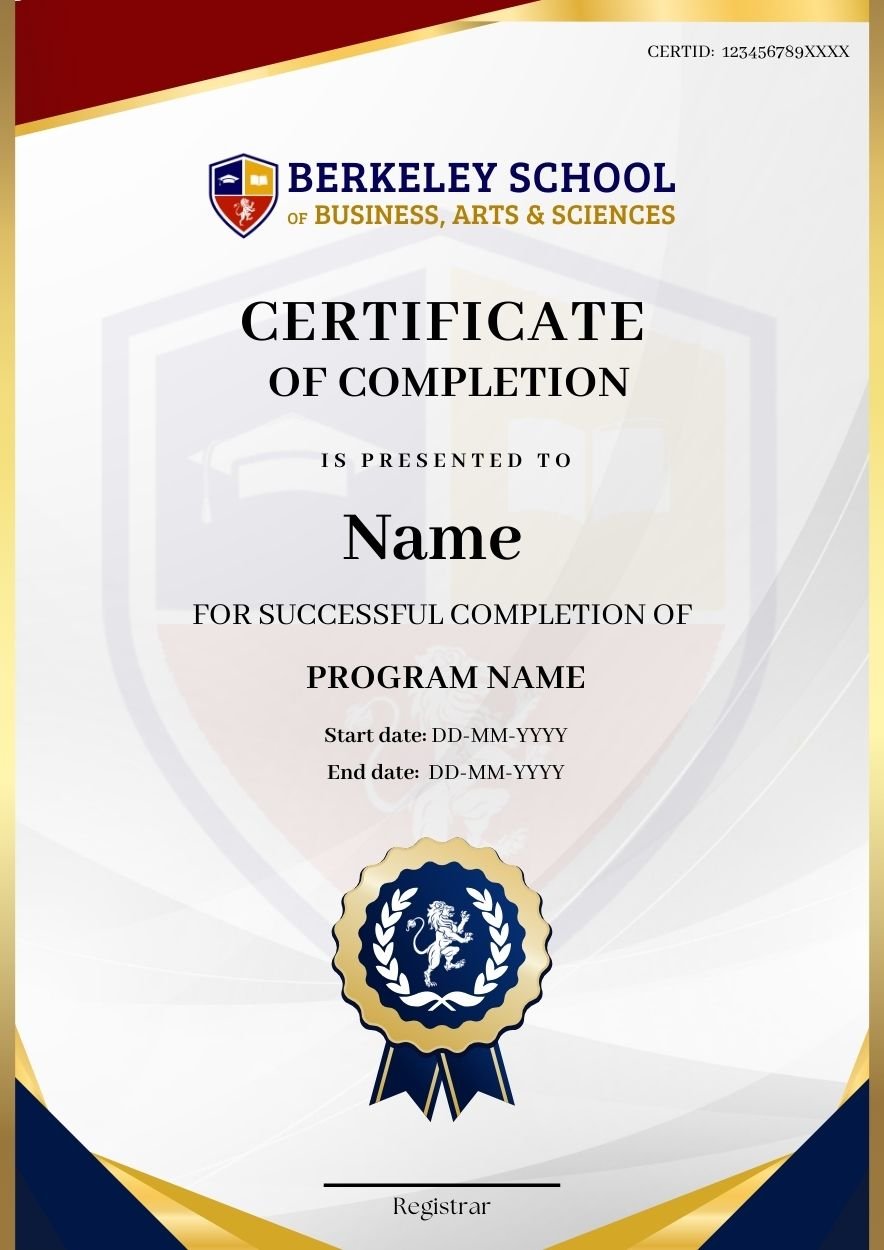
| Certificate | Certificate of Completion |
| Prerequisites | No mandatory entry requirements |
| Target Audience | Warehouse Supervisors, Storekeepers, Inventory Controllers, Logistics Professionals, Procurement Staff, Supply Chain Professionals, Operations Personnel, Business Owners, and Graduates |
Berkeley School of Business, Arts & Sciences
Our vision and mission are to develop competent warehouse and inventory professionals by providing practical, industry-relevant knowledge in warehouse operations, inventory planning, stock control, materials handling, order fulfilment, workplace safety, and performance management, enabling participants to improve stock accuracy, minimise losses, control costs, optimise resources, and support efficient supply chain operations.
This session introduces the fundamental principles of warehouse and inventory control, including the role of warehousing within the supply chain, key warehouse activities, inventory types, and the importance of accurate stock management. Participants explore how effective warehouse and inventory practices improve operational efficiency, reduce costs, prevent stock discrepancies, and support customer satisfaction.
Role of Warehousing in the Supply Chain
Types and Functions of Warehouses
Fundamentals and Categories of Inventory
Warehouse and Inventory Performance Objectives
This session examines how effective warehouse design and space utilization improve the movement, storage, handling, and retrieval of goods. Participants learn to plan functional warehouse zones, select appropriate storage systems, reduce unnecessary movement, remove operational bottlenecks, and create safe, efficient workflows.
Principles of Warehouse Layout Design
Warehouse Zones and Workflow Planning
Storage Systems and Equipment Selection
Space Utilisation and Capacity Optimization
This session covers the processes involved in receiving goods, verifying deliveries, inspecting quality and quantity, documenting discrepancies, and transferring items to suitable storage locations. Participants learn how structured receiving and put-away procedures improve stock accuracy, reduce handling time, prevent losses, and maintain an efficient flow of materials.
Goods Receiving Procedures
Quantity and Quality Inspection
Documentation and Discrepancy Management
Efficient Put-Away Methods
This session explains how inventory is planned, categorized, and prioritized to achieve the right balance between product availability and cost control. Participants learn to classify stock according to value, demand, movement, and operational importance while applying appropriate inventory policies to different categories.
Inventory Types and Planning Principles
ABC, VED and FSN Analysis
Demand Patterns and Stock Prioritization
Inventory Policies and Service Levels
This session focuses on maintaining suitable inventory levels while preventing shortages, excess stock, and unnecessary holding costs. Participants learn to calculate replenishment requirements, establish reorder points, determine safety stock, apply economic order quantity principles, and monitor stock movement to support uninterrupted operations.
Reorder Levels and Replenishment Methods
Safety Stock and Buffer Inventory
Economic Order Quantity (EOQ)
Stock Turnover and Inventory Optimization
This session covers the processes required to fulfil customer and internal orders accurately and efficiently. Participants learn how to select suitable picking methods, organize packing activities, verify completed orders, prepare shipping documentation, and coordinate dispatch operations to minimize errors, reduce processing time, and improve customer satisfaction.
Order Processing and Picking Methods
Packing, Labelling and Order Verification
Dispatch Planning and Documentation
Returns and Reverse Logistics Management
This session examines the safety, security, and risk-control practices required to protect employees, inventory, equipment, and warehouse facilities. Participants learn to identify workplace hazards, apply safe materials-handling procedures, prevent inventory loss, strengthen access controls, and prepare appropriate responses to accidents, emergencies, and operational disruptions.
Warehouse Hazards and Safety Procedures
Safe Materials Handling and Equipment Use
Inventory Security and Loss Prevention
Emergency Planning and Risk Control
This session focuses on measuring and improving warehouse and inventory performance through key performance indicators, technology, reporting, and continuous improvement techniques. Participants learn to evaluate operational results, identify inefficiencies, improve stock accuracy, reduce costs, and develop practical actions for sustainable warehouse performance.
Warehouse and Inventory Key Performance Indicators
Warehouse Management Systems and Technology
Cycle Counting, Auditing and Stock Accuracy
Cost Reduction and Continuous Improvement
Berkeley offers expertly developed learning materials tailored to meet participants' needs, ensuring comprehensive coverage of the syllabus and optimal exam preparation.
‣ Tailored Material: Guides are designed to cover the entire syllabus, offering full preparation and deep understanding.
‣ In-Depth Content: Unlike superficial outlines, our materials provide fully developed theories and concepts, equipping participants with complete knowledge.
‣ Strategic Study: We help participants prioritize study time by indicating the weight of each topic, allowing efficient focus on crucial areas.
‣ Difficulty Levels: Topics are labeled as "Awareness" or "Proficiency," guiding participants to allocate time based on the required depth of knowledge.
‣ Comprehensive Coverage: Our materials include detailed theory and a glossary of technical terms to clarify complex concepts.
‣ Effective Learning Techniques: Visual aids and memorization techniques ensure long-lasting retention, helping candidates succeed.
Berkeley’s methodologies equip participants with the essential knowledge and tools for both exams and future success.
Our lecture plan integrates structured learning with interactive teaching methods, promoting engagement and collaboration. This approach ensures a comprehensive understanding of concepts, fostering critical thinking and practical application in real-world scenarios.
Practice sessions offer hands-on experience through guided exercises, enhancing skills and reinforcing knowledge. This practical approach ensures mastery of concepts, promoting.
Mock examinations simulate real test conditions, providing valuable practice and assessment. This helps identify strengths and weaknesses, ensuring thorough preparation and boosting confidence for actual exams.
Evaluates and ensure the quality of the training program and all its deliverables. This is measured through the following indicators:
‣ Instructors' experience and style in presenting and explaining topics.
‣ Variety and balance of teaching methods (such as discussions, case studies, mock exams and videos) used in the course to ensure retention and to match the learning objectives.
‣ Level of interactivity.
‣ Feedback from program participants
‣ Full compliance with Institute standards and guidelines for preparation and study requirements and methodology.
‣ Progress reports from the training program provider.
The Warehouse and Inventory Control course provides practical knowledge and hands-on skills in warehouse operations, inventory planning, stock control, materials handling, storage systems, order fulfilment, warehouse safety, and inventory optimization to improve operational efficiency.
| Field | Details |
|---|---|
| Exam Format & Duration | No formal external examination. Assessment may include practical exercises, quizzes, assignments, case studies, or instructor evaluations throughout the course. |
| Exam Dates | No fixed examination dates. Training is delivered according to the scheduled course batches. |
| Exam Registration Deadline | Not applicable. Participants register for the course before the selected batch commencement date. |
| Passing Criteria | Participants must successfully complete the course requirements, including attendance and any applicable assessments or practical activities. |
| Exam Locations | Not applicable. The course may be delivered through classroom training, live online sessions, or a blended learning format. |
“As a strong advocate for education and human development, I commend Berkeley for its exceptional commitment to empowering future leaders. The institution stands as a symbol of excellence, innovation, and opportunity. Students who walk its halls are nurtured with knowledge, values, and vision, qualities that contribute to building a stronger and more prosperous future for our nation.”- H.H. Shaikh Khalifa Al Hamid
Alumni Benefits
‣ Exclusive Networking Events: Access invitations to industry-leading events and thought-leadership gatherings featuring renowned speakers.
‣ Monthly Updates: Stay informed with a newsletter highlighting the latest research, events, and activities from the school.
‣ LinkedIn Community Access: Join the Executive Education LinkedIn group for networking and professional development opportunities.
‣ Educational Discounts: Enjoy a 20% discount on open-enrollment programs and access to workshops focused on emerging trends.
‣ Global Alumni Network: Connect with a diverse alumni community through the Berkeley School’s online network and engage in country and interest groups.
The Warehouse and Inventory Control course equips professionals with the practical knowledge and operational skills required to manage warehouse activities and inventory effectively. Participants develop expertise in warehouse layout, receiving, storage, materials handling, stock classification, inventory replenishment, cycle counting, order fulfilment, dispatch, safety, and performance measurement. These capabilities are highly valued across logistics, manufacturing, retail, e-commerce, distribution, and public-sector organizations, supporting career progression into warehouse, inventory, logistics, and supply chain roles while improving stock accuracy, operational efficiency, and cost control.
United Kingdom: £25,000–£55,000
United States: USD 45,000–USD 95,000
United Arab Emirates: AED 90,000–AED 240,000
Canada: CAD 45,000–CAD 90,000
Saudi Arabia (KSA): SAR 80,000–SAR 220,000
Upon completing the Warehouse and Inventory Control course, participants may progress to advanced training or qualifications in Logistics & Distribution Management, Supply Chain Management, Procurement & Contract Management, CIPS certification, or Logistics and Supply Chain Crisis Management. The course can also support career progression into roles such as Inventory Controller, Warehouse Coordinator, Warehouse Supervisor, Stock Control Manager, Distribution Supervisor, Logistics Coordinator, or Warehouse Operations Manager.
You will get a certificate of completion, which is highly reputed and accepted by employers
Learn to maintain reliable stock records, conduct cycle counts, manage replenishment, and minimize shortages, excess stock, and inventory losses.
Prepare for roles in warehouse operations, inventory control, logistics, distribution, procurement, and supply chain management.
Optimize warehouse layouts, workflows, storage capacity, equipment use, and order fulfilment processes to reduce costs and delays.
Contact Us