BERKELEY SCHOOL OF BUSINESS, ARTS & SCIENCES

Certified International Purchasing/ Procurement Professional (CIPP)

The Certified International Purchasing/Procurement Professional (CIPP) is a credential designed to validate expertise in global procurement practices. It covers key areas like supplier management, contract negotiations, and international purchasing strategies, enhancing professional credibility in the procurement field.

Overview

The Certified International Purchasing/Procurement Professional (CIPP) certification is a globally recognized qualification for professionals working in procurement, supply chain management, and purchasing. This certification is designed to validate knowledge and skills in international procurement practices, including sourcing, contracting, and managing supply chains at a global scale.


Objectives:

‣ To enhance the professional recognition and credibility of certified purchasing professionals within the broader field of business management.

‣ To establish performance benchmarks and operational best practices that enhance the efficiency and effectiveness of purchasing functions.

‣ To uphold and adhere to a code of ethical standards in purchasing, fostering transparency, integrity, and public trust in modern business practices.

‣ To empower individuals by fostering confidence, job satisfaction, and a sense of accomplishment through active participation in purchasing operations.

Offered By

International Purchasing and Supply Chain Management Institute (IPSCMI)

Head office

Ontario, Canada

Members

 100,000 Members

Vision & Mission

The vision of the International Purchasing and Supply Chain Management Institute (IPSCMI) is to be a global leader in empowering professionals through advanced procurement and supply chain management education, fostering excellence and innovation in the industry. Its mission is to provide high-quality certification programs, resources, and a supportive community to help procurement and supply chain professionals develop their skills, enhance their careers, and drive sustainable value across organizations worldwide.

What is the eligibility?

It is suitable for individuals interested in International Purchasing/Procurement regardless of their background. You need to have a degree or a minimum of three years of experience in purchasing or supply chain management to get the certificate.

Who can do?
anyone who is interested to learn about following concepts can pursue Certified International Purchasing/ Procurement Professional (CIPP):
Introduction to International Procurement and Purchasing, Procurement Strategies and Frameworks, Supplier Management and Relationship Building, Contract Management and Negotiation, Financial Management in Procurement, Legal, Ethical, and Sustainability Issues, Risk Management in Procurement, International Trade and Customs Compliance, Technology in Procurement, Procurement Performance and Measurement.
individuals with the following designations:
Procurement Manager, Purchasing Manager, Supply Chain Manager, Logistics Manager, Procurement Officer, Purchasing Officer, Supply Chain Analyst, Buyer, Sourcing Manager, Vendor Manager, Contract Manager, Procurement Specialist, Purchasing Coordinator, Inventory Manager, Operations Manager, Category Manager, Supplier Relationship Manager, Materials Manager, Procurement Consultant, Procurement Analyst..

Course structure

Module 1: Specifying Requirements and Advance Procurement Planning

  • Explain the principles of purchasing (applicable to both private and public sector organizations and to both for profit and non-profit organizations.)
  • Explain the Pareto Principle and how it applies in purchasing.
  • Demonstrate the computation of percentages and calculate simple formulas found in the purchasing process.
  • Given mathematical problems typically encountered in purchasing, calculate fractions, decimals, and ratios.
  • Calculate interest rates, payback period, net present value, and other calculations considering the time value of money.
  • Employ the several methods of forecasting used in the purchasing process.
  • Compute various types of averages (mode, mean, and median).
  • Explain standard deviation and how to calculate and use it in purchasing.
  • Describe the forms typically used in purchasing and explain how those forms can be modified for use in E-Procurement.
  • Describe the various hardware and software options available for automation of the purchasing process.
  • Develop/utilize a computerized purchasing system (e.g., online buying, EDI, Web-based electronic commerce) with an ultimate goal of “paperless purchasing”.
  • Develop/implement/maintain a database of specifications, suppliers, products, and/or services.
  • Develop/utilize a computerized inventory and/or capital equipment tracking system.
  • Explain the advantages and disadvantages of single and multi-sourcing.
  • Explain the advantages and disadvantages of centralized and decentralized purchasing.
  • Establish procurement plans and make decisions necessary to purchase products or services in congruence with organizational objectives and sourcing strategies.
  • Explain how the purchasing manager uses the concepts of supply and demand in evaluating markets and potential suppliers.
  • List and describe the various types of markets, including free markets, oligopolies, monopolies, monopsonies, and oligopsonies and how they affect the ability of the purchaser to obtain competition and fair and reasonable prices.
  • Describe the different methods of acquisition (direct, off-shore buying office, etc.) for global sourcing.
  • Explain how to develop global procurement plans stemming from organizational goals.
  • Explain how different business customs and courtesies of key nationalities affect the offshore purchasing process.
  • Describe several global trade barriers and how they affect the global sourcing process.
  • Read blueprints and engineering drawings and explain the various symbols and notations on those drawings.
  • Explain how engineering supports the purchasing process and the methods of cooperation between purchasing and engineering.
  • Review purchase requisitions in accordance with organizational requirements and/or budgetary constraints.
  • Determine appropriate methods of procurement, including the different methods of E-Procurement.
  • Perform cost/benefit analyses on planned purchases.
  • Develop/review specifications, statements of work, performance terms, and/or acceptance criteria.

Module 2: Appraising and Shortlisting Suppliers

  • Locate (through internet market surveys and other means) potential sources of materials or services.     
  • Explain the process of qualifying/prequalifying and selecting domestic and offshore suppliers.
  • Manage and develop automated lists of recommended sources.     
  • Explain how to use supplier catalogs, including online catalogs.   
  • Review supplier samples and/or demonstrations with the buying organization management and/or user departments.

Module 3: Obtaining and Evaluating Offers

  • Prepare bid and proposal solicitations with pertinent specifications, terms, and conditions including digitalized solicitations for posting to an internet, extranet, or intranet “bid room” and solicitations appropriate for “online auctioning” and “reverse auctioning”.
  • Explain the use of third parties in the solicitation and bidding process.
  • Describe the various E-Procurement tools available to the buyer, including internet, intranet, extranet, application service provider (ASP), server-based, ERP, stand-alone, exchanges, and B2B hubs.
  • Describe how Electronic Data Interchange (EDI) and Value Added Networks (VANS) can be used to facilitate the purchasing process.
  • Use price, cost, and financial analytical techniques to evaluate offers and proposals to determine the overall best offer for a product/service.
  • Explain the various economic theories relating to supplier pricing of good and services. 
  • Explain the concept of price elasticity of demand.
  • Explain how the purchasing manager uses supplier financial accounting information, including balance sheets, income statements, and cash flow statements to make decisions concerning supplier financial capability and qualifications. 
  • Using supplier financial statements, calculate the current ratio, acid test/quick ratio, and debt to equity ratio and explain how those computed ratios will influence your decision concerning that supplier.
  • Explain how the purchasing manager uses internal and/or supplier management or cost accounting information to make decisions, including cost/volume/profit and breakeven analysis, make or buy analysis, learning curve analysis, and development of cost estimating relationships.
  • Describe the process of developing the total landed cost of acquisition.

Module 4: Negotiating

  • Explain the principles of negotiation according to Lewicki, Karras, and Fisher/Ury.
  • Explain when purchasing people should negotiate and when they probably should not negotiate.
  • Explain how to plan, organize, and conduct a negotiation conference.
  • Prepare for and develop strategies and tactics for negotiations.           
  • Conduct negotiations with domestic and international suppliers and explain how global negotiations differ from domestic negotiations.
  • Conduct supplier visits/evaluations and conduct “due diligence” to determine qualification and responsibility of potential suppliers either on a “prequalification” basis or immediately prior to award.

Module 5: Preparing the Contract

  • Describe provisions/clauses appropriate for inclusion in the international contract for purchase.
  • Based on economic, political, and trade-related factors, determine whether to denominate a contract in dollars or in the (foreign) currency of the offshore supplier.
  • Explain how and when to employ legal counsel in support of the purchasing process.
  • Explain the different laws governing contracts from offshore suppliers (CISG and UCC) and how they impact on risk of buyer contract performance.         
  • Explain the different International Commercial Terms (INCOTERMS).
  • Explain the documentation required in international trade. (Bill of Lading and Other International Purchasing Documents).
  • Explain how the Uniform Commercial Code (UCC), particularly Article 2, Sales affects the purchasing process.
  • Explain when a contract needs to be in writing and why.
  • Describe the basic elements of the anti-trust laws (including Sherman Anti-Trust) and how they affect the buyer as well as the seller.
  • Explain reciprocity and the legal implications of reciprocity.
  • Explain the different types of warranties, including the UC warranties of “merchantability” and “fitness for its intended purpose”.
  • Describe the legal recourses available to the buyer if the seller fails to perform as agreed in the contract.
  • Obtain legal review and approval of a contract or purchase order when required.
  • Prepare and/or issue contracts/purchase orders, including hardcopy and/or electronic.

Module 6: Managing the Contract and Supplier Relationships

  • Administer contracts/purchase orders from award to completion, including use of automated contract management systems.
  • Explain the complexities of administering a contract awarded to an offshore supplier.
  • Maintain effective and efficient relationships with other internal departments involved in procurement and contract administration.
  • Explain the various theories of motivation in order to understand what motivates people and describe the method(s) which work best for you.
  • Explain the impact of motivation on productivity and job satisfaction.
  • Participate in cross-functional and/or multifunctional teams (e.g., project management, process improvement).
  • Develop/manage effective relationships with suppliers, utilizing such techniques as supplier partnerships, strategic alliances, supply chain management, and supplier training programs.
  • Explain the various customs laws, regulations, and tariffs and how they affect the supply management process.
  • Review product availability and/or pricing information with suppliers.
  • Conduct interviews with current and prospective supplier sales personnel.
  • Coordinate/review/respond to supplier inquiries, protests, and appeals.
  • Expedite deliveries and conduct follow-up procedures when necessary.
  • Resolve contract/purchase order differences with suppliers.
  • Describe when quality begins and what the buyer should do to obtain a quality product.
  • Define quality from a purchasing point of view (the product meets the agreed specification).
  • Resolve quality problems with suppliers and user departments.
  • Develop measurements of quality improvement and target setting (e.g., “best in class” benchmarks).
  • Support and assist accounts payable in providing effective and efficient payments to suppliers.
  • Describe the different methods of electronic payments and explain the advantages and disadvantages of those various methods. Explain the several different methods of payment available for offshore purchases and which of those are most advantageous to the buyer.
  • Resolve payment problems with suppliers and user departments.
  • Manage automated and hardcopy files of contracts, purchase orders, agreements, equipment records, and/or specifications.
  • Measure supplier performance using rating systems and/or pr

Learning Methodology

Berkeley offers expertly developed learning materials tailored to meet participants' needs, ensuring comprehensive coverage of the syllabus and optimal exam preparation.

‣ Tailored Material: Guides are designed to cover the entire syllabus, offering full preparation and deep understanding.

‣ In-Depth Content: Unlike superficial outlines, our materials provide fully developed theories and concepts, equipping participants with complete knowledge.

‣ Strategic Study: We help participants prioritize study time by indicating the weight of each topic, allowing efficient focus on crucial areas.

‣ Difficulty Levels: Topics are labeled as "Awareness" or "Proficiency," guiding participants to allocate time based on the required depth of knowledge.

‣ Comprehensive Coverage: Our materials include detailed theory and a glossary of technical terms to clarify complex concepts.

‣ Effective Learning Techniques: Visual aids and memorization techniques ensure long-lasting retention, helping candidates succeed.

Berkeley’s methodologies equip participants with the essential knowledge and tools for both exams and future success.

Lecture Image
Lectures

Our lecture plan integrates structured learning with interactive teaching methods, promoting engagement and collaboration. This approach ensures a comprehensive understanding of concepts, fostering critical thinking and practical application in real-world scenarios.

Lecture Image
Practice Session

Practice SessPractice sessions offer hands-on experience through guided exercises, enhancing skills and reinforcing knowledge. This practical approach ensures mastery of concepts, promoting.

Lecture Image
Mock Examination

Mock examinations simulate real test conditions, providing valuable practice and assessment. This helps identify strengths and weaknesses, ensuring thorough preparation and boosting confidence for actual exams.

Berkeley's performance standards

Evaluates and ensure the quality of the training program and all its deliverables. This is measured through the following indicators:
‣ Instructors' experience and style in presenting and explaining topics.
‣ Variety and balance of teaching methods (such as discussions, case studies, mock exams, and videos) used in the course to ensure retention and to match the learning objectives.
‣ Level of interactivity.
‣ Feedback from program participants.
‣ Full compliance with Institute standards and guidelines for preparation and study requirements and methodology.
‣ Progress reports from the training program provider.

what are the Exam information?

Exam Format
  • Multiple-choice questions (MCQs)
  • Computer Based Exam


To complete the certification program, candidates must pass an 80-question multiple-choice examination based on the International Purchasing Management Body of Knowledge (IPMBOK). The exam is developed by a Board of Examiners comprising Certified, Sustaining, and Educator Members from the three affiliated Institutes/Societies.

Candidates select their examination locations, with proctors approved on a case-by-case basis. A proctor may be an active Certified Member, manager, supervisor, teacher, professor, or an individual of similar standing. IPSCMI ensures that every qualified candidate can complete the certification program conveniently and efficiently.

Exam Dates

Typically, the exam is offered throughout the year at scheduled intervals, with specific exam windows provided by the certification body.

Passing Criteria

Typically, candidates need to achieve a score of 70% or higher to pass the exam.

EXAM LOCATIONS

The Certified International Purchasing/Procurement Professional (CIPP) exam can be taken at various locations, depending on the certifying body and the exam format (online or in-person).

Success Stories

“As a strong advocate for education and human development, I commend Berkeley for its exceptional commitment to empowering future leaders. The institution stands as a symbol of excellence, innovation, and opportunity. Students who walk its halls are nurtured with knowledge, values, and vision—qualities that contribute to building a stronger and more prosperous future for our nation.”- H.H. Shaikh Khalifa Al Hamid

Visit our Alumni

Alumni Benefits

‣ Exclusive Networking Events: Access invitations to industry-leading events and thought-leadership gatherings featuring renowned speakers.


‣ Monthly Updates: Stay informed with a newsletter highlighting the latest research, events, and activities from the school.


‣ LinkedIn Community Access: Join the Executive Education LinkedIn group for networking and professional development opportunities.


‣ Educational Discounts: Enjoy a 20% discount on open-enrollment programs and access to workshops focused on emerging trends.


‣ Global Alumni Network: Connect with a diverse alumni community through the Berkeley School’s online network and engage in country and interest groups.

Is It Worth the Investment?

The annual salaries for Certified International Purchasing/Procurement Professionals (CIPP, Level 1) can vary based on factors such as experience, job role, and location.

United Kingdom (UK):

  • Purchasing administrators: £19,000 to £27,000
  • Purchasing managers: Over £55,000

United States (USA):

  • Procurement specialists: $65,755 to $75,036 per year

United Arab Emirates (UAE):

  • Procurement specialists: Approximately AED 136,000 per year

Canada:

  • Procurement specialists: Salaries vary widely; specific data not provided

Kingdom of Saudi Arabia (KSA):

  • Procurement specialists: Approximately SAR 159,000 per year

What You Earn

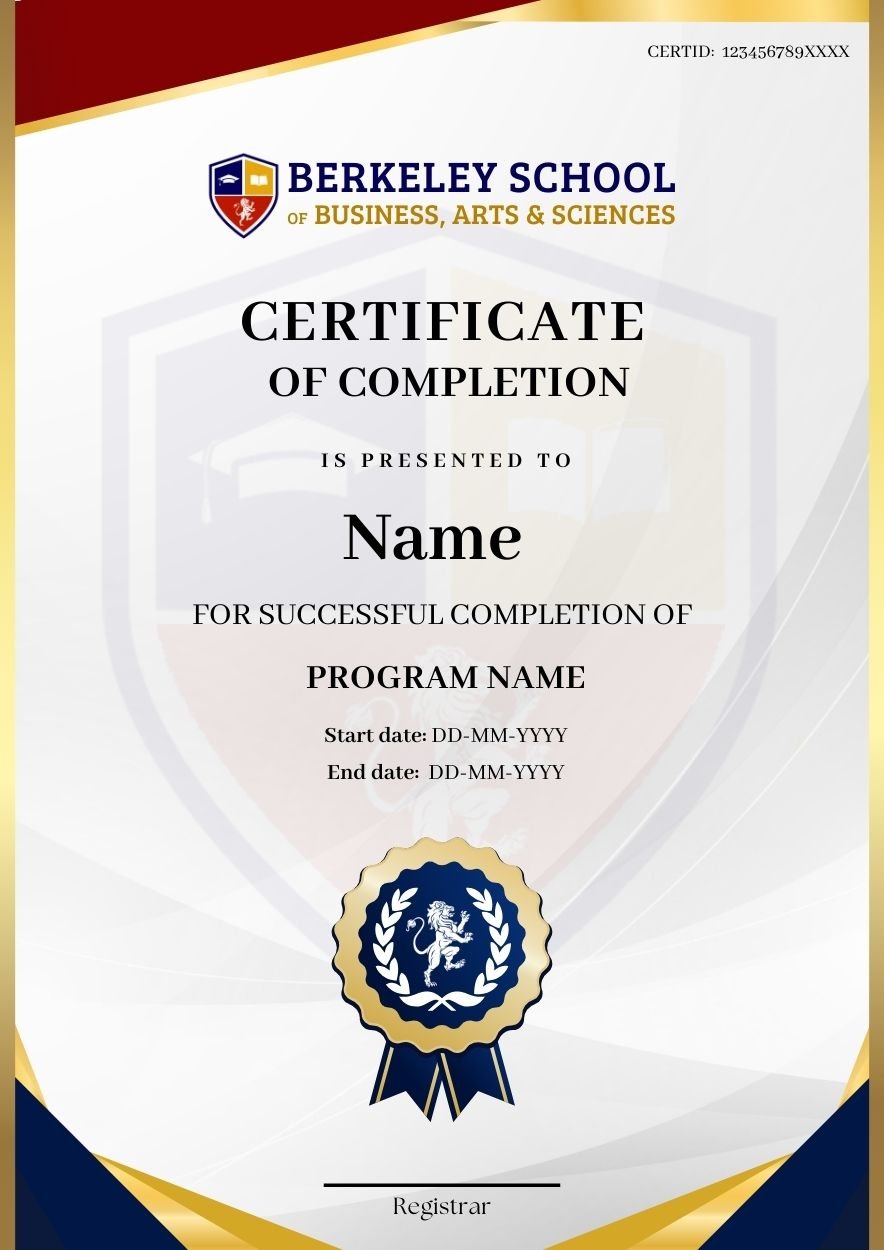
You will get a certificate of completion, which is highly reputed and accepted by employers

Fundamental Knowledge

Fundamental knowledge in procurement includes understanding core concepts like supplier management, contract negotiation, cost control, and the legal, ethical, and sustainability issues in the procurement process.

Technical Skills

Technical skills in procurement involve expertise in data analysis, procurement software tools, contract management, supply chain optimization, and understanding of international trade regulations.

Career Advancement

Career advancement in procurement can be achieved through certifications like CIPP, gaining experience in strategic sourcing, supplier management, and expanding leadership skills in global procurement operations.

Industry Relevance

Industry relevance in procurement is driven by the need for skilled professionals to manage global supply chains, ensure cost efficiency, and navigate legal and ethical challenges in a rapidly changing market.

Future Trends

Future trends in procurement include increased automation, the integration of artificial intelligence for decision-making, a focus on sustainability, and greater reliance on data analytics for optimizing supply chains.

Related courses

CISA - Certified Information Systems Auditor

CISA qualification is awarded by the Information Systems Audit and Control Association ISACA. ISACA membership and its certification programs are globally accepted and recognized. ISACA’s IS auditing and IS control standards are followed by practitioners all over the World.

Read More
Certified ScrumMaster (CSM)

The Certified ScrumMaster (CSM) certification is an entry-level credential that teaches the Scrum framework, roles, and responsibilities of a Scrum Master. It focuses on guiding teams, facilitating Scrum events, and ensuring Agile principles are followed to improve project delivery and collaboration.

Read More
Certified Web Developer (CWD)

The Certified Web Developer (CWD)™ certification, offered by the Global Association for Quality Management (GAQM), is designed to validate your competencies in essential web development technologies, including HTML, CSS, JavaScript, and foundational skills necessary to create basic web applications.

Read More
ISO 9001 – Quality Management Systems (QMS)

ISO 9001 is an internationally recognized Quality Management System (QMS) standard that ensures organizations consistently provide high-quality products and services. It focuses on customer satisfaction, process efficiency, continuous improvement, and regulatory compliance.

Read More
Certified Business Analysis Professional

The Certified Business Analysis Professional (CBAP) is a globally recognized certification offered by the International Institute of Business Analysis (IIBA) for experienced business analysts. It validates expertise in business needs identification, requirement analysis, and strategic decision-making

Read More

FAQ: Certified International Purchasing/ Procurement Professional (CIPP)

contact us for more information or to apply for admission. Seats fill up quickly, so we encourage early registration!

Cart

Cart (0)