The PMI Certified Professional in Managing AI (PMI-CPMAI) certification validates the knowledge and practical skills required to manage artificial intelligence initiatives within projects and organizations. It equips professionals to plan, implement, govern, and oversee AI solutions responsibly while aligning AI adoption with business objectives, ethical principles, and organizational strategy.
The PMI Certified Professional in Managing AI (PMI-CPMAI) certification is a globally recognized credential from the Project Management Institute (PMI) that validates the knowledge and practical skills required to lead and manage artificial intelligence initiatives successfully. The certification equips professionals with a structured, tool-agnostic methodology for planning, developing, implementing, evaluating, and operationalizing AI solutions while ensuring alignment with organizational objectives, responsible AI principles, and business value.
The certification emphasizes the complete AI project lifecycle, including identifying business opportunities, defining data requirements, preparing AI-ready data, managing AI model development, evaluating AI systems, and operationalizing AI solutions through governance and continuous improvement. Furthermore, it focuses on ethical AI practices, stakeholder collaboration, risk management, compliance, and measurable business outcomes, enabling professionals to deliver AI projects with confidence across diverse industries.
Developed according to PMI's rigorous certification standards and supported by an official Examination Content Outline (ECO), the PMI-CPMAI examination assesses practical competence in managing AI initiatives through internationally recognized project management practices. As a result, the certification demonstrates an individual's ability to bridge project management, data-driven decision-making, and responsible AI governance while helping organizations achieve successful AI adoption and sustainable innovation.
| Feature | Details |
|---|---|
| Exam Format | Computer-based |
| Number of Questions | 120 |
| Duration | 160 Minutes |
| Delivery | Pearson VUE Test Centers & Online Proctored (where available) |
| Eligibility | No mandatory prerequisites |
| Validity | PMI Credential |
Project Management Institute (PMI)
Newtown Square, Pennsylvania, United States of America (USA)
More than 700,000 members, certification holders, credential earners, and volunteers across more than 200 countries and territories, forming one of the world's largest professional communities dedicated to project management, program management, portfolio management, and business transformation.
1969 (Project Management Institute was founded in 1969 in Pennsylvania, United States.)
The Project Management Institute (PMI) envisions a world where project success drives organizational growth, innovation, and positive societal impact. Its mission is to advance the project management profession by developing globally recognized standards, certifications, education, research, and professional development opportunities. Furthermore, PMI empowers professionals with the knowledge, tools, and community needed to lead projects, programs, portfolios, and emerging technology initiatives, including artificial intelligence, while delivering measurable business value and sustainable organizational success.
There are no mandatory eligibility requirements to take the PMI Certified Professional in Managing AI (PMI-CPMAI) certification. However, candidates will benefit from having a basic understanding of project management, business processes, data, and artificial intelligence concepts. The certification is suitable for professionals who manage, support, or contribute to AI initiatives, regardless of their technical background. Familiarity with AI terminology, digital transformation, and organizational project delivery can further enhance the learning experience and examination readiness.
The PMI Certified Professional in Managing AI (PMI-CPMAI) course is structured around the five official domains defined in the PMI Examination Content Outline. The curriculum develops the knowledge and practical skills required to lead AI initiatives responsibly, identify business opportunities, manage AI data and model development, and operationalize AI solutions that deliver measurable business value. Throughout the program, participants learn internationally recognized best practices for AI governance, ethics, project management, and organizational adoption.
This module introduces the principles of responsible AI and explains how to establish trustworthy AI practices throughout the project lifecycle. Participants learn how to manage AI governance, security, privacy, compliance, ethics, transparency, and organizational accountability while reducing AI-related risks.
AI Governance, Ethics, and Responsible AI
Privacy, Security, and Regulatory Compliance
AI Risk Management and Transparency
Trustworthy AI Policies and Organizational Oversight
This module focuses on identifying business problems that can be addressed through artificial intelligence. Participants learn to evaluate AI opportunities, define business objectives, assess feasibility, align stakeholders, and develop AI solutions that support organizational strategy and measurable outcomes.
Business Problem Identification
AI Opportunity Assessment and Feasibility
Stakeholder Analysis and Value Creation
AI Solution Planning and Business Alignment
This module explains how high-quality data supports successful AI initiatives. Participants learn to identify data requirements, evaluate data quality, establish governance practices, prepare datasets, and ensure that AI models are built using reliable, secure, and representative information.
Data Collection and Data Sources
Data Quality and Preparation
Data Governance and Data Management
Privacy, Security, and Ethical Data Practices
This module covers the planning, development, testing, validation, and evaluation of AI models. Participants learn how to collaborate with technical teams, assess model performance, interpret results, reduce bias, and ensure AI models meet organizational objectives before deployment.
AI Model Development Process
Model Testing and Validation
Performance Measurement and Bias Evaluation
AI Model Monitoring and Continuous Improvement
This module focuses on deploying AI solutions into production and managing ongoing operations. Participants learn how to implement AI systems, manage organizational change, monitor operational performance, maintain AI governance, and continuously optimize AI solutions to deliver long-term business value.
AI Solution Deployment and Integration
Change Management and User Adoption
Operational Monitoring and Performance Management
Continuous Improvement and AI Lifecycle Management
Berkeley offers expertly developed learning materials tailored to meet participants' needs, ensuring comprehensive coverage of the syllabus and optimal exam preparation.
‣ Tailored Material: Guides are designed to cover the entire syllabus, offering full preparation and deep understanding.
‣ In-Depth Content: Unlike superficial outlines, our materials provide fully developed theories and concepts, equipping participants with complete knowledge.
‣ Strategic Study: We help participants prioritize study time by indicating the weight of each topic, allowing efficient focus on crucial areas.
‣ Difficulty Levels: Topics are labeled as "Awareness" or "Proficiency," guiding participants to allocate time based on the required depth of knowledge.
‣ Comprehensive Coverage: Our materials include detailed theory and a glossary of technical terms to clarify complex concepts.
‣ Effective Learning Techniques: Visual aids and memorization techniques ensure long-lasting retention, helping candidates succeed.
Berkeley’s methodologies equip participants with the essential knowledge and tools for both exams and future success.
Our lecture plan integrates structured learning with interactive teaching methods, promoting engagement and collaboration. In addition, this approach ensures a comprehensive understanding of concepts, fostering critical thinking and practical application in real-world scenarios
Practice sessions offer hands-on experience through guided exercises, enhancing skills and reinforcing knowledge. Moreover, this practical approach ensures mastery of concepts, promoting confidence and competence in real-world applications
Mock examinations of simulate real test conditions, providing valuable practice and assessment. In addition, this helps identify strengths and weaknesses, ensuring thorough preparation and boosting confidence for actual exams
Evaluates and ensure the quality of the training program and all its deliverables. This is measured through the following indicators:
‣ Instructors' experience and style in presenting and explaining topics.
‣ Variety and balance of teaching methods (such as discussions, case studies, mock exams and videos) used in the course to ensure retention and to match the learning objectives.
‣ Level of interactivity.
‣ Feedback from program participants
‣ Full compliance with Institute standards and guidelines for preparation and study requirements and methodology.
‣ Progress reports from the training program provider.
Prepare for the PMI Certified Professional in Managing AI (PMI-CPMAI) certification through comprehensive training covering responsible AI, business strategy, data governance, AI model management, and AI solution deployment aligned with the official PMI Examination Content Outline.
| Field | Details |
|---|---|
| Exam Format & Duration | Computer-based examination consisting of 50 multiple-choice questions. Duration: 90 minutes. |
| Exam Dates | Available year-round based on Pearson VUE testing schedules and online proctored availability. |
| Exam Registration Deadline | No fixed deadline. Candidates can register throughout the year via PMI, subject to appointment availability. |
| Passing Criteria | PMI does not publish a fixed passing score. Results are determined using psychometric analysis. |
| Exam Locations | Pearson VUE test centers worldwide and online proctored examination (where available). |
“As a strong advocate for education and human development, I commend Berkeley for its exceptional commitment to empowering future leaders. The institution stands as a symbol of excellence, innovation, and opportunity. Students who walk its halls are nurtured with knowledge, values, and vision—qualities that contribute to building a stronger and more prosperous future for our nation.”- H.H. Shaikh Khalifa Al Hamid
Alumni Benefits
‣ Exclusive Networking Events: Access invitations to industry-leading events and thought-leadership gatherings featuring renowned speakers.
‣ Monthly Updates: Stay informed with a newsletter highlighting the latest research, events, and activities from the school.
‣ LinkedIn Community Access: Join the Executive Education LinkedIn group for networking and professional development opportunities.
‣ Educational Discounts: Enjoy a 20% discount on open-enrollment programs and access to workshops focused on emerging trends.
‣ Global Alumni Network: Connect with a diverse alumni community through the Berkeley School’s online network and engage in country and interest groups.
The PMI Certified Professional in Managing AI (PMI-CPMAI) certification is a valuable credential for professionals who want to lead and manage artificial intelligence initiatives responsibly. As organizations increasingly adopt AI technologies, there is growing demand for professionals who can align AI projects with business objectives while ensuring ethical governance, risk management, and successful implementation. Professionals with AI project management expertise can access opportunities across technology, finance, healthcare, manufacturing, retail, telecommunications, consulting, and government sectors.
Furthermore, the certification strengthens your qualifications for leadership roles such as AI Project Manager, AI Program Manager, Digital Transformation Manager, AI Product Manager, PMO Manager, Technology Consultant, Innovation Manager, and AI Governance Specialist, while supporting long-term career growth and increased earning potential.
PMI Certified Professional in Managing AI (PMI-CPMAI) → AI Project Manager / AI Program Manager → Digital Transformation Manager → AI Product Manager / PMO Manager → Enterprise AI Leader / AI Governance Manager → Director of AI Strategy / Chief AI Officer (CAIO) / Chief Digital Officer (CDO)
If you want to build a broader project management skill set, you may also explore our Project Management Professional (PMP) course and Program Management Professional (PgMP) course. Furthermore, these certifications complement the PMI Certified Professional in Managing AI (PMI-CPMAI) by strengthening project leadership and strategic delivery skills. For the latest examination policies, eligibility requirements, and certification updates, visit the official PMI Certified Professional in Managing AI (PMI-CPMAI) page.
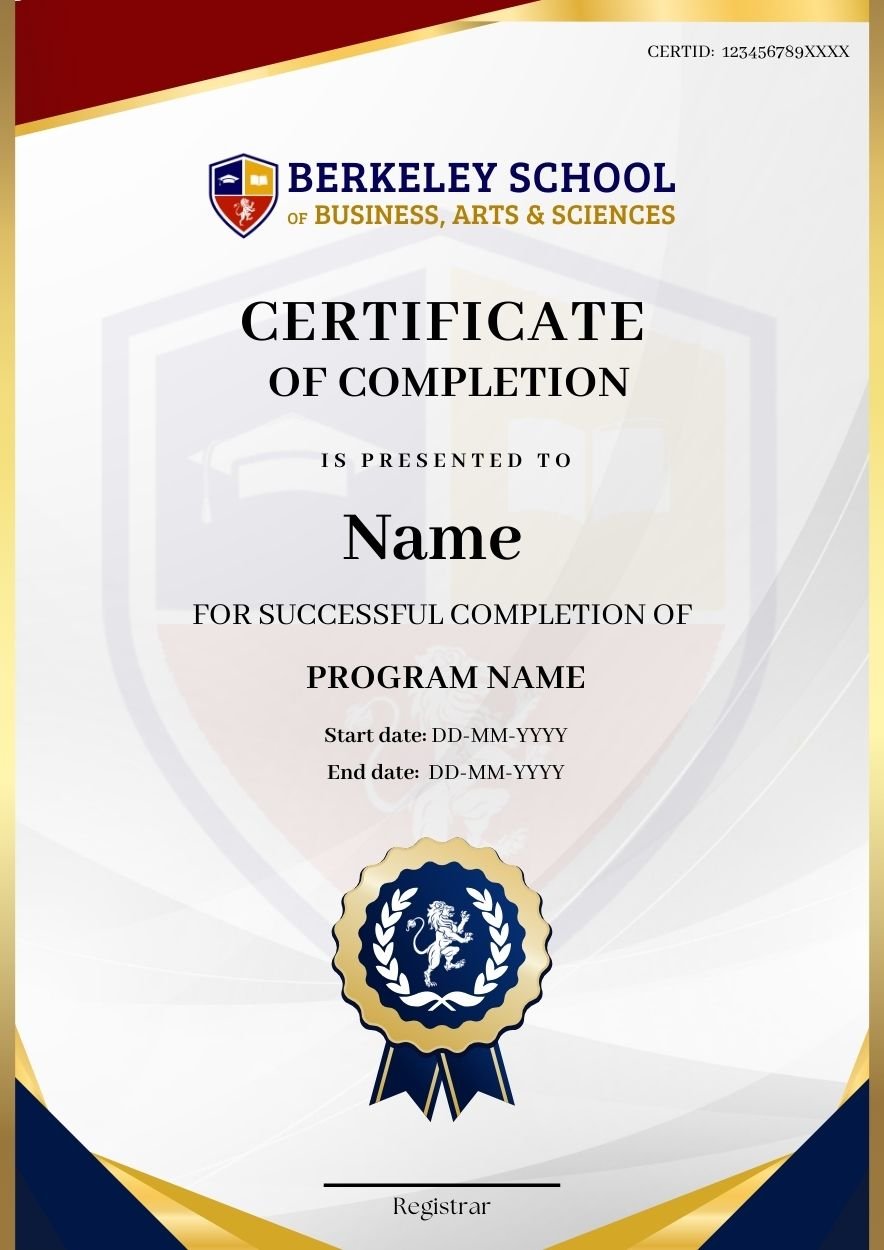
You will get a certificate of completion, which is highly reputed and accepted by employers.
Strengthen your qualifications for professional roles such as AI Project Manager, AI Program Manager, Digital Transformation Manager, AI Product Manager, PMO Manager, Business Analyst, AI Consultant, Technology Manager, and AI Governance Specialist across technology, finance, healthcare, manufacturing, government, consulting, retail, and other AI-driven industries.
Earn the globally recognized PMI Certified Professional in Managing AI (PMI-CPMAI) certification from the Project Management Institute (PMI), demonstrating your ability to manage AI initiatives using internationally recognized project management, governance, and responsible AI best practices.
Develop the expertise to govern responsible AI initiatives, define business and data requirements, manage AI model development, evaluate AI performance, implement AI solutions, and monitor AI systems throughout the project lifecycle.
Apply practical AI project management techniques immediately to identify AI opportunities, align AI initiatives with business objectives, manage AI risks, oversee AI implementation, and deliver responsible AI solutions that create measurable business value.
Contact Us