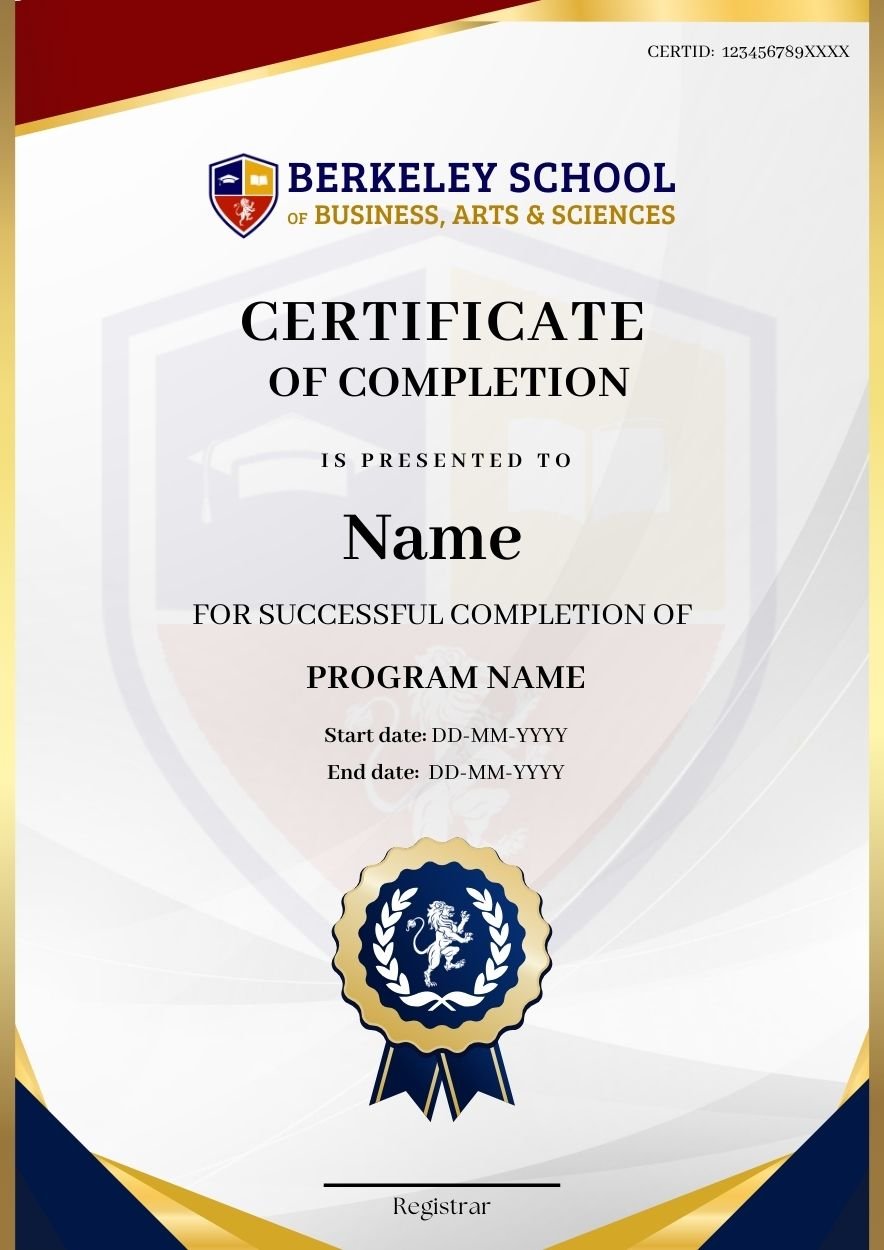
Berkeley School of Business, Arts & Sciences
The Level 7 Diploma in Law comprises eight mandatory units, with each unit carrying 15 credits. The complete qualification provides 120 credits, 1,200 Total Qualification Time hours and 480 Guided Learning Hours. It covers the principal areas of English and Welsh law while developing postgraduate-level legal research, analysis and problem-solving skills.
Gain a foundation in the legal system of England and Wales, including its institutions, legal professions, sources of law and justice systems. The unit also develops postgraduate legal research, interpretation, reasoning and professional communication skills.
Legal Institutions and Professions
Sources of Law and Legal Interpretation
Civil and Criminal Justice Systems
Legal Research, Analysis and Professional Skills
Examine the legal framework governing companies in England and Wales. Learners study corporate personality, limited liability, company constitutions, directors, shareholders and the procedures required for effective corporate administration.
Corporate Personality and Limited Liability
Company Constitutions and the Corporate Veil
Directors, Shareholders and Corporate Governance
Majority Rule and Minority Shareholder Protection
Develop a critical understanding of contract law and its practical, ethical and policy implications. Learners also evaluate methods of resolving civil disputes efficiently, proportionately and cost-effectively.
Principles and Operation of Contract Law
Contractual Issues and Ethical Implications
Civil Dispute Resolution Processes
Evidence-Based Legal Analysis and Solutions
Explore the UK constitution, constitutional institutions and the principles governing public administration. The unit examines parliamentary sovereignty, separation of powers, judicial review, human rights and the operation of European Union law.
UK Constitution and Constitutional Institutions
Parliamentary Sovereignty and Separation of Powers
Judicial Review, Accountability and Human Rights
European Union Institutions and Law-Making
Study the principles and operation of tort law within their practical, ethical and social contexts. Learners examine liability, duty of care, causation, remoteness, available defenses and contributory negligence.
Scope and Principles of Tortious Liability
Duty of Care, Causation and Remoteness
Defenses and Contributory Negligence
Practical and Ethical Implications of Tort Law
Examine the principles of land and property law and their practical application in England and Wales. Learners study legal and equitable interests, land registration, co-ownership, conveyancing and third-party rights.
Estates and Legal and Equitable Interests
Registered and Unregistered Land
Co-Ownership, Trusts of Land and Estoppel
Conveyancing, Easements, Covenants and Mortgages
Analyze the main principles of English criminal law and their practical application. Learners explore the elements of criminal liability, specific offences, participation, defenses and the rules governing criminal evidence.
Actus Reus, Mens Rea and Criminal Liability
Fatal, Non-Fatal, Sexual and Property Offences
Participation, Inchoate Offences and Defenses
Criminal Evidence and Standards of Proof
Explore the principles of equity and trusts and their relationship with common law. Learners examine different forms of trusts, the responsibilities of relevant parties, governance arrangements and trust investment strategies.
Principles of Equity and Common Law
Types, Purposes and Formation of Trusts
Settlors, Trustees and Beneficiaries
Trust Governance, Investment and Funding Strategies
Our lecture plan integrates structured learning with interactive teaching methods, promoting engagement and collaboration. This approach ensures a comprehensive understanding of concepts, fostering critical thinking and practical application in real-world scenarios
Practice sessions offer hands-on experience through guided exercises, enhancing skills and reinforcing knowledge. This practical approach ensures mastery of concepts, promoting confidence and competence in real-world applications
Mock examinations simulate real test conditions, providing valuable practice and assessment. This helps identify strengths and weaknesses, ensuring thorough preparation and boosting confidence for actual exams
Evaluates and ensure the quality of the training program and all its deliverables. This is
measured through the following indicators:
‣ Instructors' experience and style in presenting and
explaining topics.
‣ Variety and balance of teaching methods (such as discussions, case studies,
mock exams and videos) used in the course to ensure retention and to match the learning
objectives.
‣ Level of interactivity.
‣ Feedback from program participants
‣ Full
compliance with Institute standards and guidelines for preparation and study requirements and
methodology.
‣ Progress reports from the training program provider.
Exclusive Networking Events: Access invitations to industry-leading events and thought-leadership gatherings featuring renowned speakers.
Monthly Updates: Stay informed with a newsletter highlighting the latest research, events, and activities from the school.
LinkedIn Community Access: Join the Executive Education LinkedIn group for networking and professional development opportunities.
Educational Discounts: Enjoy a 20% discount on open-enrollment programs and access to workshops focused on emerging trends.
Global Alumni Network: Connect with a diverse alumni community through the Berkeley School’s online network and engage in country and interest groups.