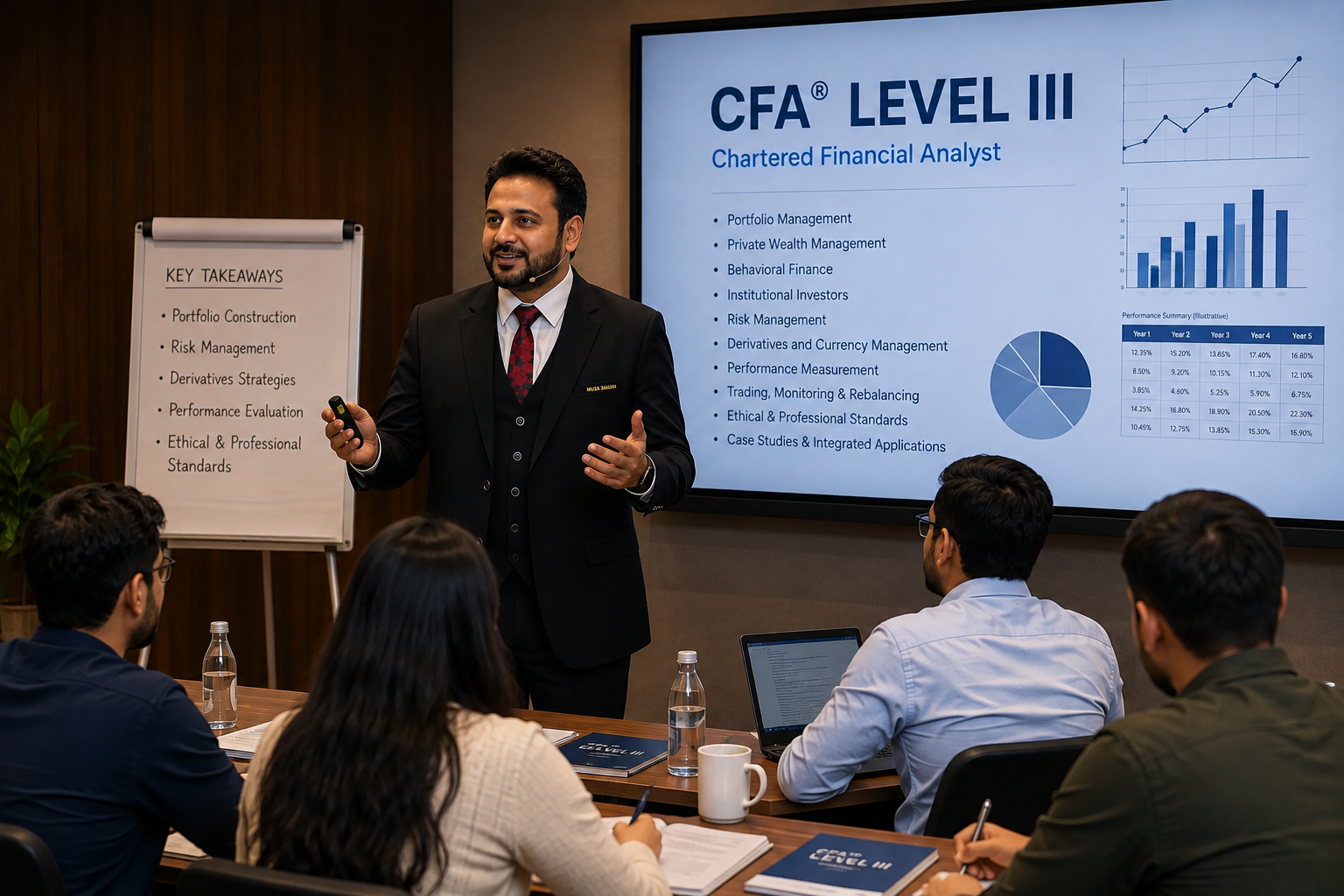
Chartered Financial Analyst (CFA) Level III with Musa Shaikh provides advanced portfolio management and examination preparation for professionals across the United Arab Emirates, Saudi Arabia, United States of America, United Kingdom and Europe.
Prepare for Chartered Financial Analyst Level III with Musa Shaikh and learn to connect investment ideas in a portfolio decision. This course brings together asset allocation, portfolio construction, risk and performance review. First, establish what an investor needs. Therefore, use those needs to assess a strategy and explain your judgement.
Level III moves from analysing individual assets to managing portfolios in context. For example, you consider objectives, constraints, market expectations and the risks of implementation. In addition, ethical duties remain part of the decision. A strong answer links the recommendation to the facts of the case.
The course plan includes common topics and pathway study. CFA Institute offers Portfolio Management, Private Markets and Private Wealth pathways. Therefore, check that your preparation matches the pathway you select for the exam. The options shown in the lecture plan support a discussion of that study choice.
Start with ethics and the assumptions behind asset allocation. In addition, connect portfolio construction with risk tools and performance review. Then, focus on the relevant pathway topics. Finally, use the practice and revision sessions to bring the ideas together.
| Sessions | Study focus | Practice task |
|---|---|---|
| 1–5 | Ethics, market expectations, allocation and investor objectives | Connect a proposed allocation with an investor’s needs. |
| 6–9 | Portfolio construction, derivatives and currency risk | Explain the purpose and limits of a risk tool. |
| 10–12 | Performance review, manager selection and implementation | Assess a result and the costs of putting a strategy into practice. |
| 13–17 | Pathway topics and integrated cases | Review the topics relevant to your chosen pathway. |
| 18–20 | Item sets, written responses and final revision | Practise concise answers under time limits. |
For example, consider a fund that must meet a near-term cash payment while pursuing long-term growth. A higher expected return may look attractive. However, the payment changes its need for liquidity. First, identify that constraint. Next, compare the proposed assets with the time horizon and risk limits. Finally, explain how the allocation meets the fund’s objectives.
Which facts support the portfolio choice, and what trade-off does the investor accept?
Similarly, good past performance does not settle a manager-selection decision. In addition, you need to consider the mandate, the source of returns and the fit with the portfolio. As a result, your review should explain the evidence rather than repeat a headline return.
CFA Level III course questions require you to read the case and answer the task directly. Begin by identifying what the question asks. Therefore, give the relevant calculation, choice or explanation. If a reason is required, connect it with the case facts. Avoid adding unrelated details that weaken the answer.
The course combines twenty planned teaching sessions with two practice sessions and three mock exams. Also, after each topic, note one concept you can explain and one you need to revisit. During mock review, separate calculation errors from gaps in reasoning. This makes your next study session more useful.
Berkeley provides preparation and a course completion certificate. CFA Institute manages exam registration, the Practical Skills Module and the requirements for the charter. Therefore, completing this training is one part of your preparation. Use the course roadmap to build a focused Chartered Financial Analyst study routine.
The Chartered Financial Analyst (CFA) Program and CFA Charter are administered and awarded by CFA Institute.
Charlottesville, Virginia, United States of America.
CFA Institute has a global community of more than 200,000 members across over 160 markets, supported by more than 155 local societies.
Berkeley's Chartered Financial Analyst (CFA) training with Musa Shaikh develops professionals who can combine investment knowledge, quantitative analysis, ethical judgement and financial analysis to make effective investment decisions.
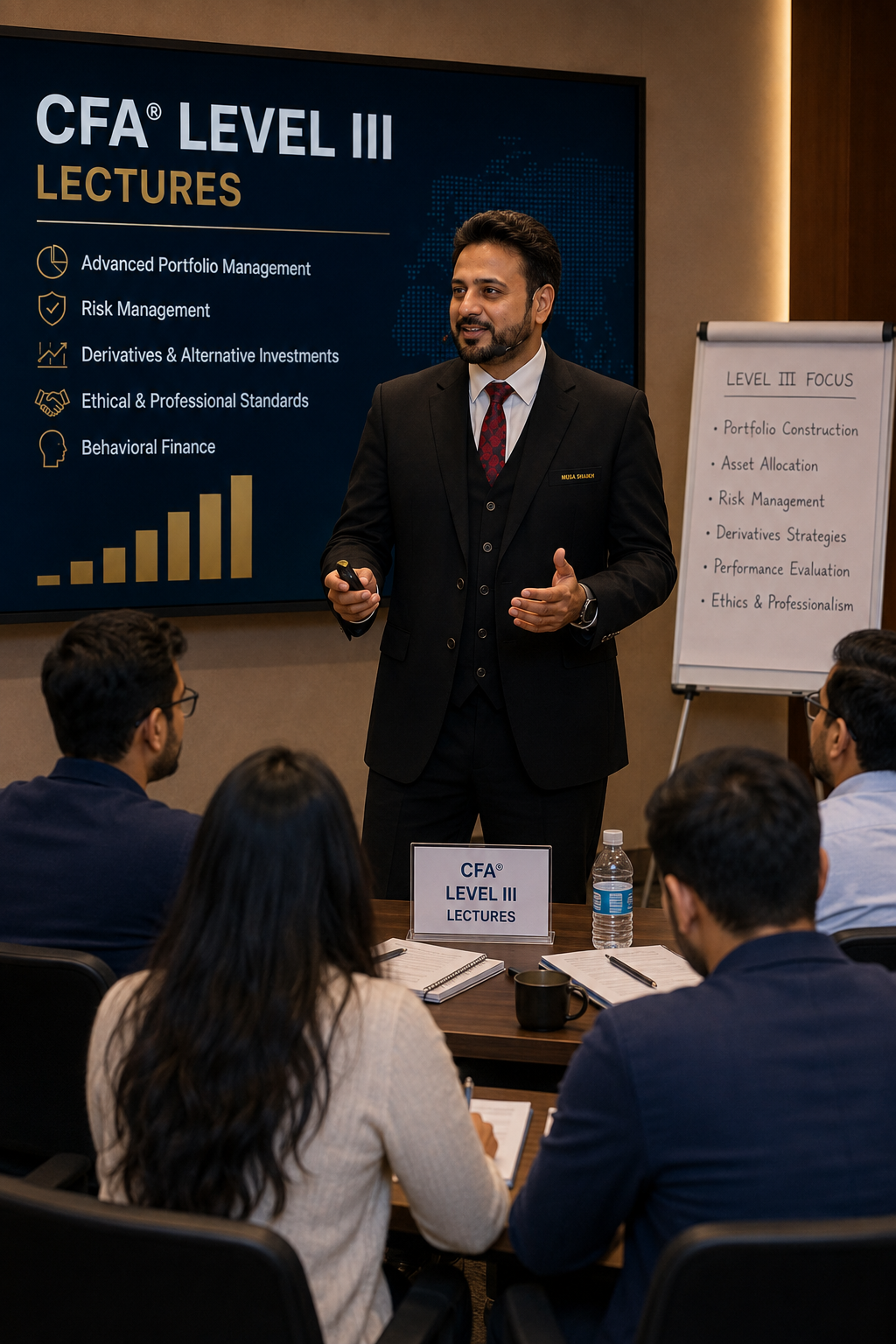
Chartered Financial Analyst (CFA) Level III preparation with Musa Shaikh consists of 20 focused teaching lectures.
Musa Shaikh is an internationally recognised academic, lecturer and executive educator with over two decades of teaching and industry experience across the UAE, Saudi Arabia, UK and USA. He has taught and mentored thousands of students, professionals and executives, combining academic rigour with real-world expertise in finance, investment, governance, risk, audit, strategy and leadership.
Study the portfolio issue, then decide how to respond. First, identify the investor’s objectives and constraints. Next, apply the relevant concept or calculation. Finally, explain the decision using facts from the case.
The lecture plan contains twenty sessions. These move from core portfolio topics to pathway cases, item sets, written responses and revision. In addition, check which pathway topics apply to your chosen exam route before planning your study.
Two practice sessions help you work through case-based questions. First, read the facts and identify the task. Then, give a focused answer and review the reasoning. This supports both item-set work and concise written explanations.
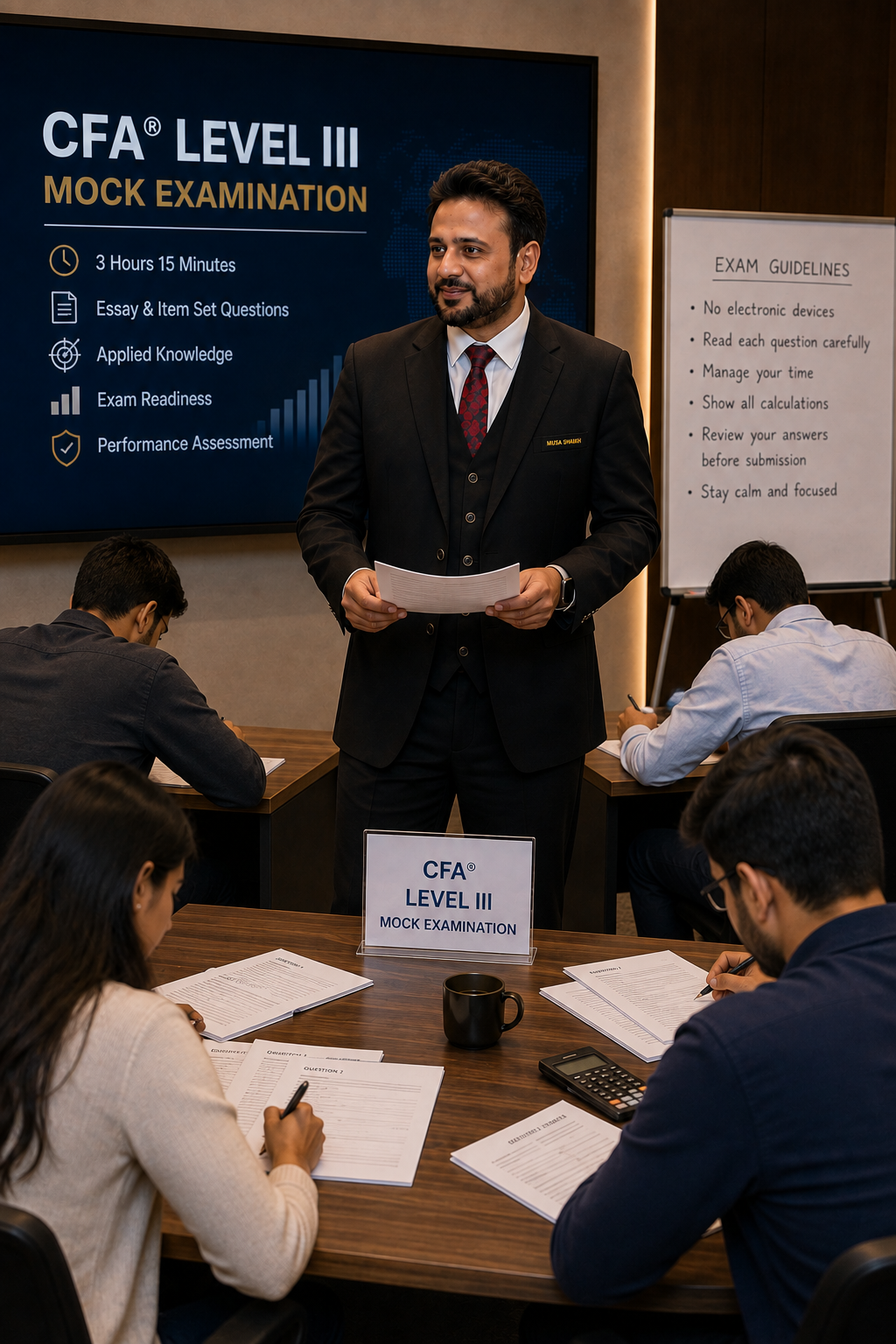
Three mock exams support revision and time management. After each attempt, review calculations, case interpretation and written answers. Next, focus your study on repeated errors. Finally, practise completing each task within the time available.
Berkeley reviews how the course supports its learning goals. First, the review considers lesson delivery and practice. In addition, participant feedback helps identify areas for improvement.
The current topic weights are Asset Allocation (15–20%), Portfolio Construction (15–20%), Performance Measurement (5–10%), Derivatives and Risk Management (10–15%), Ethics (10–15%) and the selected pathway (30–35%). Therefore, balance your revision between core topics and your pathway.
The computer-based exam combines 11 item sets and 11 constructed-response sets. It lasts four hours and 24 minutes, split into two 132-minute sessions. First, read the case. Then, answer the specific task using the facts provided.
The Chartered Financial Analyst (CFA) Level III examination is generally offered twice each year, typically in February and August, providing candidates with testing windows that can be aligned with their preparation schedule and professional commitments.
Successful candidates report more than 300 study hours on average per level. Your needs will depend on your background and progress. In addition, you must complete an applicable Practical Skills Module to receive your exam result. Plan time for both exam revision and this requirement.
CFA Institute does not publish a fixed numerical passing score in advance for the Chartered Financial Analyst (CFA) Level III examination. Candidates must achieve the Minimum Passing Score (MPS) established for the applicable examination administration.
Chartered Financial Analyst (CFA) examinations are conducted at testing centres worldwide, allowing candidates to select an available location based on appointment availability. Candidates in Dubai, Abu Dhabi, Riyadh, and Jeddah can choose suitable examination centres according to their preferred testing location and available appointments.
Number of Lectures: 20
Delivery: Live Online Instructor-Led | Location: International
Dates: Start 07 Feb 2027 – End 20 Jun 2027
Chartered Financial Analyst (Level III)
Berkeley supports professionals seeking to progress in portfolio management, investment analysis, asset management, equity research, wealth management, and investment strategy. Chartered Financial Analyst (CFA) Level III preparation with Musa Shaikh develops examination performance alongside practical capabilities in portfolio management, asset allocation, investment strategy, risk management, wealth planning, and advanced investment decision-making.
‣ Exclusive Networking Events: Access invitations to industry-leading events and thought-leadership gatherings featuring renowned speakers.
‣ Monthly Updates: Stay informed with a newsletter highlighting the latest research, events, and activities from the school.
‣ LinkedIn Community Access: Join the Executive Education LinkedIn group for networking and professional development opportunities.
‣ Educational Discounts: Enjoy a 20% discount on open-enrollment programs and access to workshops focused on emerging trends.
‣ Global Alumni Network: Connect with a diverse alumni community through the Berkeley School’s online network and engage in country and interest groups.
‣ Networking opportunities, professional updates, educational benefits and access to Berkeley's international alumni community.
Level III study develops skills used in portfolio management, wealth management, investment strategy and asset management. First, learn to connect a portfolio choice with the investor’s goals. Next, explain how risk, costs and implementation affect the result.
These skills can support more responsible investment roles as your experience grows. However, course completion alone does not secure a senior position or award the CFA charter. Career progress also depends on experience, professional requirements and available opportunities.
First, divide your study time between core topics and your chosen pathway. Keep a list of errors from both item sets and written responses. Next, revisit the relevant concepts before attempting a new case. Finally, use mock reviews to check whether your answers are clear, relevant and complete.
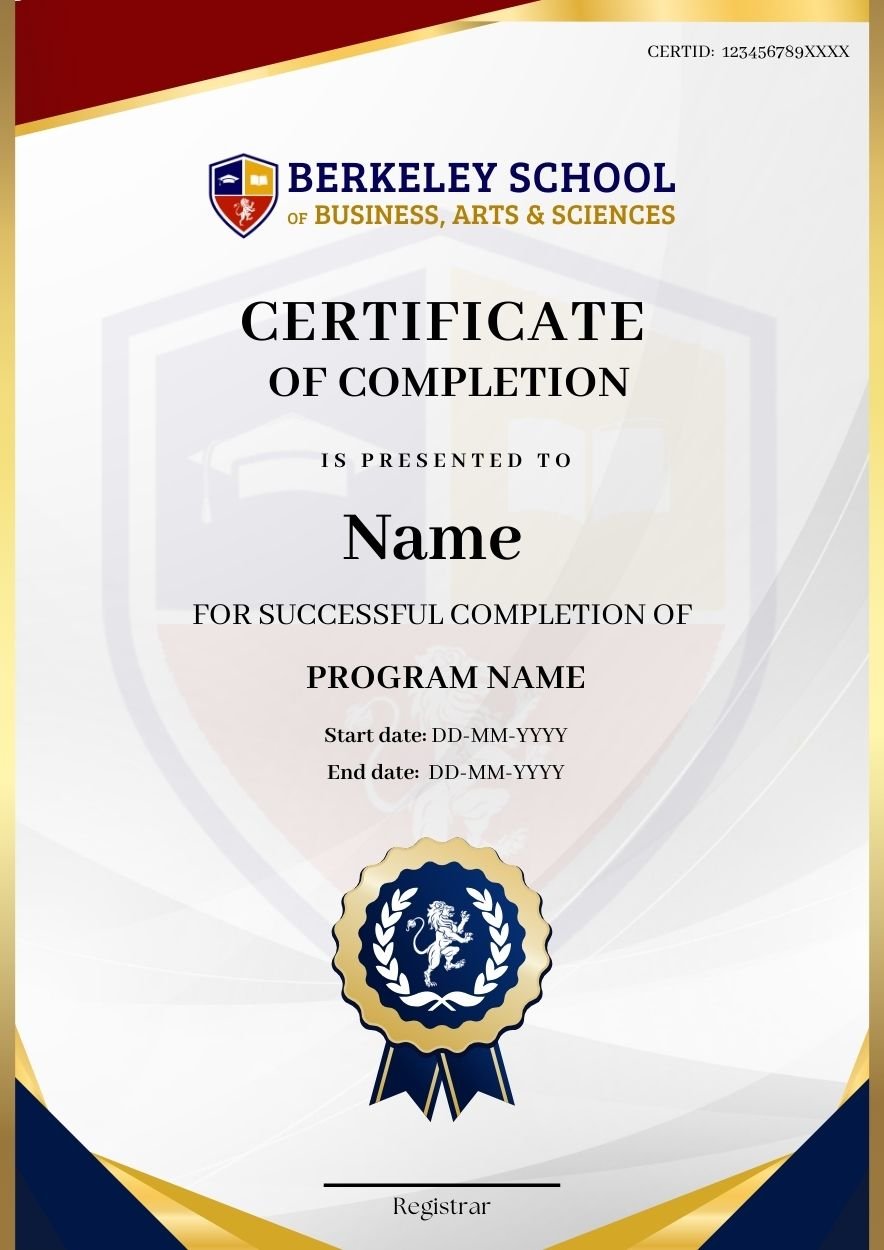
You receive a Berkeley course completion certificate after meeting the course requirements. This is separate from the CFA charter awarded by CFA Institute. Therefore, check the Institute’s
Strengthen ethical decision-making and professional judgment through the CFA Institute Code of Ethics and Standards of Professional Conduct.
Connect with investment professionals and access career resources, industry insights, events, and continuing education opportunities.
Strengthen professional capabilities for opportunities across portfolio management, investment strategy, research, and asset management.
Develop advanced skills in portfolio management, asset allocation, risk management, and investment decision-making.
Contact Us