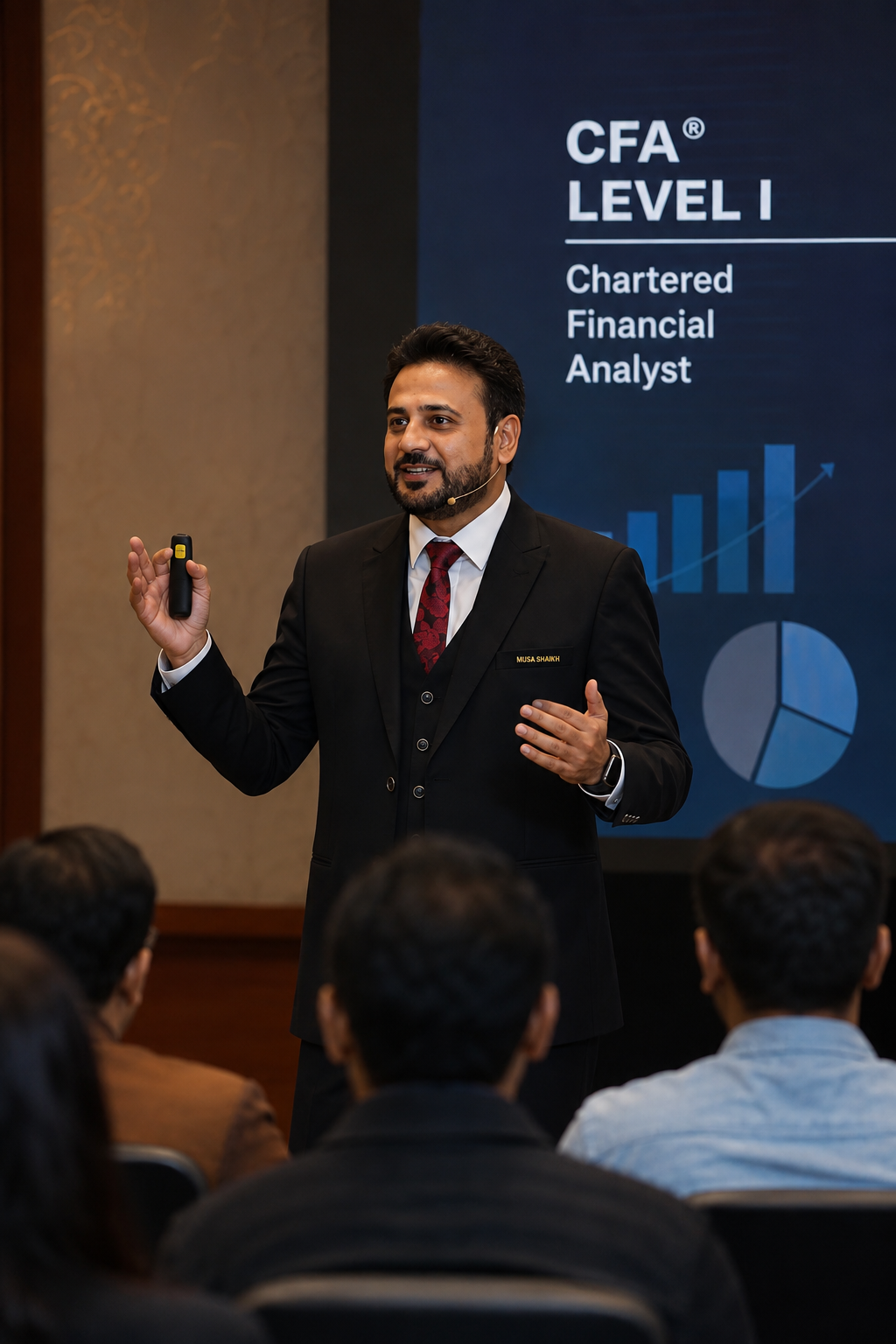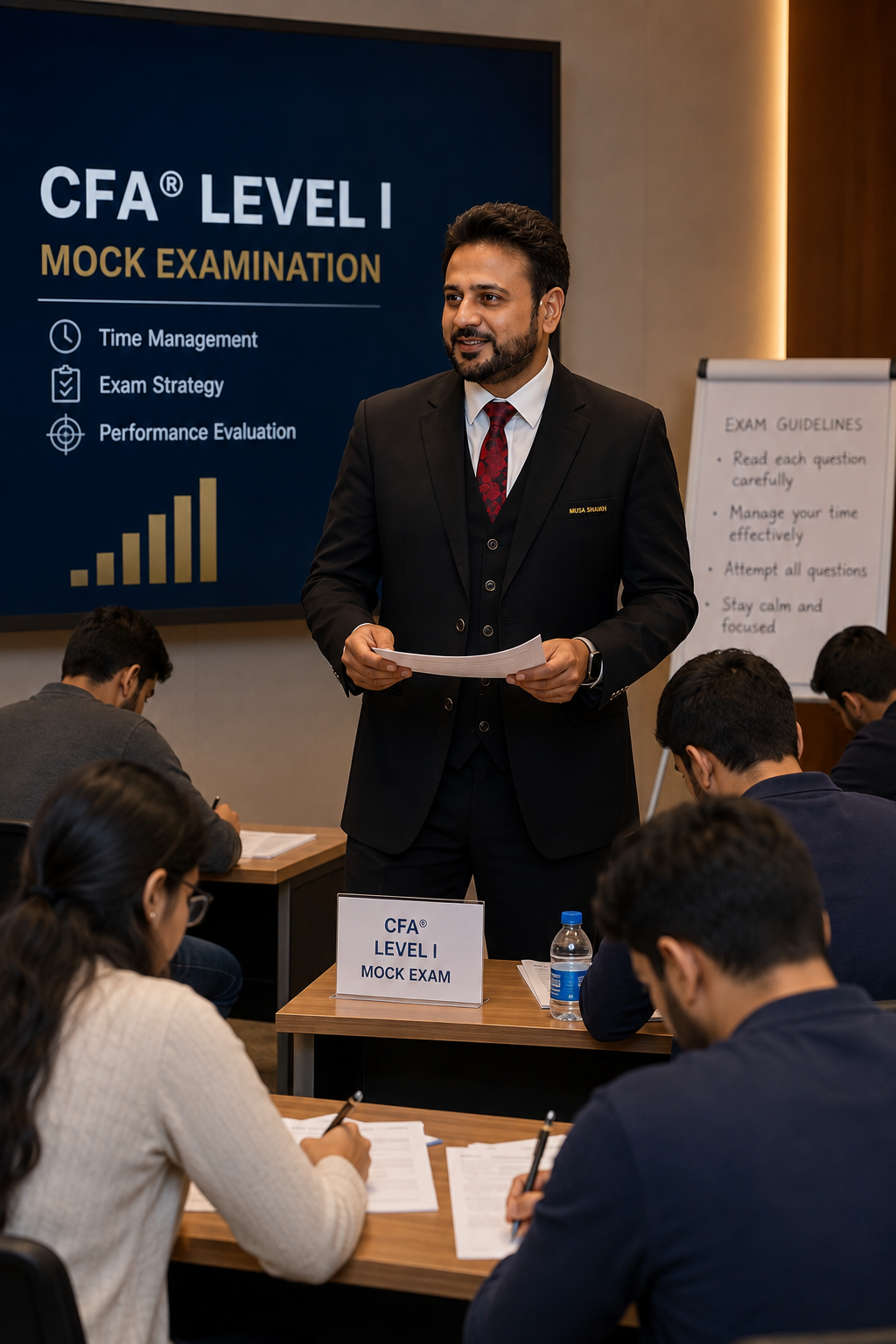
CFA Level II with Musa Shaikh helps candidates develop advanced skills in financial analysis, investment valuation and portfolio management. The course combines structured lectures, focused practice sessions and mock examinations to support effective CFA Level II exam preparation.
The CFA Level II course with Musa Shaikh helps you build skills in analysis and valuation. You learn how to assess an investment and use what you know in a case. The course also links each topic to exam practice.
First, review the core ideas from Level I. Then, work through the Level II topics in small steps. You study ethics, maths, markets and company reports. In addition, you learn how to value shares, bonds and other assets.
This table of contents shows the main parts of your study plan: core topics, practice and review.
For example, a case may ask you to compare two firms. Start with the facts in the case. Next, choose the right method. Then, work out the result and explain what it means. This helps you link theory to a clear decision.
Also, use practice to find gaps in your knowledge. Keep a short log of errors. Review each error and try a fresh question. As a result, your study time can focus on the skills you need to improve.
| Study stage | Purpose |
|---|---|
| Learn | Build a clear grasp of each topic. |
| Practise | Apply the topic to case questions. |
| Review | Check mistakes and revise weak areas. |
The program serves learners in the UAE, Saudi Arabia, USA, UK and Europe. Finally, explore the course plan, fees and entry details below. Contact the team to discuss your next step in CFA Level II preparation.
The Chartered Financial Analyst (CFA) Program and CFA Charter are administered and awarded by CFA Institute.
Charlottesville, Virginia, United States of America.
CFA Institute represents more than 200,000 members across over 160 markets, supported by a global network of more than 155 local societies.
Berkeley's Chartered Financial Analyst (CFA) Level II training with Musa Shaikh develops professionals who can combine advanced valuation, financial analysis, investment judgement and ethics to make effective investment decisions.
First, you must pass the CFA Level I exam before moving to Level II. Also, you must meet CFA Institute enrollment rules. The CFA Level II course with Musa Shaikh helps you build the skills needed for this next stage. In addition, you practise how to apply those skills to investment cases.
Chartered Financial Analyst (CFA) Level II preparation with Musa Shaikh consists of 15 focused teaching lectures.
Musa Shaikh is an internationally recognised academic, lecturer and executive educator with over two decades of teaching and industry experience across the UAE, Saudi Arabia, UK and USA. He has taught and mentored thousands of students, professionals and executives, combining academic rigour with real-world expertise in finance, investment, governance, risk, audit, strategy and leadership.
First, learn the key ideas with Musa Shaikh. Then, apply them to CFA Level II case questions. You study how to read reports, value assets and assess risk. In addition, guided practice helps you turn a long case into clear steps. Finally, mock exams help you check your progress and plan your review.
The course includes 15 lectures. First, each lecture explains a part of the syllabus. Then, you work through examples. The lessons cover company reports, share values, bonds and portfolio choices. Also, key topics receive extra time so you can build the skills you need for the exam.
The 2 practice sessions help you work through case questions. First, read the case and find the key facts. Then, choose a method and check your sums. In addition, you practise how to value shares and bonds. As a result, you can see which skills need more work.
The 3 mock exams help you check your skills before the CFA Level II exam. First, work through questions under time limits. Then, review your answers and note your errors. Also, use the results to plan what to study next. Finally, repeat weak topics to build confidence.
Evaluates and ensure the quality of the training program and all its deliverables. This is measured through the following indicators:
‣ Instructors' experience and style in presenting and explaining topics.
‣ Variety and balance of teaching methods (such as discussions, case studies, mock exams and videos) used in the course to ensure retention and to match the learning objectives.
‣ Level of interactivity.
‣ Feedback from program participants
‣ Full compliance with Institute standards and guidelines for preparation and study requirements and methodology.
‣ Progress reports from the training program provider.
The Chartered Financial Analyst (CFA) Level I examination covers a broad range of core investment and financial topics, with Ethical & Professional Standards weighted at 10%–15%, Quantitative Methods at 5%–10%, Economics at 5%–10%, Financial Statement Analysis at 10%–15%, Corporate Finance at 5%–10%, Equity Investments at 10%–15%, Fixed Income at 10%–15%, Derivatives & Risk Management at 5%–10%, Alternative Investments at 5%–10%, and Portfolio Construction at 10%–15%.
The Chartered Financial Analyst (CFA) Level II examination is computer-based and uses vignette-supported multiple-choice questions.
| Exam | Format | Duration |
|---|---|---|
| Session 1 | 11 Item Sets | 132 Minutes |
| Session 2 | 11 Item Sets | 132 Minutes |
The examination contains 22 item sets with 88 multiple-choice questions. Twenty item sets are scored and two are unscored trial sets. Each question must be answered using information contained in its accompanying vignette.
The CFA Level II examination is offered during the following months:
Successful candidates report studying more than 300 hours on average for each CFA examination level, highlighting the importance of consistent and structured preparation. At CFA Level II, candidates must also complete one Practical Skills Module (PSM) to receive their examination result, with current options including Python Programming Fundamentals, Python, Data Science and Artificial Intelligence, and Analyst Skills.
CFA Institute does not publish a fixed numerical passing score in advance. Candidates must achieve the Minimum Passing Score established for the applicable examination administration.
Chartered Financial Analyst (CFA) examinations are conducted at more than 400 testing centres worldwide. Candidates in Dubai, Abu Dhabi, Riyadh and Jeddah can select available examination centres according to appointment availability. Candidates can access locations serving:
Number of Lectures: 15
Delivery: Live Online Instructor-Led | Location: International
Dates: Start 01 Nov 2026 – End 07 Feb 2027
Number of Lectures: 15
Delivery: Live Online Instructor-Led | Location: International
Dates: Start 02 May 2027 – End 08 Aug 2027
Number of Lectures: 15
Delivery: Live Online Instructor-Led | Location: International
Dates: Start 02 May 2027 – End 08 Aug 2027
Chartered Financial Analyst (Level II)
Berkeley supports learners who want to build skills in research, asset values and portfolio management. First, CFA Level II study with Musa Shaikh helps you prepare for case-based exam questions. In addition, the course links your study to practical tasks in finance.
For example, you learn to read company reports and assess shares and bonds. Also, you explore risk, alternative assets and portfolio choices. Visit our alumni page to learn more about the Berkeley community.
CFA Level II study builds skills for roles in research, asset management and wealth management. For example, you may use these skills to assess a firm or value a share. Also, you can apply them to bonds and portfolios.
These roles span markets such as New York, London, Hong Kong, Singapore and the Middle East. With relevant work experience, you may move from an analyst role into fund management or research leadership. In addition, you can build skills for roles in investment management.
Chartered Financial Analyst (CFA) Level II with Musa Shaikh strengthens advanced skills relevant to careers in investment analysis, equity research, portfolio management, asset management, fixed income, valuation, and wealth management. The program helps candidates apply financial analysis and valuation techniques to complex investment decisions, supporting progression into more advanced roles within the global finance and investment industry.
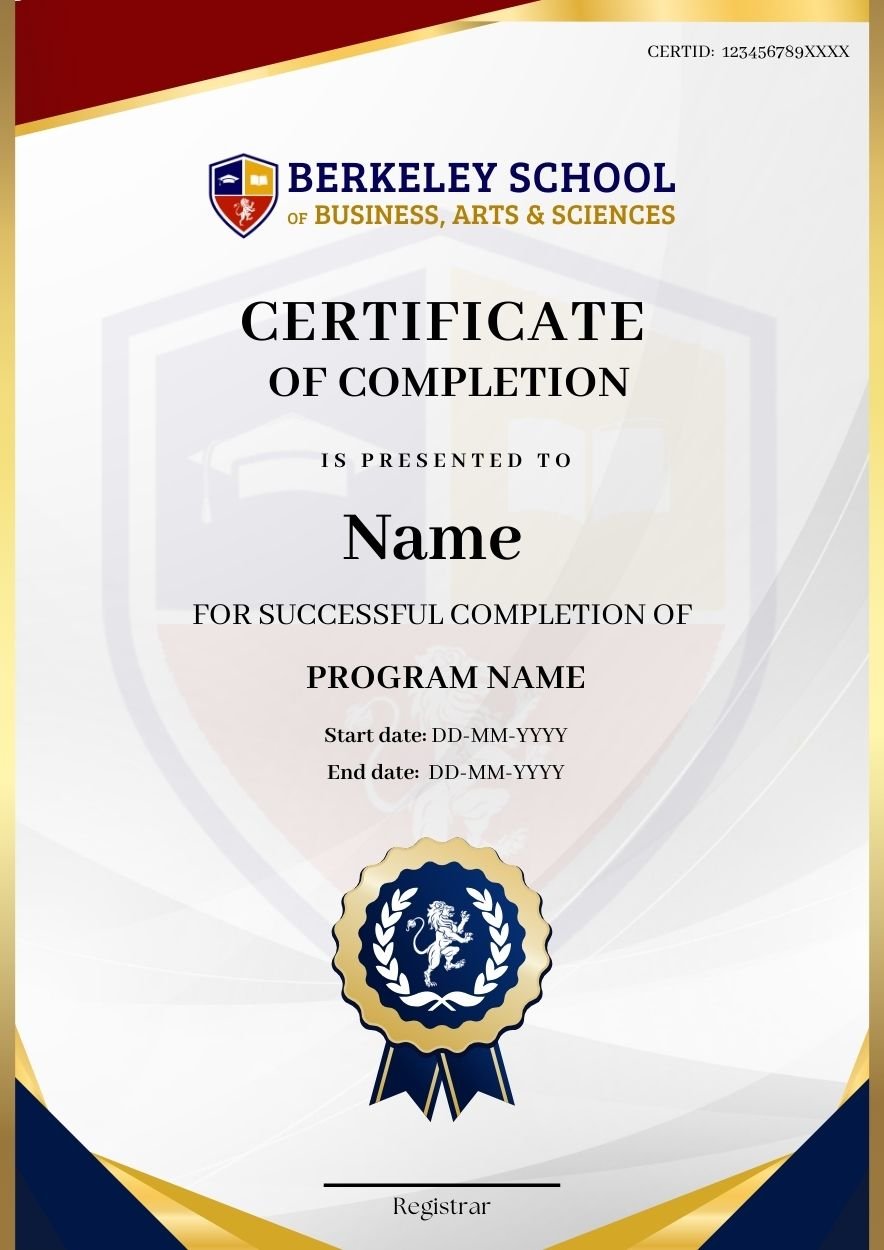
You will get a certificate of completion, which is highly reputed and accepted by employers.
Develop advanced expertise in investment analysis, valuation, financial markets, portfolio construction, and wealth management.
Build strong ethical decision-making and professional judgment through CFA Institute standards.
Connect with investment professionals and access industry insights, career resources, events, and continuing education.
Contact Us