BERKELEY SCHOOL OF BUSINESS, ARTS & SCIENCES

CFA – Chartered Financial Analyst - Level 2

The CFA Level 2 exam builds on the foundational knowledge from Level 1, focusing on the application of investment valuation and financial analysis. It consists of item set (vignette-style) questions covering topics such as equity valuation, fixed income, derivatives, alternative investments, corporate finance, portfolio management, and ethics. The exam emphasizes more in-depth analysis, real-world scenarios, and application of financial concepts, preparing candidates for advanced investment decision-making.

Overview

The CFA Level 2 exam builds on the foundational knowledge from Level 1, focusing on the application of investment valuation and financial analysis. It consists of item set (vignette-style) questions covering topics such as equity valuation, fixed income, derivatives, alternative investments, corporate finance, portfolio management, and ethics. The exam emphasizes more in-depth analysis, real-world scenarios, and application of financial concepts, preparing candidates for advanced investment decision-making.

The Chartered Financial Analyst (CFA) certification is a globally recognized credential, designed for finance and investment professionals aspiring to excel in areas such as portfolio management, investment analysis, and wealth management. Regarded as the gold standard in the investment industry, the CFA program equips candidates with a comprehensive understanding of financial analysis, ethical standards, and global investment practices.

Offered by

Awarded by the CFA Institute.

Head office

Headquartered in Charlottesville, Virginia, USA

Members

With over 200,000 members, CFA Institute is a leading global association for investment management professionals.

Vision & Mission

CFA Institute aims to be a global leader in advancing the investment profession by emphasizing ethical standards, quality education, and professional excellence to benefit society. It focuses on supporting investment professionals through initiatives that uphold ethical practices, provide access to top-tier educational resources, and build a global network dedicated to improving outcomes for investors and the industry.

What is the eligibility?

To sit for Level 2 of the CFA exam, you must have passed the CFA Level 1 exam. And candidates must meet the following criteria:

Education:

  • Have a bachelor’s degree or equivalent, or
  • Be in the final year of their bachelor’s degree program at the time of registration, or
  • Have a combination of professional work experience and higher education totaling at least four years.

Work Experience:

  • If not meeting the educational criteria, candidates can qualify with a minimum of four years of professional work experience, which does not have to be investment-related but should involve decision-making and critical thinking skills.
Who can do?
anyone who is interested to learn about following concepts can pursue CFA – Chartered Financial Analyst - Level 2:
Ethical and Professional Standards, Quantitative Methods, Economics, Financial Statement Analysis, Corporate Issuers, Equity Investments, Fixed Income, Derivatives, Alternative Investments, Portfolio Management.
individuals with the following designations:
Investment Banker, Investment Analyst, Investment Advisor, Investment Manager, Investment Counselor, Chief Investment Officer, Investment Firm Manager, Equity Analyst, Portfolio Manager, Fixed Income Analyst, Portfolio Strategist, Portfolio manager, Research Analyst, Investment banker, Investment Consultant, Risk manager, Corporate financial analyst, Chief Executive Officer – CEO, Sales/ Marketing Professional, C-suite, Credit Structurer, Managing Director, Senior Vice President.

Course structure

The CFA Level II curriculum emphasizes the application of financial tools and concepts to asset valuation and investment analysis.

CFA Level 2:

It builds on the foundational knowledge from Level I, diving deeper into topics such as Equity and Fixed Income Investments, Derivatives, Alternative Investments, and Portfolio Management. The curriculum features a case-based approach, with item set questions that test candidates' ability to analyze complex scenarios and apply concepts to real-world financial problems. Key focus areas include financial modeling, valuation techniques, and investment decision-making, providing a comprehensive framework for understanding how to evaluate assets in diverse market conditions.

Ethical and Professional Standards (10-15%)

Quantitative Methods (5-10%)

Economics (5-10%)

Financial Statement Analysis (10-15%)

Corporate Issuers (5-10%)

Equity Investments (10-15%)

Fixed Income (10-15%)

Derivatives (5-10%)

Alternative Investments (5-10%)

Portfolio Management (10-15%)

Lecture plan

Week 1: Lectures - 8 Hours

Week 2: Lectures - 8 Hours

Week 3: Lectures - 8 Hours

Week 4: Lectures - 8 Hours

Week 5: Lectures - 8 Hours

Week 6: Lectures - 8 Hours

Week 7: Lectures - 8 Hours

Week 8: Lectures - 8 Hours

Week 9: Lectures - 8 Hours

Week 10: Lectures - 8 Hours

Week 11: Lectures - 8 Hours

Week 12: Lectures - 8 Hours

Week 13: Lectures - 8 Hours

Week 14: Mock Exams - 8 hours

Mocks & Practice 1

Mocks & Practice 2

Week 15: Mock Exams - 8 hours

Mock Exam 3

Mock Exam 4

Learning Methodology

Berkeley offers expertly developed learning materials tailored to meet participants' needs, ensuring comprehensive coverage of the syllabus and optimal exam preparation.

‣ Tailored Material: Guides are designed to cover the entire syllabus, offering full preparation and deep understanding.

‣ In-Depth Content: Unlike superficial outlines, our materials provide fully developed theories and concepts, equipping participants with complete knowledge.

‣ Strategic Study: We help participants prioritize study time by indicating the weight of each topic, allowing efficient focus on crucial areas.

‣ Difficulty Levels: Topics are labeled as "Awareness" or "Proficiency," guiding participants to allocate time based on the required depth of knowledge.

‣ Comprehensive Coverage: Our materials include detailed theory and a glossary of technical terms to clarify complex concepts.

‣ Effective Learning Techniques: Visual aids and memorization techniques ensure long-lasting retention, helping candidates succeed.

Berkeley’s methodologies equip participants with the essential knowledge and tools for both exams and future success.

Lecture Image
Lectures

Our lecture plan integrates structured learning with interactive teaching methods, promoting engagement and collaboration. This approach ensures a comprehensive understanding of concepts, fostering critical thinking and practical application in real-world scenarios

Lecture Image
Practice Session

Practice sessions offer hands-on experience through guided exercises, enhancing skills and reinforcing knowledge. This practical approach ensures mastery of concepts, promoting confidence and competence in real-world applications

Lecture Image
Mock Examination

Mock examinations simulate real test conditions, providing valuable practice and assessment. This helps identify strengths and weaknesses, ensuring thorough preparation and boosting confidence for actual exams

Berkeley's performance standards

Evaluates and ensure the quality of the training program and all its deliverables.  This is measured through the following indicators:
‣ Instructors' experience and style in presenting and explaining topics.
‣ Variety and balance of teaching methods (such as discussions, case studies, mock exams and videos) used in the course to ensure retention and to match the learning objectives.
‣ Level of interactivity.
‣ Feedback from program participants
‣ Full compliance with Institute standards and guidelines for preparation and study requirements and methodology.
‣ Progress reports from the training program provider.

What are the Exam Information?

Exam Format & Duration

* Computer-Based Exams

Part/Module Exam format Exam duration
CFA Level 2:
  • 88 multiple-choice questions
  • Format: Item sets (vignette-based)
  • Morning Session (Item Set Questions): 4-6 vignettes with 6 questions per vignette.
  • Afternoon Session (Item Set Questions): 4-6 vignettes with 6 questions per vignette.

Each session lasts for 3 hours (total exam time is 6 hours)

Exam Dates

CFA Level 2: Offered in  May, August & November

Passing Criteria

The CFA Level 2 exam passing criteria are determined by the CFA Institute and vary for each exam cycle. Key details include:

  1. Minimum Passing Score (MPS): Set after each exam, typically around 65%–70%, but the exact score is not disclosed.
  2. Ethics Adjustment: Candidates near the MPS may be impacted by their performance in the Ethics section.
  3. Item Set Format: The exam consists of vignette-based multiple-choice questions, requiring a deeper understanding and application of concepts.
  4. No Negative Marking: Only correct answers count toward the final score.

To improve passing chances, candidates should aim for 70% or higher across all topics.

Exam Locations

The CFA exams are held globally at more than 400 exam centers across various regions. Here is a breakdown of the global CFA exam locations and centers:

Fee Structure

Self-Study Program

AED 5500.00

Ideal for disciplined learners who prefer flexibility

  • Access to Berkeley Study Materials (eBook)
  • QBank with hundreds of practice questions
  • Mock exams

Live Online Classes

AED 15000.00

Learn from expert instructors in real-time

  • Interactive live sessions
  • Full syllabus coverage and doubt solving
  • Study materials, QBank, and mock exams

One-to-One Face-to-Face Coaching

AED 22500.00

Personalized, intensive learning experience

  • Individual attention and customized pace
  • Direct mentorship with expert trainer
  • Complete study package included
Success Stories

“As a strong advocate for education and human development, I commend Berkeley for its exceptional commitment to empowering future leaders. The institution stands as a symbol of excellence, innovation, and opportunity. Students who walk its halls are nurtured with knowledge, values, and vision—qualities that contribute to building a stronger and more prosperous future for our nation.”- H.H. Shaikh Khalifa Al Hamid

Visit our Alumni

Alumni Benefits

‣ Exclusive Networking Events: Access invitations to industry-leading events and thought-leadership gatherings featuring renowned speakers.


‣ Monthly Updates: Stay informed with a newsletter highlighting the latest research, events, and activities from the school.


‣ LinkedIn Community Access: Join the Executive Education LinkedIn group for networking and professional development opportunities.


‣ Educational Discounts: Enjoy a 20% discount on open-enrollment programs and access to workshops focused on emerging trends.


‣ Global Alumni Network: Connect with a diverse alumni community through the Berkeley School’s online network and engage in country and interest groups.

Is It Worth the Investment?

By Region

  • North America: Higher salaries, with senior roles often exceeding $200,000 annually, particularly in financial hubs like New York.
  • Europe: Competitive pay, with mid-to-senior roles earning $120,000–$250,000, higher in London.
  • Asia: Growing demand for CFAs; salaries range from $100,000 to $200,000 in cities like Hong Kong and Singapore.
  • Middle East: Attractive packages, often including bonuses, with senior roles reaching $150,000–$250,000.

By Experience

  • Entry-Level: Analysts typically earn $70,000–$100,000 annually.
  • Mid-Level: Roles like portfolio managers earn $120,000–$250,000.
  • Senior-Level: Executives, such as CIOs, often exceed $300,000 with bonuses.

what you earn

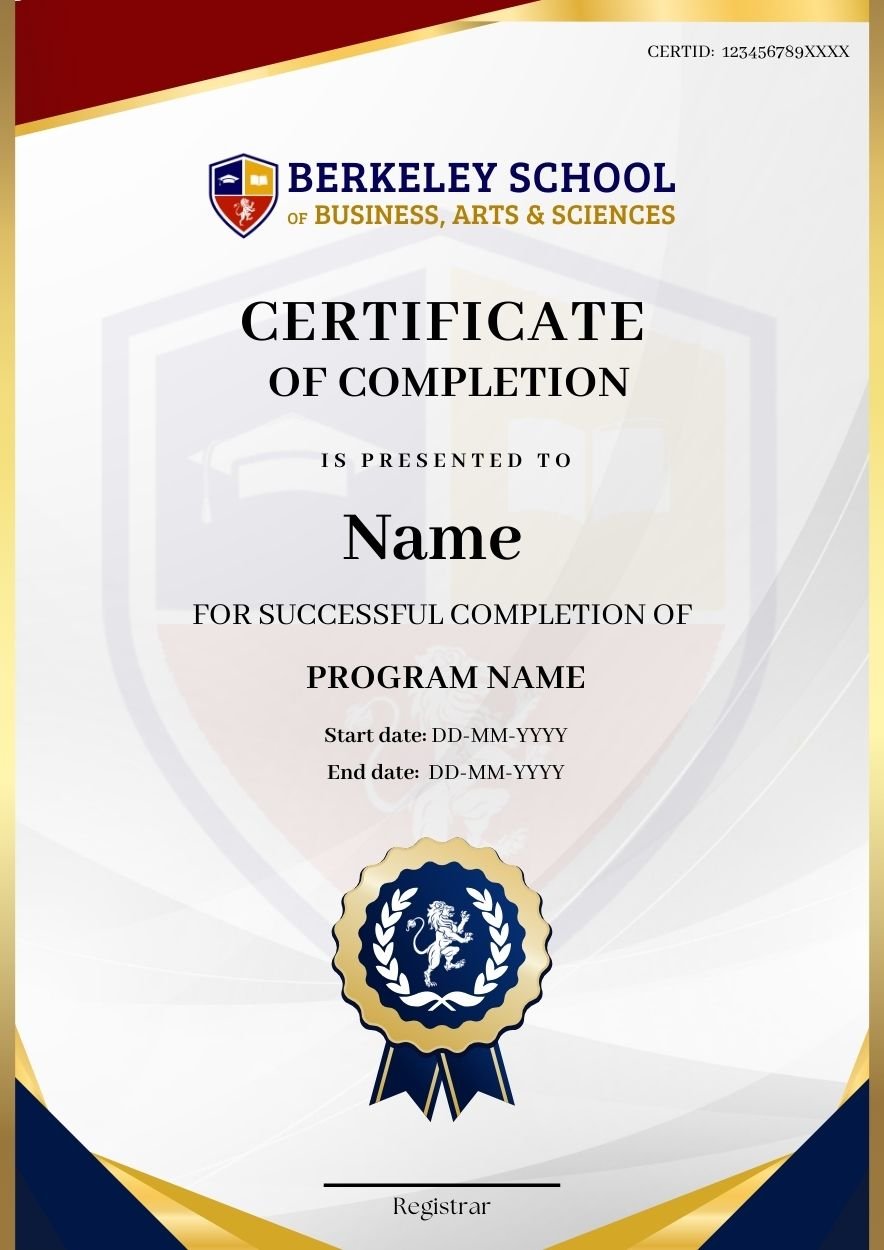
You will get a certificate of completion, which is highly reputed and accepted by employers.

In-depth Knowledge

Gain advanced knowledge in investment analysis, portfolio management, and financial markets.

Professional Network

Join a global network of investment professionals and access exclusive resources and events.

Global Credibility

Earn a globally recognized credential that enhances your professional reputation and career opportunities.

Career Advancement

Access high-level positions in finance and investment management with the CFA designation.

Ethical Standards

Adhere to the CFA Institute’s Code of Ethics and Standards of Professional Conduct, ensuring professionalism and integrity.

Related courses

CIMA Fast-Track - Chartered Institute of Management Accountants

Under the CIMA fast-track (exemption of 15 examinations out of a total of 16 examinations, depending on the candidate’s profile), candidates will sit only for the last case study exam of the CIMA qualification.

Read More
CFA – Chartered Financial Analyst (Level 1, Level 2 and Level 3)

Chartered Financial Analyst (CFA) certification is a globally recognized credential awarded by the CFA Institute, designed for finance and investment professionals aspiring to excel in areas such as portfolio management, investment analysis, and wealth management.

Read More
CAIA - Chartered Alternative Investment Analyst

The CAIA (Chartered Alternative Investment Analyst) designation is a leading certification for alternative investment professionals. It covers hedge funds, private equity, and more, symbolizing expertise in complex investment strategies.

Read More
CFA – Chartered Financial Analyst - Level 1

The CFA Level 1 exam is the first of three exams in the Chartered Financial Analyst (CFA) program. It focuses on foundational knowledge in investment management, financial reporting, ethics, and quantitative methods. The exam covers topics such as equity investments, fixed income, derivatives, alternative investments, portfolio management, and corporate finance. It emphasizes basic concepts, financial analysis, and professional ethics, serving as an entry point for aspiring finance professionals.

Read More

FAQ: CFA – Chartered Financial Analyst - Level 2

contact us for more information or to apply for admission. Seats fill up quickly, so we encourage early registration!

Cart

Cart (0)