BERKELEY SCHOOL OF BUSINESS, ARTS & SCIENCES

Certified Associate Python Programmer

The Certified Associate Python Programmer (CAPP) certification validates foundational Python skills for beginners and entry-level developers. It covers Python syntax, data types, control flow, functions, modules, file handling, and basic object-oriented programming, with no formal prerequisites required.

Overview

The Certified Associate Python Programmer (CAPP) certification validates fundamental Python programming skills for beginners, students, and entry-level developers. It covers essential topics such as syntax, data types, control structures, functions, and object-oriented programming. While no formal prerequisites are required, a basic understanding of Python is recommended. This certification helps individuals demonstrate their programming proficiency and enhance career opportunities in software development and related fields.

Offered By

GAQM  Global Association for Quality Management.

Head office

Nassau, The Bahamas.

Members

over 80,000 

What are the Objectives?

The vision of the Global Association for Quality Management (GAQM) is to be a leading global provider of certification programs that enhance the skills and careers of professionals, driving quality and innovation in organizations worldwide. Its mission is to empower individuals and organizations through globally recognized certifications, offering comprehensive, practical, and accessible learning resources, while maintaining a commitment to high standards of excellence, continuous improvement, and fostering a global community of certified professionals.

Course structure

Module 1: Python Basics & Syntax

This module introduces Python’s core concepts, including syntax, variables, data types, operators, user input, and control flow. Learners will understand how to write and execute Python programs, use conditional statements, and implement loops for efficient coding.

Module 2: Control Flow & Functions

This module covers decision-making with if-else statements, looping with for and while loops, and controlling execution flow. It also introduces functions, including defining, calling, passing arguments, using return values, lambda functions, and recursion for efficient and reusable code. 

Module 3: Data Structures & File Handling

This module covers lists, tuples, dictionaries, and sets, focusing on their operations and applications. It also introduces string manipulation techniques and file handling, including reading, writing, and managing files efficiently. Learners will develop skills to store, retrieve, and process data effectively.

Module 4: Object-Oriented Programming (OOP) in Python

This module introduces OOP principles in Python, including classes, objects, constructors (__init__), methods, inheritance, polymorphism, and encapsulation. Learners will understand how to design and implement real-world applications using Python’s object-oriented approach for scalable and modular code. 

Lecture plan

Learning Methodology

Berkeley offers expertly developed learning materials tailored to meet participants' needs, ensuring comprehensive coverage of the syllabus and optimal exam preparation.

‣ Tailored Material: Guides are designed to cover the entire syllabus, offering full preparation and deep understanding.

‣ In-Depth Content: Unlike superficial outlines, our materials provide fully developed theories and concepts, equipping participants with complete knowledge.

‣ Strategic Study: We help participants prioritize study time by indicating the weight of each topic, allowing efficient focus on crucial areas.

‣ Difficulty Levels: Topics are labeled as "Awareness" or "Proficiency," guiding participants to allocate time based on the required depth of knowledge.

‣ Comprehensive Coverage: Our materials include detailed theory and a glossary of technical terms to clarify complex concepts.

‣ Effective Learning Techniques: Visual aids and memorization techniques ensure long-lasting retention, helping candidates succeed.

Berkeley’s methodologies equip participants with the essential knowledge and tools for both exams and future success.

Lecture Image
Lectures

Our lecture plan integrates structured learning with interactive teaching methods, promoting engagement and collaboration. This approach ensures a comprehensive understanding of concepts, fostering critical thinking and practical application in real-world scenarios

Lecture Image
Practice Session

Practice sessions offer hands-on experience through guided exercises, enhancing skills and reinforcing knowledge. This practical approach ensures mastery of concepts, promoting confidence and competence in real-world applications

Lecture Image
Mock Examination

Practice sessions offer hands-on experience through guided exercises, enhancing skills and reinforcing knowledge. This practical approach ensures mastery of concepts, promoting confidence and competence in real-world applications

Berkeley's performance standards

Evaluates and ensure the quality of the training program and all its deliverables. This is measured through the following indicators:
‣ Instructors' experience and style in presenting and explaining topics.
‣ Variety and balance of teaching methods (such as discussions, case studies, mock exams, and videos) used in the course to ensure retention and to match the learning objectives.
‣ Level of interactivity.
‣ Feedback from program participants.
‣ Full compliance with Institute standards and guidelines for preparation and study requirements and methodology.
‣ Progress reports from the training program provider.

what are the Exam information?

The Certified Associate Python Programmer (CAPP) exam evaluates foundational Python programming skills. It is designed for beginners and professionals seeking to validate their expertise. 

Exam Format & Duration
  • Number of Questions: Varies, typically around 40–60 questions.
     
  • Exam Duration: 90–120 minutes (depends on the exam provider).
Exam Dates

The exam is non-proctored and can be taken anytime, anywhere, within an eight-month validity period from the date of purchase. 

Passing Criteria

Usually 70% or higher.

EXAM LOCATIONS

The Certified Associate Python Programmer (CAPP) exam is conducted online.

Success Stories

“As a strong advocate for education and human development, I commend Berkeley for its exceptional commitment to empowering future leaders. The institution stands as a symbol of excellence, innovation, and opportunity. Students who walk its halls are nurtured with knowledge, values, and vision—qualities that contribute to building a stronger and more prosperous future for our nation.”- H.H. Shaikh Khalifa Al Hamid

Visit our Alumni

Alumni Benefits

‣ Exclusive Networking Events: Access invitations to industry-leading events and thought-leadership gatherings featuring renowned speakers.


‣ Monthly Updates: Stay informed with a newsletter highlighting the latest research, events, and activities from the school.


‣ LinkedIn Community Access: Join the Executive Education LinkedIn group for networking and professional development opportunities.


‣ Educational Discounts: Enjoy a 20% discount on open-enrollment programs and access to workshops focused on emerging trends.


‣ Global Alumni Network: Connect with a diverse alumni community through the Berkeley School’s online network and engage in country and interest groups.

Is It Worth the Investment?

Python developer salaries vary significantly across different countries, influenced by factors such as experience, location, and industry demand. 

United Kingdom (UK):

  • In London, Python developers earn between £85,000 and £105,000 per year.

United States of America (USA):

  • The average annual salary for a Python developer is approximately $126,000.

United Arab Emirates (UAE):

The average annual salary for a Python developer is AED 317,567 (approximately $86,500).

Monthly salaries average around AED 5,880 (approximately $1,600).

Canada:

  • Python developers earn an average of CAD 112,919 (approximately $82,500) per year.

Saudi Arabia (KSA):

  • The average annual salary for a Python developer is SAR 243,416 (approximately $64,900).


What You Earn

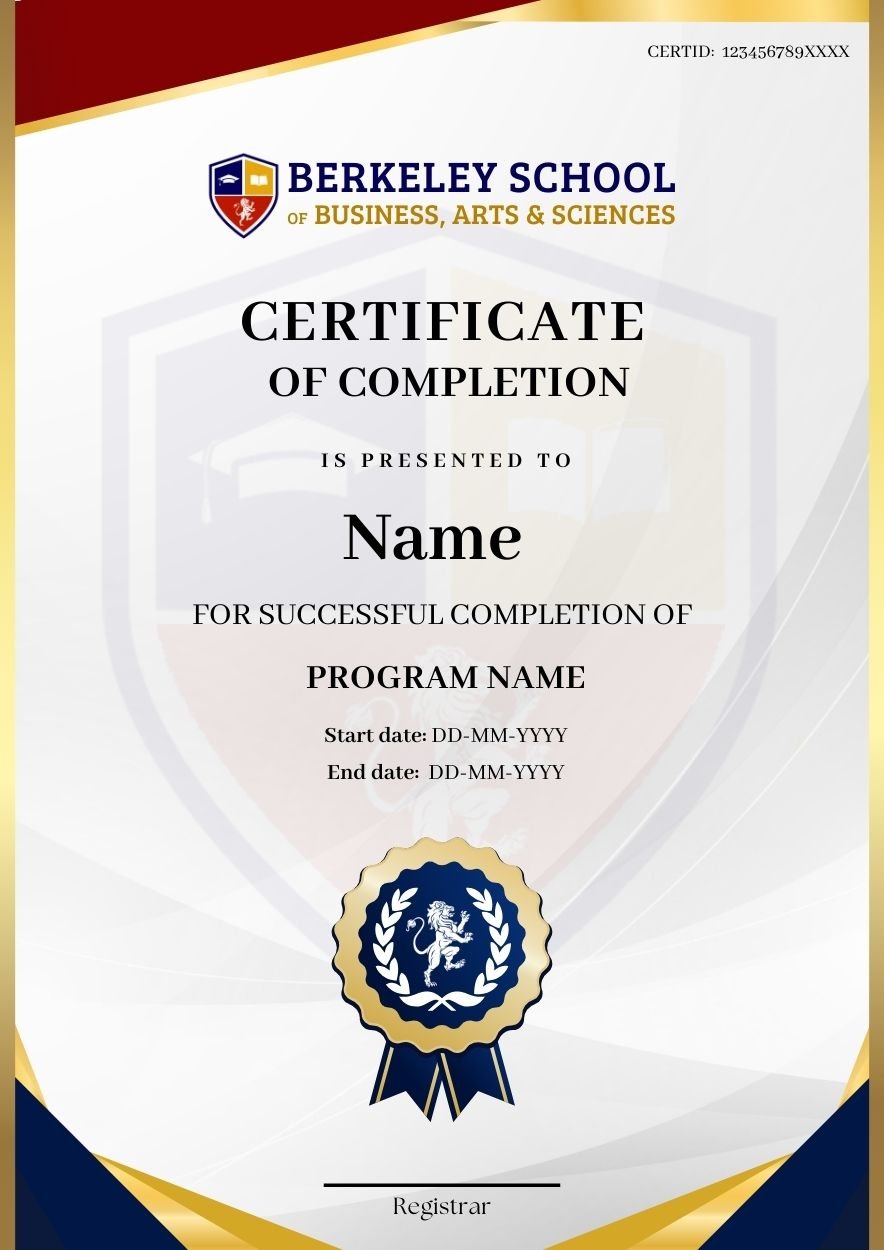
You will get a certificate of completion, which is highly reputed and accepted by employers

Industry Relevance

The CAPP certification validates essential Python skills, enhancing career opportunities in software development, data science, automation, and AI industries.

Future Trends

The future of Python programming includes advancements in AI, automation, data science, and web development, increasing demand for certified professionals.

Career Advancement

CAPP certification enhances career opportunities in Python development, data science, and automation.

Technical Skills

CAPP certification boosts career prospects in Python development, data science, automation, and software engineering.

Fundamental Knowledge

CAPP certification validates essential Python skills, including syntax, data types, control flow, functions, and OOP concepts.

Related courses

Information Technology Infrastructure Library (ITIL4)

ITIL 4 (Information Technology Infrastructure Library) is a globally recognized framework for IT service management (ITSM) that focuses on aligning IT services with business needs. It introduces a holistic, flexible, and value-driven approach to managing IT services, emphasizing collaboration, automation, and continual improvement.

Read More
Cybersecurity Nexus (CSX)

CSX (Cybersecurity Nexus) is a certification program offered by ISACA designed to help professionals develop foundational and advanced cybersecurity skills. The program provides a comprehensive understanding of cybersecurity concepts, risk management, and threat intelligence. CSX focuses on equipping professionals with the tools needed to protect information systems, address security vulnerabilities, and respond to cyber threats. The certification includes both CSX Cybersecurity Fundamentals for beginners and CSX Practitioner for more experienced professionals, covering areas such as incident response, network security, and data protection.

Read More
Certified Ethical Hacker (CEH)

The Certified Ethical Hacker (CEH) certification, offered by EC-Council, is designed for professionals seeking to enhance their skills in ethical hacking and cybersecurity. The CEH certification provides comprehensive knowledge of identifying vulnerabilities, testing, and securing IT systems from a hacker's perspective.

Read More
Computer Hacking Forensic Investigator (CHFI)

The CHFI certification validates expertise in digital forensics and cybercrime investigation, equipping professionals with the skills to detect, analyze, and respond to security incidents. It covers forensic methodologies, data recovery, evidence collection, and cyber law compliance, helping organizations investigate cyberattacks and digital fraud. CHFI is widely recognized in law enforcement, corporate security, and government agencies, making it essential for forensic analysts, security professionals, and IT auditors.

Read More

FAQ: Certified Associate Python Programmer

contact us for more information or to apply for admission. Seats fill up quickly, so we encourage early registration!

Cart

Cart (0)