BERKELEY SCHOOL OF BUSINESS, ARTS & SCIENCES

Advanced Course on IFRS S1 & S2 Sustainability Reporting Standards

The Advanced Course on IFRS S1 & S2 Sustainability Reporting Standards equips professionals with the knowledge to apply the International Sustainability Standards Board (ISSB) framework. It covers sustainability-related financial disclosures, climate-related risks and opportunities, governance, strategy, risk management, and metrics and targets, helping organizations improve transparency, accountability, and investor-focused sustainability reporting.

Advanced Course on IFRS S1 & S2 Sustainability Reporting Standards

Overview

Advanced Course on IFRS S1 & S2 Sustainability Reporting Standards

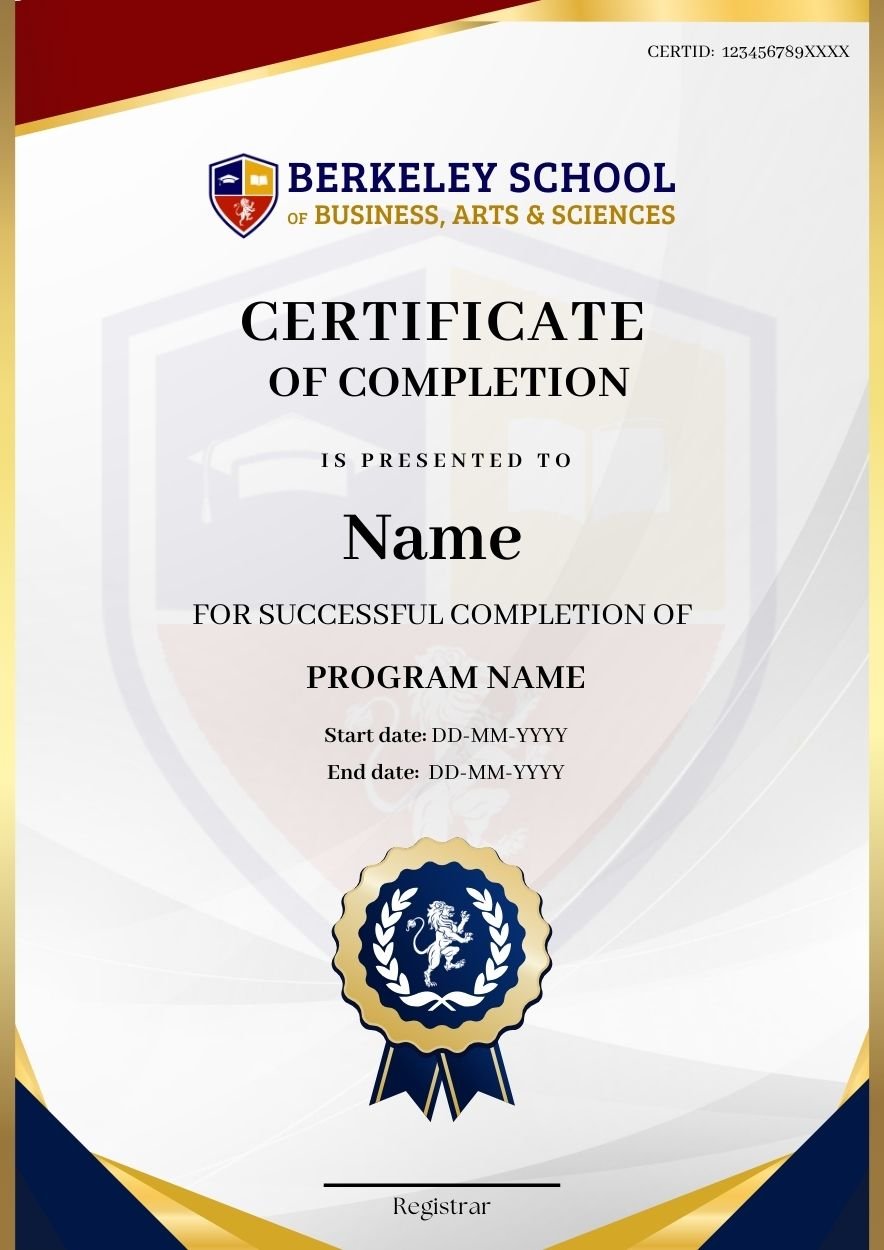
The Advanced Course on IFRS S1 & S2 Sustainability Reporting Standards develops advanced knowledge of sustainability-related financial disclosures and climate-related reporting requirements established by the International Sustainability Standards Board (ISSB). Participants explore global ESG reporting frameworks, materiality assessments, corporate governance, business strategy, risk management, sustainability metrics, and performance targets. Furthermore, the course examines climate-related risks and opportunities, greenhouse gas emissions, climate scenario analysis, transition planning, and the alignment between Global Reporting Initiative (GRI) standards and IFRS S1/S2 requirements. Through practical case studies, reporting examples, and structured learning modules, participants develop the skills to interpret disclosure requirements, strengthen reporting quality, and support transparent, investor-focused sustainability reporting. This self-paced online course requires approximately 20-25 hours to complete and provides a CPD-accredited certificate upon successful completion.

Offered By

Berkeley School of Business, Arts & Sciences

Vision & Mission

Vision

To advance global sustainability reporting by equipping professionals and organizations with the knowledge and skills to implement IFRS S1 and S2 Sustainability Reporting Standards, promoting transparency, accountability, and responsible business practices.

Mission

Our mission is to provide practical, industry-relevant education on sustainability-related financial disclosures, climate-related risks, and ESG reporting. Through structured learning and real-world applications, we aim to help professionals strengthen reporting quality, support informed investment decisions, and integrate sustainability considerations into organizational strategy, governance, and risk management.

What is the eligibility?

This course is suitable for sustainability professionals, ESG reporting specialists, finance and accounting professionals, auditors, consultants, investor relations specialists, and corporate executives involved in sustainability disclosures and financial reporting. Additionally, professionals interested in understanding IFRS S1 and S2, climate-related risks, ESG regulations, and sustainability reporting frameworks can benefit from the program. A specific academic qualification or prior work experience requirement is not stated on the official course page.

Who can do?

Who can do?
Anyone interested in developing expertise in sustainability reporting can pursue the Advanced Course on IFRS S1 & S2 Sustainability Reporting Standards to understand the following concepts:
IFRS S1 general requirements, IFRS S2 climate-related disclosures, ESG reporting frameworks, materiality assessment, sustainability governance, risk management, climate-related risks and opportunities, greenhouse gas emissions, sustainability metrics and targets, and alignment between GRI and IFRS standards. Furthermore, the course explores global ESG legislation, transition planning, and the integration of sustainability-related disclosures into corporate financial reporting..
Individuals with the following designations can benefit from this course:
Sustainability or ESG Reporting Specialist, ESG Manager or Sustainability Manager, Chartered Accountant or Financial Reporting Professional, External Auditor or Internal Auditor, Finance Manager or Financial Controller, Risk Manager or Compliance Manager, Corporate Governance Professional, Sustainability Consultant or ESG Consultant, Climate Risk Analyst, Investor Relations Professional, Chief Financial Officer (CFO) or Finance Executive, Corporate Strategy or Sustainability Reporting Analyst..

Course Structure

The course is structured into five comprehensive modules covering sustainability reporting fundamentals, global ESG legislation, IFRS S1 requirements and materiality, IFRS S2 climate-related disclosures, and alignment between GRI and IFRS sustainability standards.

Module 1: Introduction to Sustainability Reporting

Included

Sustainability & ESG Definition

Included

ESG vs Sustainability: Two Distinct Perspective

Included

What is ESG Sustainability Reporting?

Included

Purpose & Benefits of Sustainability (ESG) Reporting

Included

Components of a sustainability report

Included

Major Sustainability Reporting Standards

Included

How to Choose the Right Sustainability Reporting Standard for Your Company

Included

ESG Ratings and Investors’ Decisions

Included

ESG Reporting Trends

Module 2: Overview of IFRS Sustainability Standards and Global ESG Legislation:

Included

How ISSB Links to Other ESG Regulations

Included

IFRS S1 & S2 Timeline

Included

IFRS S1 & S2 Structure

Included

Relationship Between IFRS S1 and S2

Included

Benefits for Companies and Investors

Included

Compliance & Transition Reliefs

Included

UN Sustainable Development Goals (SDGs)

Included

Emissions Gap Report and Key Findings

Included

EU Corporate Sustainability Reporting Directive (CSRD)

Included

UK Sustainability Reporting Standards (SRS)

Included

US Climate Corporate Data Accountability Act (CCDAA)

Included

Canadian Sustainability Disclosure Standards (CSDS)

Module 3: IFRS S1 and Materiality:

Included

IFRS S1 Core Content

Included

IFRS S1 – Governance

Included

IFRS S1 – Strategy

Included

IFRS S1 – Risk Management

Included

IFRS S1 – Metrics and Targets

Included

General Requirements of IFRS S1

Included

Content Integrity

Included

High-Quality & Decision-Useful Information

Included

Selecting topics and metrics under IFRS S1

Included

Materiality in IFRS S1

Included

Materiality Assessment

Included

Steps of Materiality Assessment

Module 4: IFRS S2 and climate-related disclosures:

Included

IFRS S2 Core Content

Included

GHG Emissions in IFRS S2

Included

IFRS S2 Key Disclosures

Included

Greenhouse Gas (GHG) Targets

Included

Core content differences from IFRS S1

Included

IFRS S2 – Governance and Risk Management

Included

IFRS S2 – Strategy (Climate-related risks & opportunities)

Included

IFRS S2 – Strategy disclosures (Climate-related risks & opportunities)

Included

IFRS S2 – Strategy (Climate resilience & scenario analysis)

Included

What is Climate-related scenario analysis

Included

IFRS S2 – Metrics

Included

Cross-Industry Metrics

Included

Industry-Based Metrics

Included

IFRS S2 – Targets

Included

Amendments to IFRS S2

Module 5: GRI - IFRS S1/S2 alignment guide and next steps:

Included

Similarities between GRI and IFRS Standards

Included

Key differences

Included

Transition Plan Disclosures

Included

Adaptation Plan Disclosures

Included

Global Adoption

Included

Alignment and Interoperability

Included

Interoperability considerations for GHG emissions

Included

Mapping of requirements in GRI 305 and IFRS S2 related to GHG emissions

Included

Will the IFRS Sustainability Disclosure Standards replace the GRI Standards?

Included

Why IFRS Standards Are Becoming Mandatory While GRI Remains Largely Voluntary

Included

Why Use GRI Standards If IFRS Reporting Is Mandatory?

Lecture Plan

This course consists of five modules covering sustainability reporting fundamentals, global ESG legislation, IFRS S1 requirements and materiality, IFRS S2 climate-related disclosures, and alignment between GRI and IFRS Standards.

Learning Methodology

Berkeley offers expertly developed learning materials tailored to meet participants' needs, ensuring comprehensive coverage of the syllabus and optimal exam preparation.

‣ Tailored Material: Guides are designed to cover the entire syllabus, offering full preparation and deep understanding.

‣ In-Depth Content: Unlike superficial outlines, our materials provide fully developed theories and concepts, equipping participants with complete knowledge.

‣ Strategic Study: We help participants prioritize study time by indicating the weight of each topic, allowing efficient focus on crucial areas.

‣ Difficulty Levels: Topics are labeled as "Awareness" or "Proficiency," guiding participants to allocate time based on the required depth of knowledge.

‣ Comprehensive Coverage: Our materials include detailed theory and a glossary of technical terms to clarify complex concepts.

‣ Effective Learning Techniques: Visual aids and memorization techniques ensure long-lasting retention, helping candidates succeed.

Berkeley’s methodologies equip participants with the essential knowledge and tools for both exams and future success.

Lectures
Lectures

Our lecture plan integrates structured learning with interactive teaching methods, promoting engagement and collaboration. This approach ensures a comprehensive understanding of concepts, fostering critical thinking and practical application in real-world scenarios

Practice Session
Practice Session

Practice sessions offer hands-on experience through guided exercises, enhancing skills and reinforcing knowledge. This practical approach ensures mastery of concepts, promoting confidence and competence in real-world applications

Mock Examination
Mock Examination

Mock examinations simulate real test conditions, providing valuable practice and assessment. This helps identify strengths and weaknesses, ensuring thorough preparation and boosting confidence for actual exams

Berkeley Middle East Performance Standards

Evaluates and ensure the quality of the training program and all its deliverables.  This is measured through the following indicators:
‣ Instructors' experience and style in presenting and explaining topics.
‣ Variety and balance of teaching methods (such as discussions, case studies, mock exams and videos) used in the course to ensure retention and to match the learning objectives.
‣ Level of interactivity.
‣ Feedback from program participants
‣ Full compliance with Institute standards and guidelines for preparation and study requirements and methodology.
‣ Progress reports from the training program provider.

What are the Exam Information?

Advanced Course on IFRS S1 & S2 Sustainability Reporting Standards

The Advanced Course on IFRS S1 & S2 Sustainability Reporting Standards assesses participants through a final multiple-choice quiz and a practical assignment. Both assessments must be passed to receive the course certificate.

Exam Format & Duration

The course is self-paced and delivered entirely online, requiring approximately 20 to 25 hours to complete. The final quiz consists of multiple-choice questions, with results calculated immediately. Additionally, the final assignment includes open-ended questions evaluated by the training team on a pass-or-fail basis. The provider does not specify a fixed examination duration or a formal examination schedule.

Exam Dates

There are no fixed examination sessions specified for this course. Instead, participants can study flexibly and complete the assessments through the online learning platform within the course access period, which is generally 45 days.

Passing Criteria

Participants must successfully pass both the final quiz and the final assignment to earn the certificate. The provider permits two attempts at the final quiz; however, participants who fail the second attempt should contact the training team for further guidance.

Exam Locations

The course and its assessments are conducted online. Therefore, participants can study and complete the assessments remotely through the learning platform, subject to the provider's access and registration requirements.

Dubai
Abu Dhabi
Sharjah
Ajman
Ras Al Khaimah
Riyadh
Jeddah
Dammam
Makkah
Madinah
Khobar
Doha
Kuwait City
Muscat
Manama
London
Birmingham
Success Stories

Success Stories

“As a strong advocate for education and human development, I commend Berkeley for its exceptional commitment to empowering future leaders. The institution stands as a symbol of excellence, innovation, and opportunity. Students who walk its halls are nurtured with knowledge, values, and vision—qualities that contribute to building a stronger and more prosperous future for our nation.”

- H.H. Shaikh Khalifa Al Hamid

Alumni Benefits

‣ Exclusive Networking Events: Access invitations to industry-leading events and thought-leadership gatherings featuring renowned speakers.


‣ Monthly Updates: Stay informed with a newsletter highlighting the latest research, events, and activities from the school.


‣ LinkedIn Community Access: Join the Executive Education LinkedIn group for networking and professional development opportunities.


‣ Educational Discounts: Enjoy a 20% discount on open-enrollment programs and access to workshops focused on emerging trends.


‣ Global Alumni Network: Connect with a diverse alumni community through the Berkeley School’s online network and engage in country and interest groups.

Visit Our Alumni

Is It Worth the Investment?

The Advanced Course on IFRS S1 & S2 Sustainability Reporting Standards builds knowledge of ESG reporting, sustainability disclosures, and climate-related risks. It can support career development in finance, auditing, risk management, and sustainability compliance. Overall, it is a valuable option for professionals seeking to strengthen their expertise in sustainability reporting and meet evolving industry requirements.

Career path

Progression Route:

The Advanced Course on IFRS S1 & S2 Sustainability Reporting Standards can support progression into sustainability reporting, ESG management, climate risk analysis, financial reporting, auditing, and regulatory compliance. Building on this knowledge, professionals may pursue advanced training in sustainability reporting, ESG assurance, corporate governance, climate risk management, and sustainable finance. Furthermore, the skills gained can complement existing qualifications in accounting, finance, auditing, and risk management, helping professionals develop expertise aligned with evolving organizational sustainability disclosure requirements.

What You Earn

Learn IFRS S1 and S2 standards, ESG reporting, sustainability disclosures, and climate-related risks to strengthen your professional expertise.

What You Earn

IFRS S1 Standards

Explore IFRS S1 requirements for sustainability-related financial disclosures, focusing on governance, strategy, risk management, materiality assessments, metrics, and targets.

Global ESG Frameworks

Examine the relationship between IFRS Sustainability Disclosure Standards and global ESG regulations, including the EU CSRD, UK Sustainability Reporting Standards, and GRI Standards.

Professional Development

Develop knowledge relevant to sustainability reporting, financial disclosures, risk management, and compliance to support your professional growth in ESG and corporate sustainability.

Climate Disclosures

Learn how IFRS S2 addresses climate-related risks and opportunities, greenhouse gas emissions, climate resilience, scenario analysis, and climate-related metrics and targets.

Related courses

ACCA DipIFR – Diploma in International Financial Reporting Standards

The ACCA DipIFR develops practical expertise in IFRS principles and financial reporting, enabling finance and accounting professionals to prepare and interpret accurate financial statements and support global reporting compliance.

Read More
Certified CFO Program

The certified CFO program aims at transforming senior executives into thoughtful business & financial leaders. Berkeley’s world-class, comprehensive general management programs are designed to accelerate your effectiveness not as a manager but as a leader, by value addition in strategic and management levels.

Read More
Level 7 Diploma in Accounting and Finance

The Level 7 Diploma in Accounting and Finance is an accredited vocational qualification (RQF 603/0723/7) worth 120 credits. It is specifically designed for senior and middle managers and accountants to enhance their ability to run businesses and progress to higher leadership levels within their organizations.
 

Read More
ISO 14001 – Environmental Management Systems (EMS)

ISO 14001 is an internationally recognized standard for Environmental Management Systems (EMS), developed by the International Organization for Standardization (ISO). It provides a structured framework for organizations to manage their environmental responsibilities, improve sustainability, and comply with legal requirements.

Read More
Data Governance, Protection and Compliance Management

Data Governance, Protection, and Compliance Management ensure the secure, ethical, and lawful use of organizational data. Moreover, they promote data quality, strengthen security, reduce risks, and support regulatory compliance, enabling organizations to manage data responsibly and effectively.

Read More
Certificate in International Financial Reporting Standards

The Certificate in International Financial Reporting Standards equips finance professionals with practical knowledge of international accounting standards. Moreover, it strengthens financial reporting, compliance, and analytical skills, while also supporting global career mobility.

Read More
Certificate in Compliance

The Certificate in Compliance is an internationally recognized qualification designed to equip individuals with a foundational understanding of regulatory compliance and risk management in financial services. This course provides essential knowledge of compliance frameworks, regulatory environments, and the role of compliance in maintaining ethical standards and preventing financial crime.

Read More
Women in ESG Sustainability Social Impact

The Women in ESG, Sustainability & Social Impact program develops practical expertise in ESG principles, sustainability strategies, ethical leadership, and responsible business practices. Participants learn to drive sustainable development and meaningful social impact.

Read More
ISO 14001 Lead Auditor

The ISO 14001 Lead Auditor course develops practical skills in planning, conducting, reporting, and following up environmental management system audits. Participants learn audit planning, evidence collection, findings evaluation, reporting, and risk-based auditing in line with ISO 14001:2026 and ISO 19011:2026 guidelines.

Read More
Corporate Finance

Develop practical expertise in financial decision-making, capital budgeting, business valuation, funding strategies, and working-capital management. Additionally, learn how to evaluate investments, optimize capital structure, and assess financial risks. Furthermore, apply these skills to real-world business scenarios. As a result, you will be better equipped to support sustainable business growth and make informed financial decisions.

Read More
Certified Chief Compliance Officer

Certified Chief Compliance Officer (CCCO) is an executive certification for professionals leading corporate compliance, governance, ethics, and regulatory risk management. It develops practical skills in compliance frameworks, regulatory obligations, internal controls, and ethical business practices.

Read More
ESG Reporting

Gain practical expertise in Environmental, Social, and Governance (ESG) reporting, sustainability frameworks, regulatory compliance, materiality assessment, and ESG disclosure standards. Learn to prepare transparent ESG reports, measure sustainability performance, manage ESG risks, and support responsible business practices aligned with global reporting frameworks and stakeholder expectations.

Read More
CIMA F1: Financial Reporting

CIMA F1: Financial Reporting develops a foundation in financial statements, taxation, cash and working capital. Learn to connect reporting rules with the information a business needs.

Read More
ACCA Strategic Business Reporting (SBR)

Study Strategic Business Reporting with ACCA SBR. Apply reporting principles, assess ethical choices and explain financial statements. Then connect technical accounting knowledge with clear judgement about business performance.

Read More

Frequently Asked Questions?

Contact Us 

Facebook Twitter Instagram Linkedin Youtube Tiktok
Cart

Cart (0)