Develop the knowledge and practical skills required to plan, conduct, report, and follow up environmental management system audits against ISO 14001:2026 using ISO 19011:2026 auditing guidelines. Throughout the course, participants learn internationally recognised auditing principles and best practices for environmental management systems. In addition, they develop the ability to plan audits, collect objective evidence, evaluate audit findings, and prepare professional audit reports. Furthermore, the programme strengthens communication, analytical, and decision-making skills needed for effective auditing. As a result, learners gain the competence and confidence to perform first-party, second-party, and third-party environmental management system audits in accordance with ISO 14001:2026 and ISO 19011:2026 guidance.
The ISO 14001:2026 Lead Auditor course prepares professionals to lead first-, second-, and third-party environmental management system audits. Throughout the course, participants learn to interpret EMS requirements, evaluate environmental aspects and impacts, assess compliance obligations, and identify environmental risks and opportunities. In addition, the program covers audit principles, audit program planning, evidence collection, interviewing techniques, audit findings, nonconformity reporting, corrective action follow-up, and audit team leadership. Furthermore, practical exercises, case studies, and simulated audits enable learners to apply internationally recognised auditing practices in realistic organisational settings. As a result, participants develop the competence and confidence to plan, conduct, lead, and report effective environmental management system audits in accordance with ISO 14001:2026 requirements.
| Feature | Details |
|---|---|
| Standard | ISO 14001:2015 – Environmental Management Systems (EMS) |
| Delivery Mode | Classroom, Live Online, or Blended Learning |
| Assessment | Continuous assessment and/or written examination, depending on the approved training provider |
| Suitable For | Environmental Managers, EMS Professionals, Internal Auditors, Compliance Officers, Consultants, and Management System Practitioners |
| Key Learning Areas | ISO 14001:2015 requirements, audit planning, audit execution, evidence collection, nonconformity reporting, corrective actions, and audit program management |
| Career Opportunities | Lead Auditor, Internal Auditor, Environmental Manager, EMS Consultant, Compliance Manager, and Sustainability Professional |
Berkeley School of Business, Arts & Sciences
Our vision is to develop competent, ethical, and environmentally responsible audit leaders who help organizations achieve sustainable performance and continual improvement. To achieve this, our mission is to provide practical, standards-aligned training that enables learners to interpret ISO 14001:2026 requirements and apply ISO 19011:2026 auditing principles effectively. Furthermore, the program develops the skills needed to plan, lead, conduct, and report environmental management system audits while evaluating audit evidence and identifying nonconformities objectively. As a result, participants are equipped to support meaningful corrective actions, strengthen environmental compliance, and drive continual improvement across organizations.
Introduces environmental management systems, the purpose of ISO 14001:2026 and the responsibilities of an EMS lead auditor.
Environmental Management Principles and Benefits
Structure and Purpose of ISO 14001:2026
Essential Environmental Terms and Concepts
EMS Certification, Audit Types and Auditor Roles
Explores how organizations establish an EMS by assessing their context, stakeholder expectations, leadership responsibilities and system boundaries.
Internal and External Environmental Issues
Interested Parties and Relevant Requirements
Defining the EMS Scope and Processes
Leadership, Environmental Policy and Responsibilities
Examines environmental aspects, compliance obligations, risks, opportunities and measurable environmental objectives.
Environmental Aspects and Impact Evaluation
Compliance Obligations and Regulatory Requirements
Environmental Risks, Opportunities and Life-Cycle Thinking
Objectives, Performance Indicators and Action Plans
Covers the resources, competence, communication, documentation and operational controls needed to maintain an effective EMS.
Resources, Competence and Employee Awareness
Internal and External Environmental Communication
Control of Documented Information
Operational Control and Emergency Preparedness
Explains how organizations monitor environmental performance, evaluate compliance and continually improve their EMS.
Monitoring, Measurement, Analysis and Evaluation
Evaluation of Environmental Compliance
Internal Audits and Management Reviews
Nonconformities, Corrective Action and Improvement
Introduces the principles and professional practices used to conduct credible management-system audits in accordance with ISO 19011:2026.
Auditing Principles and Professional Conduct
First-Party Audits, Second-Party Audits and Third-Party Audits
Auditor Competence, Independence and Confidentiality
Risk-Based Audit Programme Management
Develops the skills required to establish audit objectives, review documentation and prepare an effective audit plan.
Audit Objectives, Scope and Criteria
Preliminary Information and Document Review
Audit Plans, Sampling Methods and Audit Trails
Checklists, Working Papers and Team Responsibilities
Provides practical guidance for gathering evidence, communicating with auditees and managing an EMS audit team.
Opening Meetings and Audit Communication
Interviews, Observation and Evidence Collection
Evaluating Conformity and Developing Audit Trails
Managing the Audit Team, Time and Difficult Situations
Explains how to evaluate evidence, document findings, report audit conclusions and review corrective actions.
Conformities, Nonconformities and Observations
Writing Clear, Evidence-Based Audit Findings
Closing Meetings and Final Audit Reports
Corrective-Action Verification and Audit Follow-Up
Integrates course knowledge through a realistic audit simulation in which learners plan, lead, report and follow up an EMS audit.
Environmental Audit Case-Study Planning
Simulated Audit and Team Leadership
Audit Reporting and Corrective-Action Review
Final Assessment, Feedback and Development Planning
Berkeley offers expertly developed learning materials tailored to meet participants' needs, ensuring comprehensive coverage of the syllabus and optimal exam preparation.
‣ Tailored Material: Guides are designed to cover the entire syllabus, offering full preparation and deep understanding.
‣ In-Depth Content: Unlike superficial outlines, our materials provide fully developed theories and concepts, equipping participants with complete knowledge.
‣ Strategic Study: We help participants prioritize study time by indicating the weight of each topic, allowing efficient focus on crucial areas.
‣ Difficulty Levels: Topics are labeled as "Awareness" or "Proficiency," guiding participants to allocate time based on the required depth of knowledge.
‣ Comprehensive Coverage: Our materials include detailed theory and a glossary of technical terms to clarify complex concepts.
‣ Effective Learning Techniques: Visual aids and memorization techniques ensure long-lasting retention, helping candidates succeed.
Berkeley’s methodologies equip participants with the essential knowledge and tools for both exams and future success.
Our lecture plan integrates structured learning with interactive teaching methods, promoting engagement and collaboration. This approach ensures a comprehensive understanding of concepts, fostering critical thinking and practical application in real-world scenarios.
Practice sessions offer hands-on experience through guided exercises, enhancing skills and reinforcing knowledge. This practical approach ensures mastery of concepts, promoting.
Mock examinations simulate real test conditions, providing valuable practice and assessment. This helps identify strengths and weaknesses, ensuring thorough preparation and boosting confidence for actual exams.
Evaluates and ensure the quality of the training program and all its deliverables. This is measured through the following indicators:
‣ Instructors' experience and style in presenting and explaining topics.
‣ Variety and balance of teaching methods (such as discussions, case studies, mock exams and videos) used in the course to ensure retention and to match the learning objectives.
‣ Level of interactivity.
‣ Feedback from program participants
‣ Full compliance with Institute standards and guidelines for preparation and study requirements and methodology.
‣ Progress reports from the training program provider.
The PECB ISO 14001 Lead Auditor examination evaluates candidates’ knowledge of environmental management systems, ISO 14001 requirements, auditing principles, audit preparation, audit execution, reporting, follow-up activities and audit program management.
The open-book examination contains 80 stand-alone and scenario-based multiple-choice questions. It may be taken online under remote supervision or as a paper-based examination at an authorized PECB partner location.
Online examinations can be scheduled through the PECB examination platform. Paper-based examination dates are arranged through authorized training partners and depend on local availability.
There is no universal fixed registration deadline. Candidates should register before their selected session closes. The included examination and free-retake cycle must generally be completed within 12 months of course completion or purchase, depending on the delivery method.
Candidates must achieve at least 70% to pass. Passing the examination allows candidates to apply for an appropriate PECB credential. Professional experience and EMS auditing requirements must also be fulfilled to receive the Lead Auditor designation.
Candidates may take the examination remotely from eligible locations worldwide or attend a supervised paper-based examination at an authorized PECB partner venue.
“As a strong advocate for education and human development, I commend Berkeley for its exceptional commitment to empowering future leaders. The institution stands as a symbol of excellence, innovation, and opportunity. Students who walk its halls are nurtured with knowledge, values, and vision, qualities that contribute to building a stronger and more prosperous future for our nation.”- H.H. Shaikh Khalifa Al Hamid
Alumni Benefits
‣ Exclusive Networking Events: Access invitations to industry-leading events and thought-leadership gatherings featuring renowned speakers.
‣ Monthly Updates: Stay informed with a newsletter highlighting the latest research, events, and activities from the school.
‣ LinkedIn Community Access: Join the Executive Education LinkedIn group for networking and professional development opportunities.
‣ Educational Discounts: Enjoy a 20% discount on open-enrollment programs and access to workshops focused on emerging trends.
‣ Global Alumni Network: Connect with a diverse alumni community through the Berkeley School’s online network and engage in country and interest groups.
Completing the ISO 14001 Lead Auditor course develops practical expertise in planning, conducting, reporting, and following up environmental management system audits. Participants learn to interpret ISO 14001 requirements, apply ISO 19011 auditing guidance, evaluate environmental performance and compliance, identify nonconformities, lead audit teams, and recommend corrective actions. These skills are valuable across manufacturing, construction, energy, oil and gas, logistics, healthcare, consulting, and public-sector organizations. The course supports careers such as Environmental Auditor, ISO 14001 Lead Auditor, EMS Manager, Environmental Consultant, HSE Manager, Sustainability Manager, and Compliance Manager. ISO 14001 establishes EMS requirements, while ISO 19011:2026 provides management-system auditing guidance.
United Kingdom: GBP 20,000–GBP 50,000+
United States: USD 50,000–USD 117,000
United Arab Emirates: AED 96,000–AED 360,000
Canada: CAD 50,000–CAD 128,000
Saudi Arabia: SAR 96,000–SAR 312,000
After completing the course and passing the examination, candidates may apply for the PECB ISO 14001 Provisional Auditor, Auditor, Lead Auditor or Senior Lead Auditor credential, depending on their professional experience and EMS audit hours. Learners can also progress into environmental auditing, EMS management, HSE, compliance, sustainability and consulting roles or pursue further training in ISO 14001 Lead Implementer, ISO 45001, ISO 9001 and integrated management systems.
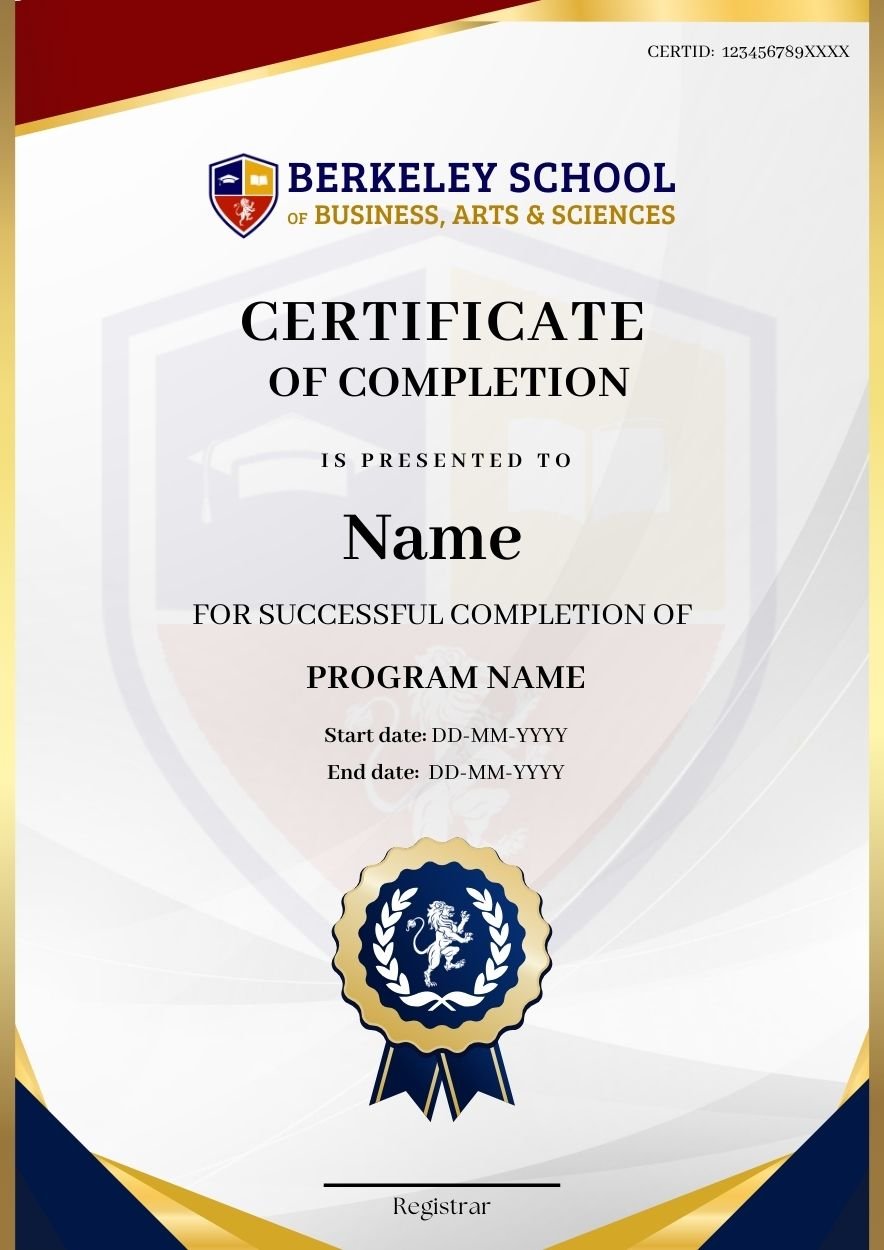
You will get a certificate of completion, which is highly reputed and accepted by employers
Build the leadership and communication skills required to manage audit teams, meetings and stakeholder interactions.
Gain knowledge aligned with the PECB ISO 14001 Lead Auditor examination domains and certification pathway.
Pursue opportunities in environmental auditing, EMS management, HSE, sustainability, compliance and consulting.
Contact Us