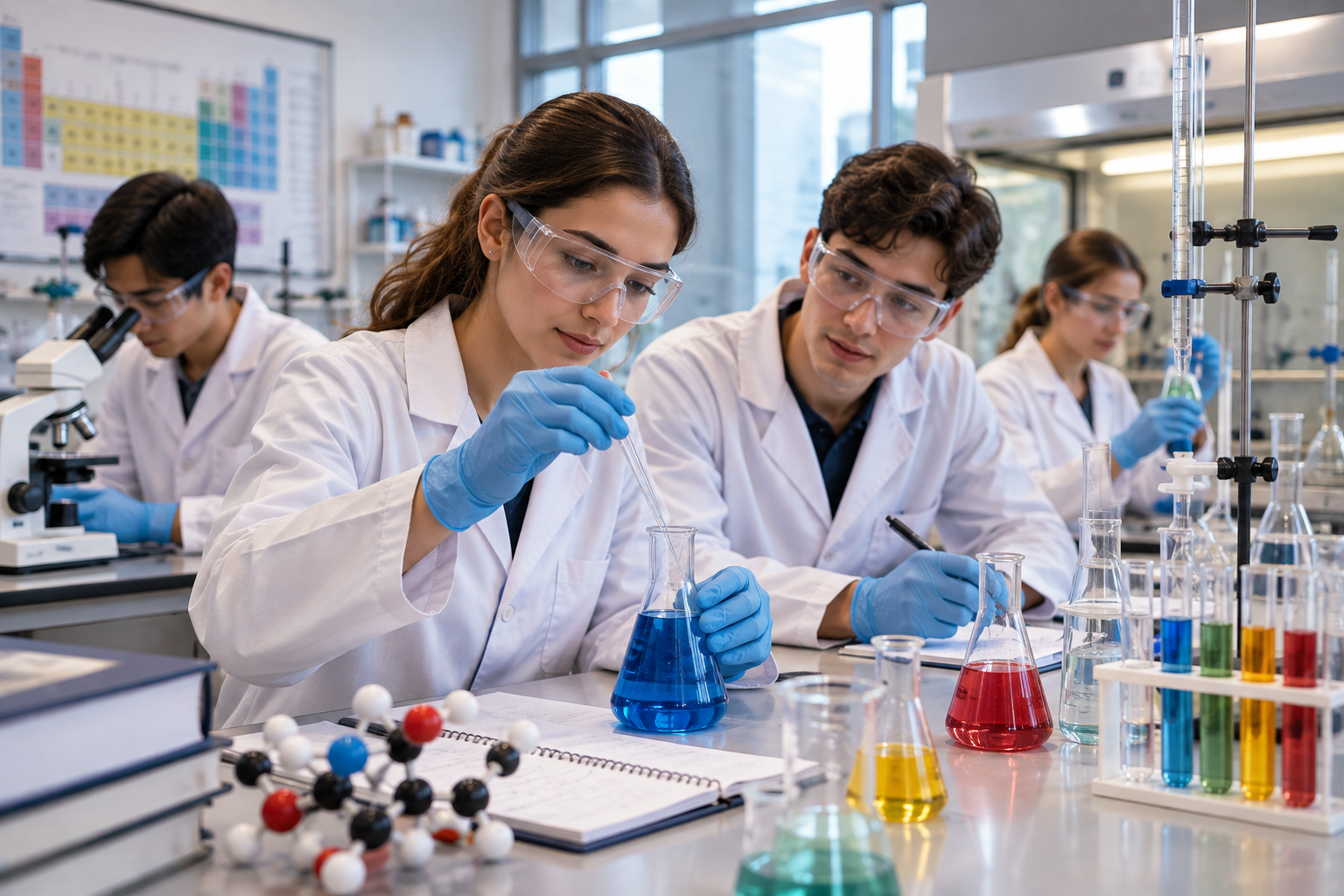
Cambridge International AS & A Level Chemistry develops advanced scientific knowledge, analytical reasoning, laboratory competency, and problem-solving skills aligned with international academic standards. The programme covers organic, inorganic, physical, and analytical chemistry through structured learning, practical application, and exam-focused preparation designed for university progression in medicine, pharmacy, engineering, and science-related fields.
Cambridge International AS & A Level Chemistry is an internationally recognized programme that emphasizes experimental investigation, scientific interpretation, quantitative analysis, and evidence-based learning through structured practical applications and laboratory assessments. The programme strengthens understanding of organic, inorganic, and physical chemistry while developing critical thinking, research, and analytical evaluation skills.Through flexible online and classroom learning, structured practical applications, and laboratory assessments.
Berkeley School of Business, Arts & Sciences
To provide internationally aligned A Level Chemistry education that develops scientific knowledge, analytical thinking, laboratory competency, and research-based learning for future academic and professional success. The programme aims to prepare learners for university progression in medicine, pharmacy, engineering, biomedical sciences, environmental science, and other STEM-related disciplines through high-quality academic instruction, practical applications, and globally recognized educational standards.
Students seeking admission to the A Level Chemistry programme should have successfully completed IGCSE, O Level, GCSE, or an equivalent secondary education qualification with a foundational understanding of Chemistry, Mathematics, and related science subjects. Cambridge International AS & A Level Chemistry is suitable for learners aiming to pursue higher education in Medicine, Pharmacy, Engineering, Biotechnology, Biomedical Sciences, Environmental Science, and other STEM-related disciplines at internationally recognized universities.
Physical Chemistry explores the principles and theories governing chemical reactions, molecular interactions, energy transformations, and equilibrium systems. This module connects chemistry with physics to develop analytical and quantitative problem-solving skills essential for advanced chemical studies and laboratory applications.
Atomic Structure and Mole Concept
Chemical Bonding and Intermolecular Forces
States of Matter and Gas Laws
Thermochemistry and Energetics
Reaction Rates and Chemical Kinetics
Chemical Equilibrium and Le Chatelier’s Principle
Acids, Bases, and pH Calculations
Electrochemistry and Redox Reactions
Thermodynamics and Energy Changes
Practical Calculations and Laboratory Applications
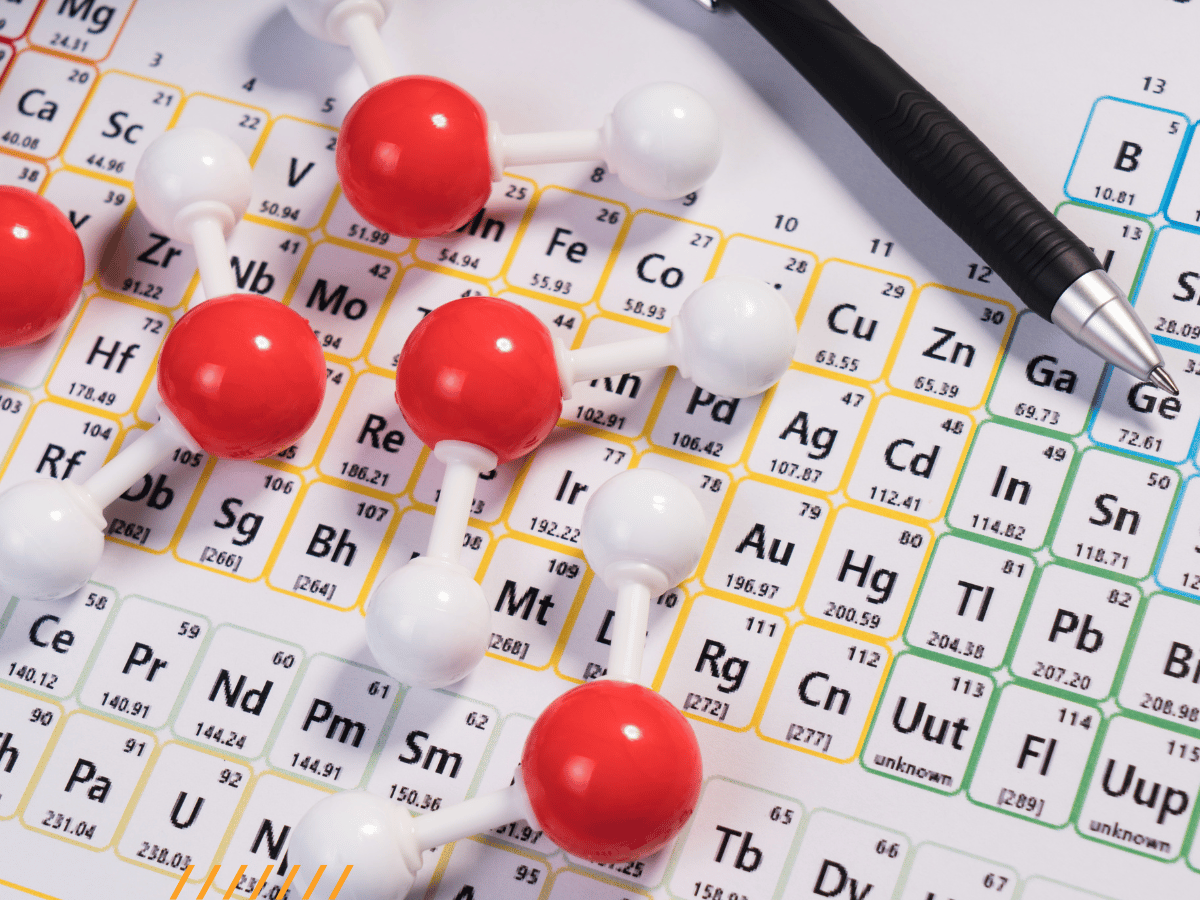
Inorganic Chemistry focuses on the properties, structure, reactions, and applications of inorganic compounds including metals, minerals, salts, and coordination compounds. This module develops an understanding of periodicity, chemical reactivity, transition elements, and industrial chemical processes essential in modern chemistry and materials science.
Periodic Table and Periodicity
Group Trends and Chemical Properties
Properties of Alkali and Alkaline Earth Metals
Halogens and Noble Gases
Transition Metals and Coordination Chemistry
Oxidation States and Redox Reactions
Ionic Compounds and Crystal Structures
Industrial Inorganic Processes
Qualitative Analysis of Inorganic Compounds
Applications of Inorganic Chemistry in Industry and Medicine
Organic Chemistry examines the structure, properties, reactions, and synthesis of carbon-containing compounds. This module develops a strong understanding of hydrocarbons, functional groups, reaction mechanisms, and organic synthesis techniques widely used in pharmaceuticals, biotechnology, polymers, and industrial chemistry.
Introduction to Organic Compounds and Nomenclature
Hydrocarbons: Alkanes, Alkenes, and Alkynes
Functional Groups and Organic Reactions
Isomerism and Stereochemistry
Reaction Mechanisms and Catalysis
Aromatic Compounds and Benzene Chemistry
Alcohols, Aldehydes, Ketones, and Carboxylic Acids
Polymers and Macromolecules
Organic Synthesis and Laboratory Techniques
Applications of Organic Chemistry in Pharmaceuticals and Industry
Analytical Chemistry focuses on the identification, separation, and quantitative measurement of chemical substances. This module develops practical laboratory skills and analytical techniques used in quality control, environmental monitoring, pharmaceuticals, research, and clinical diagnostics.
Introduction to Analytical Chemistry
Qualitative and Quantitative Analysis
Chromatography Techniques
Spectroscopy and Instrumental Analysis
Titration and Volumetric Analysis
Gravimetric and Electrochemical Methods
Data Interpretation and Error Analysis
Laboratory Safety and Good Laboratory Practice (GLP)
Analytical Applications in Environmental and Clinical Chemistry
Practical Laboratory Experiments and Reporting
Berkeley offers expertly developed learning materials tailored to meet participants' needs, ensuring comprehensive coverage of the syllabus and optimal exam preparation.
‣ Tailored Material: Guides are designed to cover the entire syllabus, offering full preparation and deep understanding.
‣ In-Depth Content: Unlike superficial outlines, our materials provide fully developed theories and concepts, equipping participants with complete knowledge.
‣ Strategic Study: We help participants prioritize study time by indicating the weight of each topic, allowing efficient focus on crucial areas.
‣ Difficulty Levels: Topics are labeled as "Awareness" or "Proficiency," guiding participants to allocate time based on the required depth of knowledge.
‣ Comprehensive Coverage: Our materials include detailed theory and a glossary of technical terms to clarify complex concepts.
‣ Effective Learning Techniques: Visual aids and memorization techniques ensure long-lasting retention, helping candidates succeed.
Berkeley’s methodologies equip participants with the essential knowledge and tools for both exams and future success.
Our lecture plan integrates structured learning with interactive teaching methods, promoting engagement and collaboration. This approach ensures a comprehensive understanding of concepts, fostering critical thinking and practical application in real-world scenarios.
Practice sessions offer hands-on experience through guided exercises, enhancing skills and reinforcing knowledge. This practical approach ensures mastery of concepts, promoting.
Mock examinations simulate real test conditions, providing valuable practice and assessment. This helps identify strengths and weaknesses, ensuring thorough preparation and boosting confidence for actual exams.
Evaluates and ensure the quality of the training program and all its deliverables. This is measured through the following indicators:
‣ Instructors' experience and style in presenting and explaining topics.
‣ Variety and balance of teaching methods (such as discussions, case studies, mock exams, and videos) used in the course to ensure retention and to match the learning objectives.
‣ Level of interactivity.
‣ Feedback from program participants.
‣ Full compliance with Institute standards and guidelines for preparation and study requirements and methodology.
‣ Progress reports from the training program provider.
| Paper | Format | Duration | Marks | Assessment Focus | Assessment Type |
|---|---|---|---|---|---|
| Paper 1 | Multiple choice questions | 1 hour 15 minutes | 40 marks | Cambridge International AS Level Chemistry syllabus content | Externally assessed |
| Paper 2 | Structured written questions | 1 hour 15 minutes | 60 marks | Core AS Level Chemistry concepts and scientific analysis | Externally assessed |
| Paper 3 | Practical laboratory assessment and structured questions | 2 hours | 40 marks | Experimental techniques, laboratory competency, practical scientific investigation, and analytical skills | Externally assessed |
| Paper 4 | Advanced structured written questions | 2 hours | 100 marks | Full A Level Chemistry syllabus including AS Level knowledge, critical thinking, and advanced scientific application | Externally assessed |
| Paper 5 | Planning, analysis, and evaluation-based questions | 1 hour 15 minutes | 30 marks | Experimental planning, data interpretation, scientific evaluation, and evidence-based analysis | Externally assessed |
Cambridge International AS & A Level Chemistry examinations are typically conducted in multiple examination series throughout the academic year. Students are advised to confirm official examination schedules, session availability, and registration timelines with the academic administration team.
Students are assessed through externally evaluated written and practical examinations. Final grades are awarded based on overall performance across the required Cambridge International AS & A Level Chemistry assessment components in accordance with official grading standards.
Cambridge International AS & A Level Chemistry examinations may be conducted at approved examination centers and authorized academic partner locations, subject to examination session availability.
“As a strong advocate for education and human development, I commend Berkeley for its exceptional commitment to empowering future leaders. The institution stands as a symbol of excellence, innovation, and opportunity. Students who walk its halls are nurtured with knowledge, values, and vision—qualities that contribute to building a stronger and more prosperous future for our nation.”- H.H. Shaikh Khalifa Al Hamid
‣ Exclusive Networking Events: Access invitations to industry-leading events and thought-leadership gatherings featuring renowned speakers.
‣ Monthly Updates: Stay informed with a newsletter highlighting the latest research, events, and activities from the school.
‣ LinkedIn Community Access: Join the Executive Education LinkedIn group for networking and professional development opportunities.
‣ Educational Discounts: Enjoy a 20% discount on open-enrollment programs and access to workshops focused on emerging trends.
‣ Global Alumni Network: Connect with a diverse alumni community through the Berkeley School’s online network and engage in country and interest groups.
Students completing Cambridge International AS & A Level Chemistry may pursue higher education and career pathways in Medicine, Pharmacy, Chemical Engineering, Biotechnology, Biomedical Sciences, Environmental Science, and scientific research fields.
Strong global demand exists across healthcare, pharmaceuticals, laboratory sciences, engineering, biotechnology, and industrial sectors.
International progression opportunities include:
A Level Chemistry provides an internationally recognized academic foundation that supports long-term progression in science, healthcare, engineering, research, and technology-driven careers.