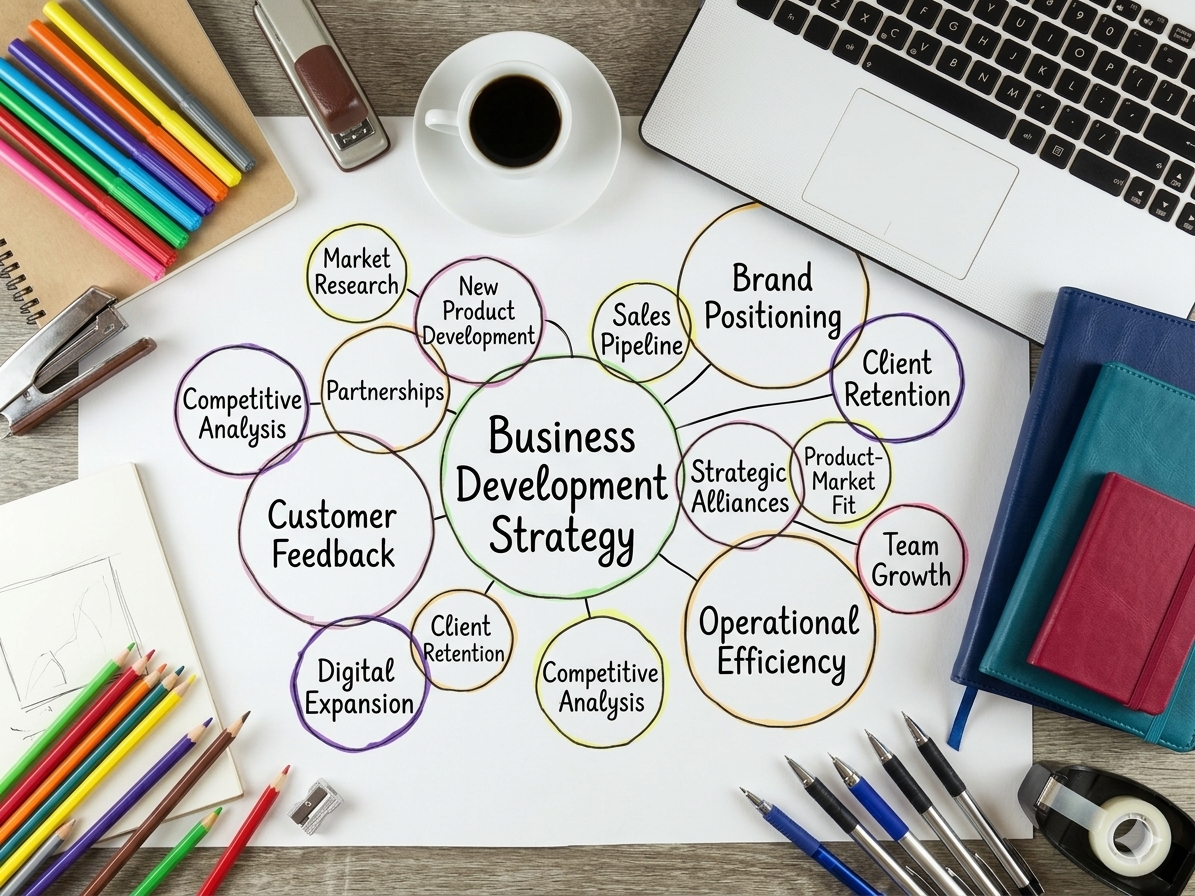
The Level 5 Extended Diploma in Business Management develops practical business and management knowledge across leadership, financial awareness, business operations, change management and team development. Furthermore, learners explore business development, decision-making, customer management, risk management and organizational growth. In addition, the program strengthens problem-solving, communication, teamwork and independent learning skills. Moreover, learners can connect management theory with practical business applications and develop their professional capabilities. Consequently, the qualification provides a strong foundation for career development and progression to the final year of a UK university honors degree.
The Level 5 Extended Diploma in Business Management develops comprehensive knowledge and practical skills for effective business and management practice. Furthermore, learners explore leadership, business development, operations, financial awareness and organizational management. In addition, the program examines decision-making, change management, customer management and risk management within modern business environments. Moreover, learners develop an understanding of how organizations can improve performance, respond to challenges and achieve sustainable growth. The program also encourages effective teamwork, communication and professional development. Consequently, learners strengthen their problem-solving, analytical and decision-making capabilities. Furthermore, practical learning helps learners connect business management concepts with real-world organizational situations. In addition, the qualification supports independent learning and the development of transferable skills required across different business sectors. Therefore, it can provide a strong foundation for career advancement and progression to higher-level study. Ultimately, the program prepares learners to contribute effectively to business operations, management and organizational development.
| Course Detail | Information |
|---|---|
| Course Title | Level 5 Extended Diploma in Business Management |
| Qualification Level | Level 5 |
| Qualification Type | Extended Diploma |
| Subject Area | Business Management |
| Credits | 240 Credits |
| Learning Focus | Business management, leadership, operations and organisational development |
| Key Areas | Business Development, Leadership, Operations, Finance, Customer Management and Risk Management |
| Management Focus | Decision-Making, Change Management, Team Development and Business Performance |
| Core Skills | Communication, Problem-Solving, Critical Thinking, Teamwork and Decision-Making |
| Progression | Higher-level study, final-year undergraduate progression and business career development |
Berkeley School of Business, Arts & Sciences
The vision of the Level 5 Extended Diploma in Business Management is to develop capable and adaptable business professionals who can understand modern organizational challenges and contribute effectively to business growth. Furthermore, the program aims to build strong knowledge of management, leadership, operations, finance and business development. In addition, its mission is to equip learners with practical skills in decision-making, problem-solving, communication, teamwork and change management. Moreover, learners are encouraged to apply business concepts to real-world organizational situations and develop their professional capabilities. Consequently, the program supports career development, higher-level academic progression and effective contribution to diverse business environments.
The Level 5 Extended Diploma in Business Management comprises 12 mandatory units: six at Level 4 and six at Level 5. It carries 240 credits, 2,400 Total Qualification Time hours and 960 Guided Learning Hours. Each unit carries 20 credits.
Examine organizational, interpersonal, team and external communication. Learners evaluate communication systems, personal communication styles and methods for improving internal and external workplace communication.
Organizational Communication Practices and Systems
Interpersonal Communication Styles
Meetings, Presentations and Professional Networking
Internal and External Workplace Communication
Develop practical leadership knowledge for rapidly changing working environments. Learners explore leadership qualities, theories, models and styles while evaluating their suitability for different organizational situations.
Leadership Qualities and Characteristics
Leadership Theories, Models and Principles
Leadership Styles for Different Situations
Leadership Skills Development
Understand the role of financial information in organizational management and decision-making. Learners examine accounting principles, financial regulation, stakeholder requirements and methods for interpreting financial performance.
Nature and Purpose of Financial Information
Accounting Principles, Standards and Regulation
Financial Performance, Profitability and Solvency
Financial Analysis and Management Commentary
Explore models and practices used to manage organizational change. Learners analyze change requirements, evaluate available options, involve stakeholders and develop plans for implementation and evaluation.
Organizational Change Analysis
Stakeholder Involvement and Team Approaches
Change Models and Implementation Planning
Monitoring, Evaluation and Continuous Improvement
Develop knowledge of business processes, organizational objectives and operational planning. Learners create, implement and monitor plans designed to improve efficiency, quality and organizational performance.
Organizational Functions and Business Processes
Business Goals and SMART Objectives
Operational Planning and Resource Allocation
Performance Monitoring and Quality Improvement
Examine how successful teams are created, developed and supported. Learners evaluate team roles, motivation, objectives, leadership and methods for monitoring and improving performance.
Characteristics and Roles of Effective Teams
Team Motivation and Development
Team Objectives and Performance Monitoring
Leadership, Conflict and Performance Improvement
Analyze the economic, market, political and social factors influencing modern organizations. Learners evaluate external trends and develop appropriate organizational responses to emerging opportunities and threats.
Microeconomic and Macroeconomic Environments
External Trends, Opportunities and Threats
Organizational Responses and Management Change
Business, Government and Public-Sector Relationships
Develop structured and participative approaches to organizational decision-making. Learners investigate business issues, gather relevant information, involve stakeholders and evaluate the effectiveness of decisions.
Business Issues and Stakeholder Requirements
Information and Knowledge for Decision-Making
Participative Decision-Making Processes
Decision Implementation and Evaluation
Develop the skills required to research markets and plan a new enterprise, product, service or income stream. Learners evaluate opportunities, prepare a business model and pitch a development strategy.
Opportunity Analysis and the TOWS Matrix
Market Research and Feasibility Assessment
Business Models and Development Strategy
Sales Planning, Pitching and Feedback
Examine business models and growth opportunities for smaller and expanding organizations. Learners evaluate growth strategies, resource requirements, revenue streams, innovation and organizational performance.
Growth Strategies and Resource Implications
Business Models and Revenue Streams
Performance Measurement and Innovation
Environmental Scanning and Strategic Fit
Develop an understanding of customer behaviour and customer-centred organisational practices. Learners explore segmentation, relationship management, retention and methods for creating additional customer value.
Customer Behavior and Segmentation
Customer Relationship Management
Customer Retention and Added Value
Customer-Centered Strategy and Service Improvement
Examine organizational risk profiles, risk tolerance and enterprise-wide risk management. Learners identify business risks and develop strategies that balance risk control, innovation and competitive opportunity.
Business Risk and Organizational Tolerance
Risk Identification, Assessment and Profiling
Enterprise-Wide Risk Management
Innovation Risk and Competitive Advantage
Berkeley offers expertly developed learning materials tailored to meet participants' needs, ensuring comprehensive coverage of the syllabus and optimal exam preparation.
‣ Tailored Material: Guides are designed to cover the entire syllabus, offering full preparation and deep understanding.
‣ In-Depth Content: Unlike superficial outlines, our materials provide fully developed theories and concepts, equipping participants with complete knowledge.
‣ Strategic Study: We help participants prioritize study time by indicating the weight of each topic, allowing efficient focus on crucial areas.
‣ Difficulty Levels: Topics are labeled as "Awareness" or "Proficiency," guiding participants to allocate time based on the required depth of knowledge.
‣ Comprehensive Coverage: Our materials include detailed theory and a glossary of technical terms to clarify complex concepts.
‣ Effective Learning Techniques: Visual aids and memorization techniques ensure long-lasting retention, helping candidates succeed.
Berkeley’s methodologies equip participants with the essential knowledge and tools for both exams and future success.
Our lecture plan integrates structured learning with interactive teaching methods, promoting engagement and collaboration. This approach ensures a comprehensive understanding of concepts, fostering critical thinking and practical application in real-world scenarios.
Practice sessions offer hands-on experience through guided exercises, enhancing skills and reinforcing knowledge. This practical approach ensures mastery of concepts, promoting.
Mock examinations simulate real test conditions, providing valuable practice and assessment. This helps identify strengths and weaknesses, ensuring thorough preparation and boosting confidence for actual exams.
Evaluates and ensure the quality of the training program and all its deliverables. This is measured through the following indicators:
‣ Instructors' experience and style in presenting and explaining topics.
‣ Variety and balance of teaching methods (such as discussions, case studies, mock exams and videos) used in the course to ensure retention and to match the learning objectives.
‣ Level of interactivity.
‣ Feedback from program participants
‣ Full compliance with Institute standards and guidelines for preparation and study requirements and methodology.
‣ Progress reports from the training program provider.
“As a strong advocate for education and human development, I commend Berkeley for its exceptional commitment to empowering future leaders. The institution stands as a symbol of excellence, innovation, and opportunity. Students who walk its halls are nurtured with knowledge, values, and vision, qualities that contribute to building a stronger and more prosperous future for our nation.”- H.H. Shaikh Khalifa Al Hamid
Alumni Benefits
‣ Exclusive Networking Events: Access invitations to industry-leading events and thought-leadership gatherings featuring renowned speakers.
‣ Monthly Updates: Stay informed with a newsletter highlighting the latest research, events, and activities from the school.
‣ LinkedIn Community Access: Join the Executive Education LinkedIn group for networking and professional development opportunities.
‣ Educational Discounts: Enjoy a 20% discount on open-enrollment programs and access to workshops focused on emerging trends.
‣ Global Alumni Network: Connect with a diverse alumni community through the Berkeley School’s online network and engage in country and interest groups.
The Level 5 Extended Diploma in Business Management is a valuable qualification for individuals seeking to strengthen their knowledge of business, management and organisational development. Furthermore, it develops understanding across leadership, business development, operations, financial management, customer management and risk management. In addition, the qualification can benefit aspiring business managers, entrepreneurs, team leaders, business analysts, project managers and professionals seeking career advancement.
Potential Annual Earnings:
The Level 5 Extended Diploma in Business Management provides a strong pathway for continued academic and professional development. Furthermore, successful learners may progress to the final year of a relevant UK university honors degree, subject to the university’s admission requirements. In addition, learners can pursue higher-level qualifications in business, management, leadership or related disciplines. Moreover, the qualification can support career progression into roles such as business manager, operations manager, business development manager, project manager and management consultant. Ultimately, progression depends on the requirements of the chosen university, employer or professional pathway. Explore more Level 7 Diploma in International Business Law, Level 5 Extended Diploma in Cyber Security, Chartered Management Institute (CMI): Professional management and leadership resources, qualifications and career development, Institute of Leadership: Leadership development resources, professional standards and management learning opportunities. GOV.UK Business Support: Official guidance covering business management, employment, finance and business development and British Chambers of Commerce: Business resources, networking and guidance for organisations and professionals.
You will get a certificate of completion, which is highly reputed and accepted by employers
Responsible for overseeing daily activities and ensuring that the principles of business management are applied effectively within the industry
Focuses on managing team performance and coordinating workforce efforts to meet departmental goals within the broader business context
Applies fundamental marketing and management concepts to coordinate campaigns and bridge the gap between theory and real-world market needs
Uses analytical and problem-solving techniques to support business projects, working both independently and as part of a team
Contact Us