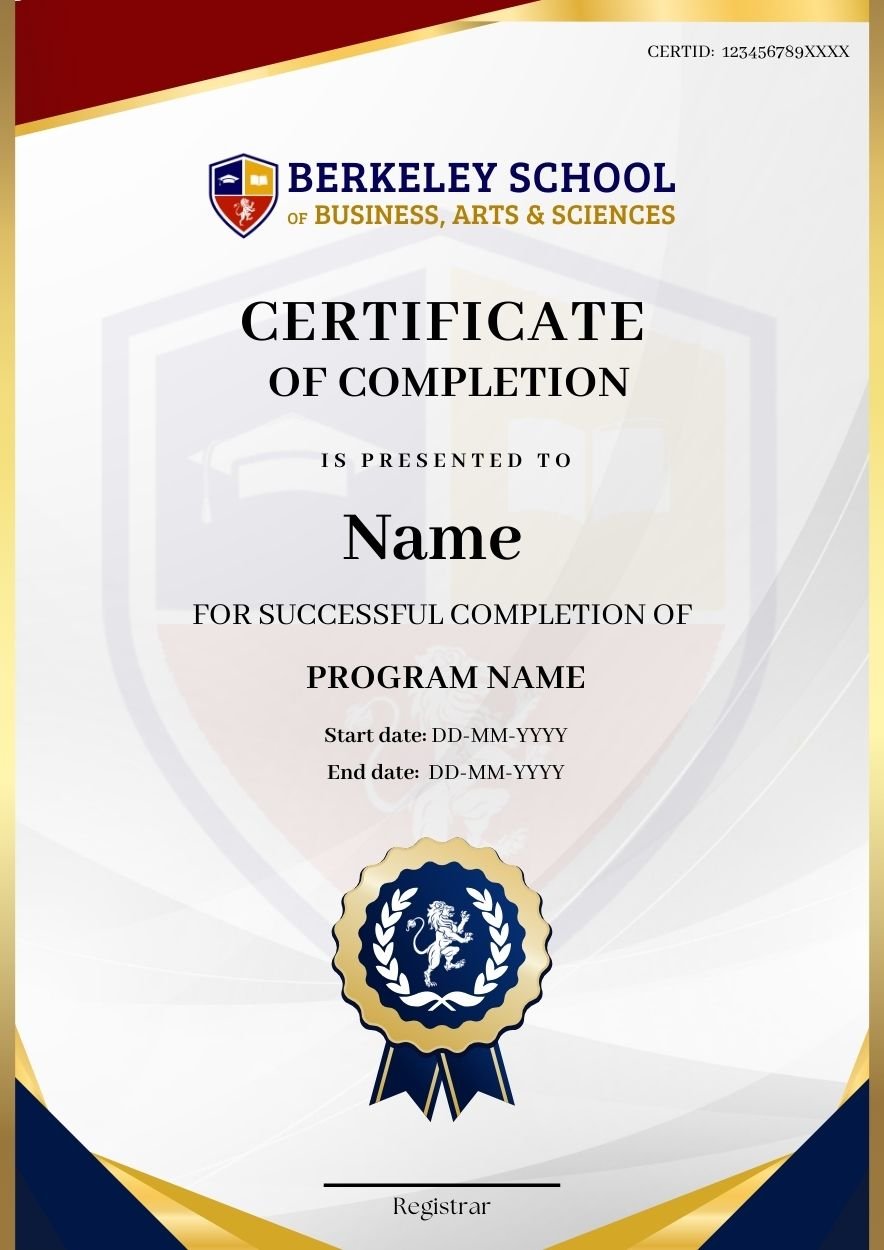
Berkeley School of Business, Arts & Sciences
The Level 5 Diploma in Teaching English to Speakers of Other Languages (TESOL) is structured to develop both theoretical knowledge and practical teaching competence. The program progresses from foundational language awareness to advanced classroom methodologies, lesson planning, and assessment strategies. Each unit is designed to build professional teaching capability aligned with international TESOL standards.
Introduces core principles of English language teaching, learner profiles, and the global TESOL landscape.
Introduction to TESOL and Global Context
Roles and Responsibilities of an English Language Teacher
Learner Types and Learning Styles
Teaching Environments and Contexts
Grammar and Sentence Structure
Vocabulary Development Techniques
Phonology and Pronunciation
Functional Language Usage
Teaching Listening Skills
Teaching Speaking Skills
Teaching Reading Skills
Teaching Writing Skills
Lesson Planning Frameworks (PPP, ESA, TBL)
Classroom Management Techniques
Use of Teaching Aids and Resources
Time Management in Lessons
Communicative Language Teaching (CLT)
Task-Based Learning (TBL)
Direct Method and Audio-Lingual Method
Blended and Online Teaching Approaches
Types of Assessment (Formative & Summative)
Designing Tests and Quizzes
Providing Feedback
Monitoring Student Progress
Characteristics of Young Learners
Classroom Activities for Children
Managing Behavior in Young Learner Classes
Use of Games and Interactive Learning
Business Communication Skills
Teaching Professional Vocabulary
Role Plays and Case Studies
Workplace Language Needs
Online Teaching Platforms and Tools
Virtual Classroom Engagement Strategies
Digital Lesson Planning
Managing Remote Learners
Micro-Teaching Sessions
Lesson Delivery Practice
Peer and Trainer Feedback
Reflective Teaching Practice
Our lecture plan integrates structured learning with interactive teaching methods, promoting engagement and collaboration. This approach ensures a comprehensive understanding of concepts, fostering critical thinking and practical application in real-world scenarios
Practice sessions offer hands-on experience through guided exercises, enhancing skills and reinforcing knowledge. This practical approach ensures mastery of concepts, promoting confidence and competence in real-world applications
Mock examinations simulate real test conditions, providing valuable practice and assessment. This helps identify strengths and weaknesses, ensuring thorough preparation and boosting confidence for actual exams
Evaluates and ensure the quality of the training program and all its deliverables. This is
measured through the following indicators:
‣ Instructors' experience and style in presenting and
explaining topics.
‣ Variety and balance of teaching methods (such as discussions, case studies,
mock exams and videos) used in the course to ensure retention and to match the learning
objectives.
‣ Level of interactivity.
‣ Feedback from program participants
‣ Full
compliance with Institute standards and guidelines for preparation and study requirements and
methodology.
‣ Progress reports from the training program provider.
Exclusive Networking Events: Access invitations to industry-leading events and thought-leadership gatherings featuring renowned speakers.
Monthly Updates: Stay informed with a newsletter highlighting the latest research, events, and activities from the school.
LinkedIn Community Access: Join the Executive Education LinkedIn group for networking and professional development opportunities.
Educational Discounts: Enjoy a 20% discount on open-enrollment programs and access to workshops focused on emerging trends.
Global Alumni Network: Connect with a diverse alumni community through the Berkeley School’s online network and engage in country and interest groups.