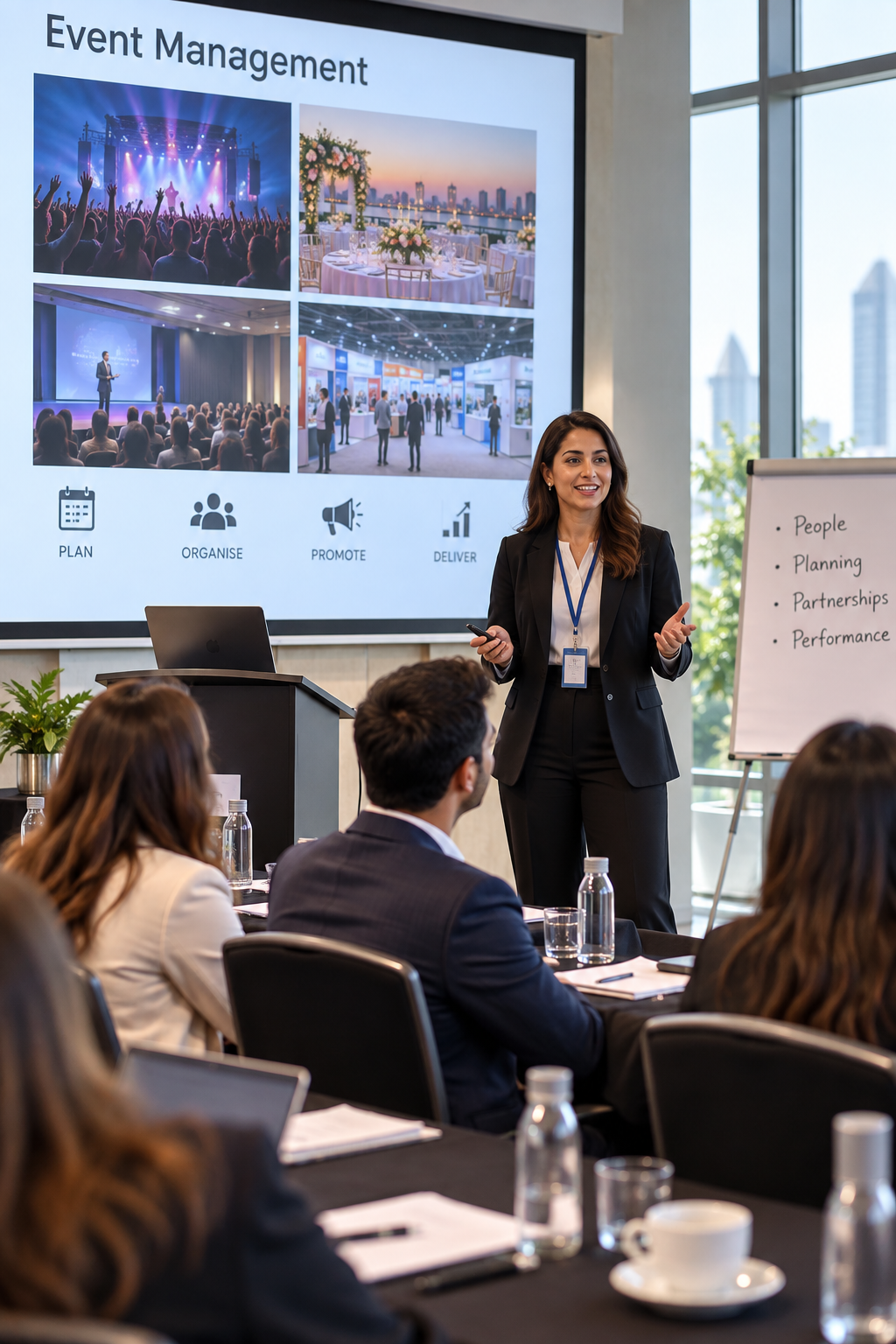
Build Festival and Event Management skills from the first brief to the final review. Learn to plan resources, promote an event, coordinate delivery and evaluate the result.
The Executive Certificate in Festival and Event Management builds practical skills for planning, running and reviewing events. These include festivals, sports events, conferences, exhibitions and corporate or private events.
First, define the event purpose and the needs of its guests. Next, build a plan for time, cost and resources. Then, connect promotion with the people you want to reach. Finally, review the results and use feedback to improve the next event.
Consider a team planning a local festival. First, agree on the audience and the result the event should achieve. A clear brief helps the team choose a venue, a programme and a realistic schedule.
Next, list the work needed before the event. Assign an owner and a due date to each task. For example, the stage team and the guest team may need the same space at different times. Therefore, check the whole schedule before confirming either plan.
Then, compare the planned costs with the available budget. Include resources, staff and supplier needs. In addition, record the assumptions behind each estimate. This makes it easier to explain a change when a cost or a deadline moves.
Promotion should match the event purpose. First, identify who the message is for. Next, explain what guests can expect and how to take part. Keep sponsor messages and event branding clear and consistent.
On the day, use a shared plan for tasks and communication. Check who can make a decision when a problem arises. For example, a late supplier may affect setup and guest arrival. Then, update the team so each person knows the next step.
Finally, review what worked and what needs to change. Compare the result with the original aim. In addition, gather feedback from guests, staff and other stakeholders. Use that evidence to improve future Festival and Event Management plans.
| Area | Key skills |
|---|---|
| Event planning | Planning, coordination and delivery |
| Project management | Schedules, resources and execution |
| Marketing | Promotion, public relations and audience engagement |
| Human resources | Workforce planning and team coordination |
| Operations | On-site tasks and event delivery |
| Evaluation | Outcome review and improvement |
| Practical application | Event scenarios and operational problem-solving |
Berkeley School of Business, Arts & Sciences
Participants will gain a practical understanding of event planning, promotion, implementation, and evaluation. They will learn to define event objectives, develop budgets, manage safety and security, assess risks, and apply effective event management strategies.
First, learn to turn an event brief into a clear plan. Next, connect the budget, schedule, people and resources. Then, practise responding to operational challenges. Finally, evaluate the outcome and explain how the next event could improve.
The programme has five topic modules and a sixth module for practical application and assessment. First, explore event types and planning. Next, link marketing with delivery and evaluation. Then, review risk, ethics and sustainability. Finally, apply these areas to an event case.
First, compare small and large events, hallmark events and mega events. Next, explore MICE: meetings, incentives, conferences and exhibitions. Then, examine how events connect with tourism and hospitality.
Types and Classification of Events
The Role of Events in Tourism and Hospitality
First, set the event aims and identify stakeholder needs. Next, prepare a budget and timeline. Then, choose venues and vendors that fit the brief. Finally, connect the production schedule with logistics and team tasks.
Setting Objectives and Stakeholder Requirements
Budgeting, Scheduling and Logistics
First, identify the audience and shape the event message. Next, connect branding, sponsor plans and promotional materials. Then, choose suitable channels and review marketing results. In addition, consider new trends in event promotion.
Event Branding and Marketing Communications
Sponsorship, Promotion and Audience Engagement
First, plan event setup, staffing and on-site tasks. Next, practise responding to a problem during delivery. Then, review the event result and gather feedback. Finally, use that evidence to identify a practical improvement.
Event Operations and On-Site Management
Post-Event Evaluation and Continuous Improvement
First, explore event safety, security and crisis management. Next, review legal and ethical considerations. Then, examine the effects on communities and destinations. In addition, consider sustainability, technology and virtual events.
Event Safety, Security and Risk Management
Legal, Ethical and Sustainability Considerations
First, use the study guidelines to review the course ideas. Next, apply them through event exercises and case studies. Then, complete the assessment or quiz. Finally, explain a practical response to an event scenario.
Assignment and Study Guidelines
Event Planning and Management Assessment
The programme combines expert-led sessions, workshops and event case studies. First, learn the key steps in planning an event. Next, apply them to a brief, a budget and a schedule. Then, review how each choice affects the people and resources involved.
For example, a change in guest numbers may affect staffing, space and costs. Therefore, check the links between tasks before updating a plan. In addition, use the practical activities to explain your choices clearly. Finally, review the outcome and identify one change for a future event.
First, explore event planning and production. Next, connect marketing and sponsorship with the event purpose. Then, review budgets, operations, safety and evaluation through guided discussion.
Practise event plans, staffing needs and project schedules. In addition, work on press releases, sponsor plans, risk plans and budgets. Then, check that these parts fit the same event brief.
Use event cases to apply the course ideas. First, identify the problem. Next, compare practical options and explain your choice. Finally, review feedback and improve the plan.
The quality of the Executive Certificate in Festival and Event Management is evaluated through the following indicators:
‣ Instructor Quality: Experience and effectiveness in presenting and explaining event management topics.
‣ Teaching Methods: Balanced use of discussions, case studies, practical activities, videos, and assessments aligned with learning objectives.
‣ Interactivity: Level of learner participation and engagement throughout the program.
‣ Participant Feedback: Feedback from learners to assess the training experience and identify improvements.
‣ Program Standards: Alignment with established training requirements, learning objectives, and methodology.
‣ Progress Monitoring: Progress reports from the training provider to evaluate learner development and program effectiveness.
Number of Lectures: 6
Delivery: Live Online Instructor-Led | Location: International
Dates: Start 24 Oct 2026 – End 12 Dec 2026
Executive Certificate in Festival and Event Management Program
“As a strong advocate for education and human development, I commend Berkeley for its exceptional commitment to empowering future leaders. The institution stands as a symbol of excellence, innovation, and opportunity. Students who walk its halls are nurtured with knowledge, values, and vision—qualities that contribute to building a stronger and more prosperous future for our nation.”- H.H. Shaikh Khalifa Al Hamid
‣ Exclusive Networking Events: Access invitations to industry-leading events and thought-leadership gatherings featuring renowned speakers.
‣ Monthly Updates: Stay informed with a newsletter highlighting the latest research, events, and activities from the school.
‣ LinkedIn Community Access: Join the Executive Education LinkedIn group for networking and professional development opportunities.
‣ Educational Discounts: Enjoy a 20% discount on open-enrollment programs and access to workshops focused on emerging trends.
‣ Global Alumni Network: Connect with a diverse alumni community through the Berkeley School’s online network and engage in country and interest groups.
The Executive Certificate in Festival and Event Management equips professionals with practical skills in event planning, production, budgeting, marketing, stakeholder management, and successful event delivery.
| Country/Region | Estimated Salary Range |
|---|---|
| United Kingdom | £30,000–£60,000+ per year |
| Middle East | AED 120,000–300,000+ per year |
| United States | USD 50,000–90,000+ per year |
| Asia & Africa | Competitive salaries based on experience, event type, industry, organizational size, and responsibilities |
The Executive Certificate in Festival and Event Management is designed for professionals pursuing careers in event planning, festival management, conference and exhibition coordination, venue management, event marketing, and public event operations. It develops practical skills in planning, budgeting, production, stakeholder coordination, risk management, and event promotion, supporting career opportunities across corporate, hospitality, entertainment, sports, and cultural events.
Learners can further develop their expertise through relevant event management, hospitality, marketing, and project management courses offered by Berkeley School of Business, Arts & Sciences.
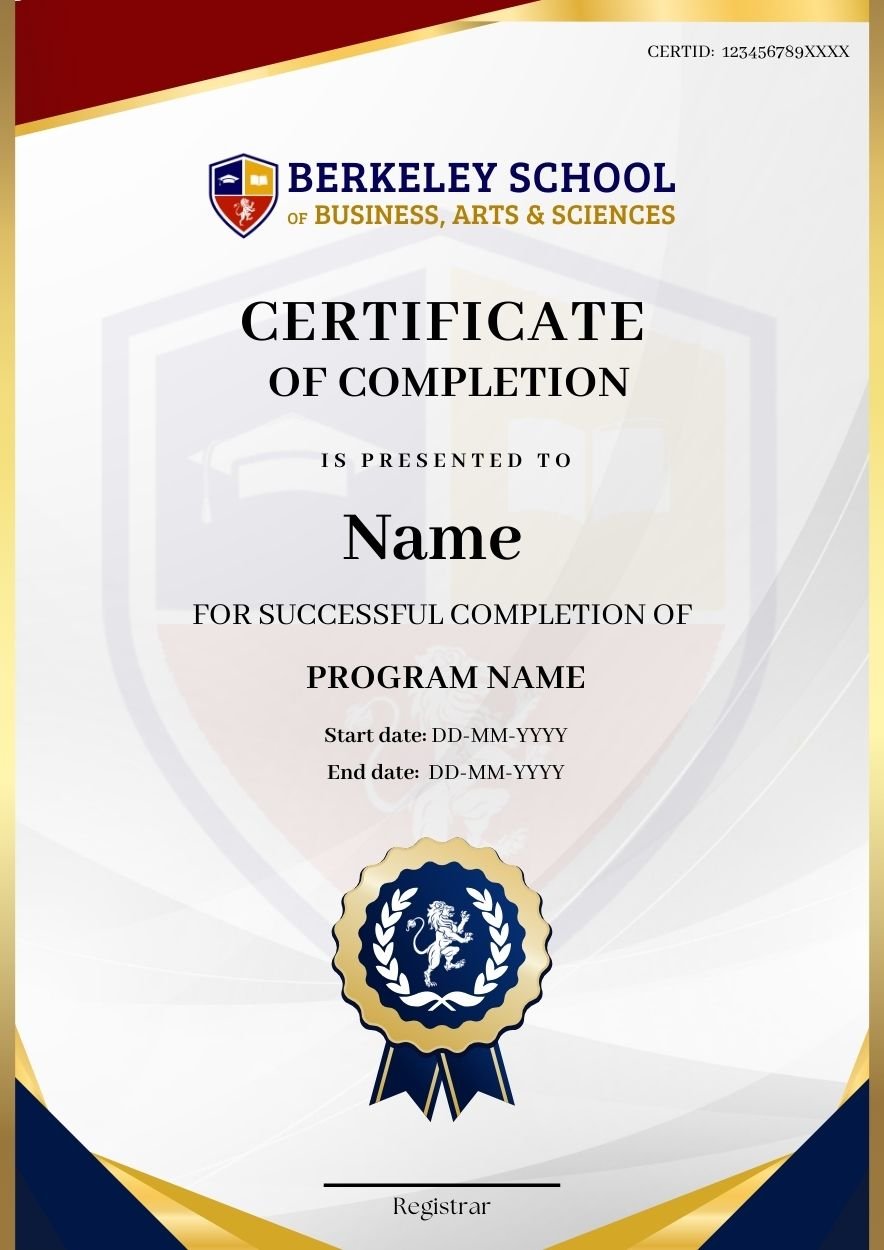
You will get a certificate of completion, which is highly reputed and accepted by employers.
Develop practical skills in event planning, coordination, scheduling, and successful event delivery.
Learn to develop event marketing strategies, manage public relations, promote events, and engage target audiences.
Build expertise in event operations, production, venue coordination, logistics, and resource management.
Contact Us