The Machine Learning Specialization provides in-depth knowledge and practical skills in machine learning algorithms, data processing, and model evaluation. It covers key areas like supervised and unsupervised learning, deep learning, and reinforcement learning, preparing learners for advanced roles in AI and data science.
The Machine Learning Specialization offers comprehensive training in machine learning techniques, including data processing and algorithm development. Students learn both supervised and unsupervised learning, deep learning, and reinforcement learning. The course emphasizes hands-on experience with real-world data to build and evaluate models. This specialization prepares learners for advanced careers in AI, data science, and machine learning roles.
Berkeley School of Buisness Art & Sciences
Typically, there are no specific prerequisites for this certification. It is suitable for individuals interested in,Certified Machine Learning Specialization regardless of their background.
This module introduces core machine learning concepts, including supervised and unsupervised learning. Learners explore basic algorithms and data preprocessing techniques.
Dive into regression and classification techniques, focusing on algorithms like decision trees, support vector machines, and linear regression. Practical model-building exercises are included.
Explore clustering and dimensionality reduction methods, including k-means clustering, hierarchical clustering, and principal component analysis (PCA).
Learn about deep learning fundamentals, including neural networks, backpropagation, and advanced topics like convolutional neural networks (CNNs) and recurrent neural networks (RNNs).
This module focuses on evaluating model performance, handling overfitting, hyperparameter tuning, and improving the accuracy of machine learning models.
Lecture 4: Classification Algorithms
Berkeley offers expertly developed learning materials tailored to meet participants' needs, ensuring comprehensive coverage of the syllabus and optimal exam preparation.
‣ Tailored Material: Guides are designed to cover the entire syllabus, offering full preparation and deep understanding.
‣ In-Depth Content: Unlike superficial outlines, our materials provide fully developed theories and concepts, equipping participants with complete knowledge.
‣ Strategic Study: We help participants prioritize study time by indicating the weight of each topic, allowing efficient focus on crucial areas.
‣ Difficulty Levels: Topics are labeled as "Awareness" or "Proficiency," guiding participants to allocate time based on the required depth of knowledge.
‣ Comprehensive Coverage: Our materials include detailed theory and a glossary of technical terms to clarify complex concepts.
‣ Effective Learning Techniques: Visual aids and memorization techniques ensure long-lasting retention, helping candidates succeed.
Berkeley’s methodologies equip participants with the essential knowledge and tools for both exams and future success.
Our lecture plan integrates structured learning with interactive teaching methods, promoting engagement and collaboration. This approach ensures a comprehensive understanding of concepts, fostering critical thinking and practical application in real-world scenarios.
Practice sessions offer hands-on experience through guided exercises, enhancing skills and reinforcing knowledge. This practical approach ensures mastery of concepts, promoting.
Mock examinations simulate real test conditions, providing valuable practice and assessment. This helps identify strengths and weaknesses, ensuring thorough preparation and boosting confidence for actual exams.
Evaluates and ensure the quality of the training program and all its deliverables. This is
measured through the following indicators:
‣ Instructors' experience and style in presenting and
explaining topics.
‣ Variety and balance of teaching methods (such as discussions, case studies,
mock exams and videos) used in the course to ensure retention and to match the learning
objectives.
‣ Level of interactivity.
‣ Feedback from program participants
‣ Full
compliance with Institute standards and guidelines for preparation and study requirements and
methodology.
‣ Progress reports from the training program provider.
“As a strong advocate for education and human development, I commend Berkeley for its exceptional commitment to empowering future leaders. The institution stands as a symbol of excellence, innovation, and opportunity. Students who walk its halls are nurtured with knowledge, values, and vision—qualities that contribute to building a stronger and more prosperous future for our nation.”- H.H. Shaikh Khalifa Al Hamid
‣ Exclusive Networking Events: Access invitations to industry-leading events and thought-leadership gatherings featuring renowned speakers.
‣ Monthly Updates: Stay informed with a newsletter highlighting the latest research, events, and activities from the school.
‣ LinkedIn Community Access: Join the Executive Education LinkedIn group for networking and professional development opportunities.
‣ Educational Discounts: Enjoy a 20% discount on open-enrollment programs and access to workshops focused on emerging trends.
‣ Global Alumni Network: Connect with a diverse alumni community through the Berkeley School’s online network and engage in country and interest groups.
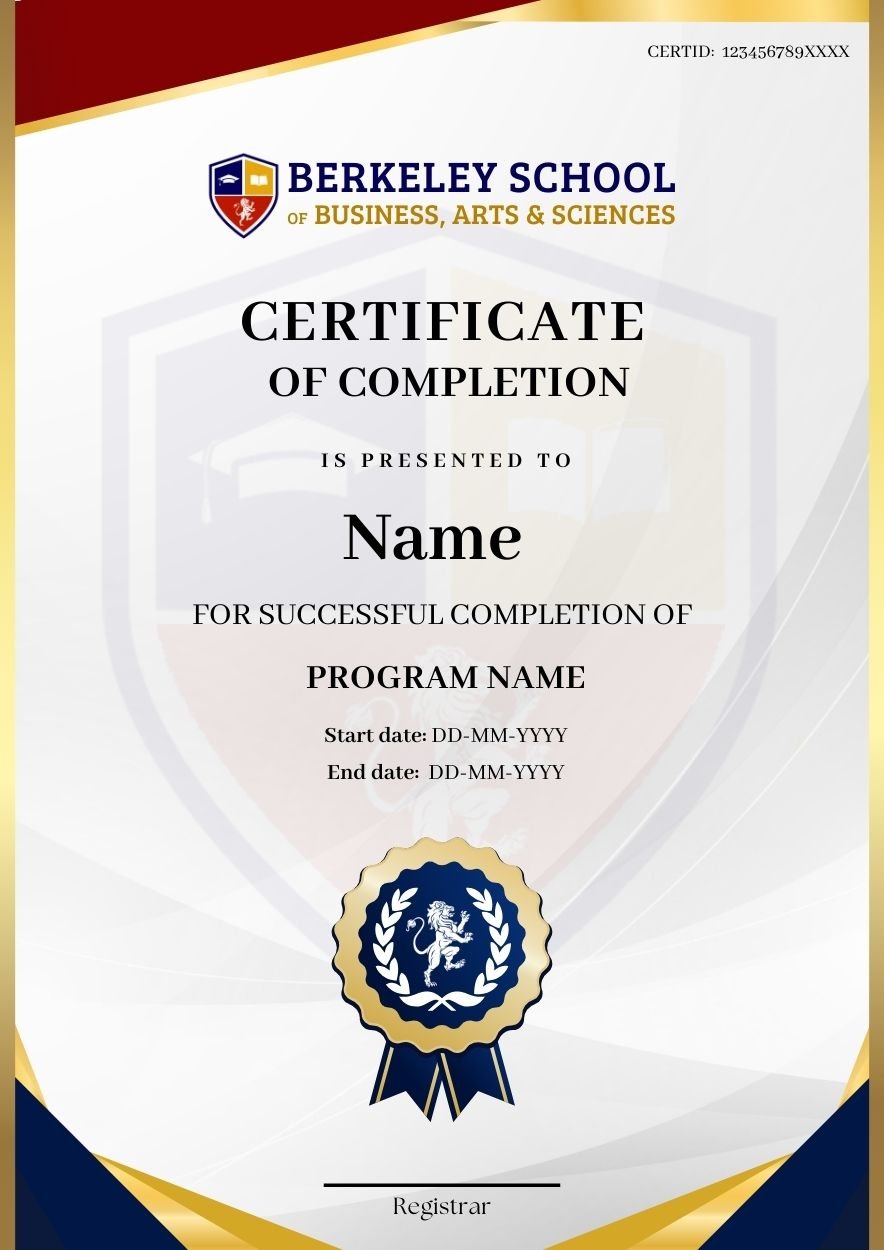
You will get a certificate of completion, which is highly reputed and accepted by employers
Completing the Certified Machine Learning Specialization opens doors to high-demand roles in AI, data science, and advanced machine learning engineering.
In 2025, machine learning is advancing through trends like agentic AI, multimodal systems, explainable AI, and automated machine learning (AutoML), reshaping industries and enhancing decision-making processes.
Machine learning is highly relevant across industries like healthcare, finance, retail, and technology, driving innovation, automation, and smarter decision-making.
Machine learning specialization accelerates career growth by opening opportunities in top tech roles like ML engineer, data scientist, and AI researcher.
Machine learning specialization builds strong fundamentals in algorithms, data analysis, model training, and AI-driven problem-solving techniques.