Autodesk Certified Professional in Simulation for Static Stress Analysis

BERKELEY SCHOOL OF BUSINESS, ARTS & SCIENCES

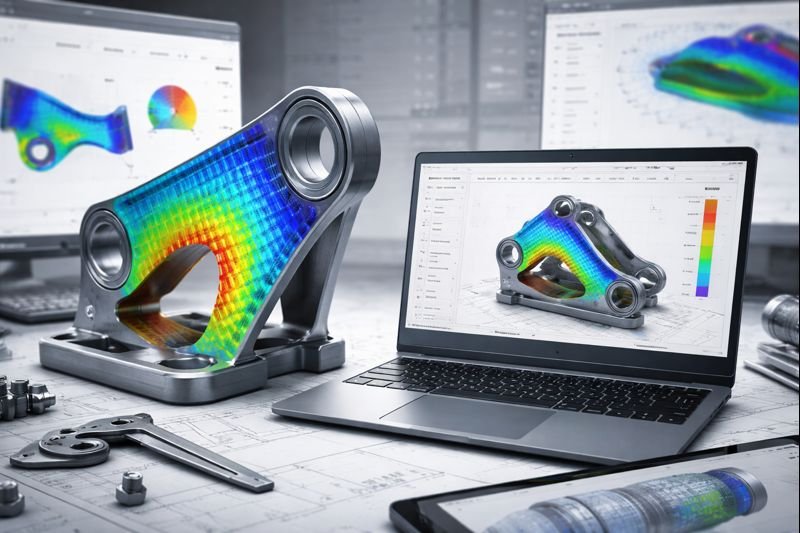
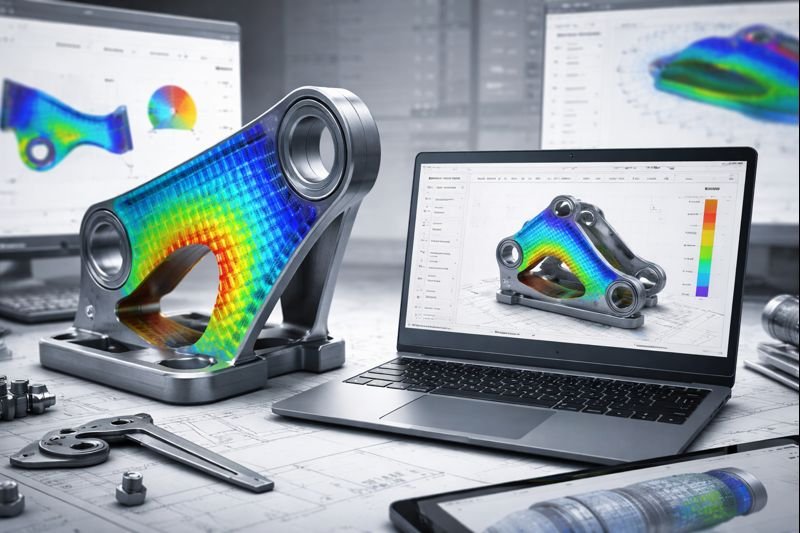
The Autodesk Certified Professional in Simulation for Static Stress Analysis certification validates advanced skills in performing static stress simulations, analyzing structural behavior, and interpreting results using Autodesk simulation tools to support engineering design decisions.

Overview

The Autodesk Certified Professional in Simulation for Static Stress Analysis certification demonstrates professional-level expertise in applying finite element analysis (FEA) techniques to evaluate stress, strain, and deformation in mechanical components and assemblies. This certification validates the ability to prepare simulation models, apply loads and boundary conditions, generate accurate meshes, run static stress analyses, and interpret simulation results to improve product performance and reliability. It is designed for engineers and designers who use simulation to optimize designs, reduce physical prototyping, and ensure structural integrity in real-world engineering applications.

Offered By

Autodesk, Inc.


Head office

San Francisco, California, United States


Members

Global Autodesk User and Professional Community (Millions+ worldwide)


What are the Objectives?
  • Validate professional-level skills in static stress simulation and structural analysis.
  • Develop expertise in applying Finite Element Analysis (FEA) techniques for real-world engineering problems.
  • Enable accurate evaluation of stress, strain, and deformation in mechanical designs.
  • Support design optimization and performance improvement through simulation-driven decision-making.
  • Reduce physical prototyping costs by promoting virtual testing workflows.
  • Enhance professional credibility in engineering simulation and analysis roles.
What is the Eligibility?

This certification is intended for professionals with hands-on experience in engineering simulation and static stress analysis using Autodesk tools. It is recommended for mechanical engineers, design engineers, product designers, CAE analysts, and manufacturing professionals who have practical experience in FEA model setup, applying loads and boundary conditions, meshing, running simulations, and interpreting stress and deformation results. Candidates should be familiar with structural analysis workflows and simulation-based design validation.


Who can do?
anyone who is interested to learn about following concepts can pursue Autodesk Certified Professional in Simulation for Static Stress Analysis:
Static Stress Simulation Setup, Finite Element Analysis (FEA) Modeling, Applying Loads and Boundary Conditions, Mesh Generation and Refinement, Stress, Strain, and Deformation Analysis, Simulation Result Interpretation, Structural Performance Validation, Design Optimization Using Simulation.
individuals with the following designations:
Mechanical Engineers, Design Engineers, CAE Analysts, Product Designers, Structural Engineers, Manufacturing Engineers, CAD/CAE Professionals, Simulation Specialists.

Course Structure

Part 1: Introduction to Static Stress Simulation

This module introduces the fundamentals of static stress simulation within a CAD/CAE environment. Learners gain an understanding of simulation workflows, engineering assumptions, and the role of finite element analysis in validating designs.


Fundamentals of Static Stress Analysis

Simulation Workflow Overview

Linear vs Nonlinear Analysis Concepts

Applications in Engineering Design

Part 2: Model Preparation for Simulation

This module focuses on preparing CAD models for accurate simulation. It includes geometry simplification, defect repair, and validation of models before analysis.


Geometry Simplification Techniques

Repairing Imported Models

Managing Design History

Preparing Assemblies for Simulation

Part 3: Simulation Setup: Materials, Loads, and Constraints

This module covers defining simulation parameters such as materials, loads, and constraints. Learners understand how to accurately represent real-world conditions in a virtual simulation environment.


Material Properties and Selection

Defining Loads and Force Conditions

Applying Constraints and Supports

Contact Sets and Assembly Interactions

Part 4: Meshing and Solving Simulation Studies

This module explains meshing strategies and solving simulation studies. It emphasizes mesh quality, solver settings, and error handling during simulation execution.


Mesh Generation Techniques

Mesh Refinement Strategies

Running Simulation Studies

Pre-check Errors and Warnings

Part 5: Results Interpretation and Validation

This module focuses on interpreting simulation results and validating outcomes. Learners analyze stress distribution, deformation, and ensure engineering accuracy.


Stress and Displacement Analysis

Result Visualization Tools

Identifying Stress Concentrations

Validating Simulation Accuracy

Part 6: Optimization and Study Refinement

This module teaches how to refine simulations and optimize designs. It includes iterative improvements, mesh adjustments, and design modifications.


Mesh Optimization Techniques

Design Iteration Strategies

Improving Simulation Accuracy

Engineering Decision Making

Lecture Plan

Session 1: Introduction to Static Stress Simulation

Understand the fundamentals of static stress analysis and simulation workflows used in engineering validation.


Session 2: Model Preparation for Simulation

Session 3: Simulation Setup: Materials, Loads, and Constraints

Session 4: Meshing and Solving Simulation Studies

Session 5: Results Interpretation and Validation

Session 6: Optimization and Study Refinement

Learning Methodology

Berkeley offers expertly developed learning materials tailored to meet participants' needs, ensuring comprehensive coverage of the syllabus and optimal exam preparation.

‣ Tailored Material: Guides are designed to cover the entire syllabus, offering full preparation and deep understanding.

‣ In-Depth Content: Unlike superficial outlines, our materials provide fully developed theories and concepts, equipping participants with complete knowledge.

‣ Strategic Study: We help participants prioritize study time by indicating the weight of each topic, allowing efficient focus on crucial areas.

‣ Difficulty Levels: Topics are labeled as "Awareness" or "Proficiency," guiding participants to allocate time based on the required depth of knowledge.

‣ Comprehensive Coverage: Our materials include detailed theory and a glossary of technical terms to clarify complex concepts.

‣ Effective Learning Techniques: Visual aids and memorization techniques ensure long-lasting retention, helping candidates succeed.

Berkeley’s methodologies equip participants with the essential knowledge and tools for both exams and future success.

Lecture Image
Lectures

Our lecture plan integrates structured learning with interactive teaching methods, promoting engagement and collaboration. This approach ensures a comprehensive understanding of concepts, fostering critical thinking and practical application in real-world scenarios.

Lecture Image
Practice Session

Practice sessions offer hands-on experience through guided exercises, enhancing skills and reinforcing knowledge. This practical approach ensures mastery of concepts, promoting.

Lecture Image
Mock Examination

Mock examinations simulate real test conditions, providing valuable practice and assessment. This helps identify strengths and weaknesses, ensuring thorough preparation and boosting confidence for actual exams.

Berkeley's performance standards

Evaluates and ensure the quality of the training program and all its deliverables. This is measured through the following indicators:
‣ Instructors' experience and style in presenting and explaining topics.
‣ Variety and balance of teaching methods (such as discussions, case studies, mock exams, and videos) used in the course to ensure retention and to match the learning objectives.
‣ Level of interactivity.
‣ Feedback from program participants.
‣ Full compliance with Institute standards and guidelines for preparation and study requirements and methodology.
‣ Progress reports from the training program provider.

What are the Exam Information?

The Autodesk Certified Professional in Simulation for Static Stress Analysis exam validates a candidate’s ability to perform advanced static stress simulations, set up accurate FEA models, apply loads and boundary conditions, generate meshes, and interpret analysis results using Autodesk simulation tools. It measures real-world skills required for structural validation, performance optimization, and simulation-driven engineering design.


Exam Format & Duration

The exam is performance-based and evaluates practical simulation skills through scenario-driven questions. Candidates are tested on FEA model preparation, applying loads and boundary conditions, mesh generation, running static stress analysis, interpreting results, and validating structural performance using Autodesk simulation tools.


Exam Dates

Available on-demand year-round.


Passing Criteria

Minimum passing score set by Autodesk (scaled scoring system).


Exam Locations

Online proctored exam and Pearson VUE authorized test centers worldwide.


Success Stories

“As a strong advocate for education and human development, I commend Berkeley for its exceptional commitment to empowering future leaders. The institution stands as a symbol of excellence, innovation, and opportunity. Students who walk its halls are nurtured with knowledge, values, and vision—qualities that contribute to building a stronger and more prosperous future for our nation.”- H.H. Shaikh Khalifa Al Hamid

Visit our Alumni

Alumni Benefits

‣ Exclusive Networking Events: Access invitations to industry-leading events and thought-leadership gatherings featuring renowned speakers.


‣ Monthly Updates: Stay informed with a newsletter highlighting the latest research, events, and activities from the school.


‣ LinkedIn Community Access: Join the Executive Education LinkedIn group for networking and professional development opportunities.


‣ Educational Discounts: Enjoy a 20% discount on open-enrollment programs and access to workshops focused on emerging trends.


‣ Global Alumni Network: Connect with a diverse alumni community through the Berkeley School’s online network and engage in country and interest groups.

Is It Worth the Investment?

Earning the Autodesk Certified Professional in Simulation for Static Stress Analysis strengthens career prospects in engineering and product development by validating professional-level simulation and structural analysis skills. This certification demonstrates the ability to perform accurate stress analysis, evaluate structural performance, reduce design risk, and optimize product reliability using Autodesk simulation tools.

Typical Roles

Simulation Engineer

Mechanical Design Engineer

CAE Analyst

Structural Engineer

Product Development Engineer

Manufacturing Design Engineer

CAD/CAE Specialist

Career Value

High demand across automotive, aerospace, manufacturing, and industrial engineering sectors

Improves employability in simulation, analysis, and design validation roles

Supports career growth into advanced CAE and engineering leadership positions

Enhances professional credibility in simulation-driven design environments

Validates real-world structural analysis and performance optimization expertise

What You Earn

You will get a certificate of completion, which is highly reputed and accepted by employers

Future Trends:

Supports digital engineering, virtual prototyping, and simulation-driven product development workflows.

Fundamental Knowledge:

Builds strong understanding of static stress analysis principles and FEA methodologies.

Technical Skills:

Develops hands-on expertise in Autodesk simulation tools, mesh generation, load application, and result interpretation.

Career Advancement:

Enables progression into advanced simulation, CAE analysis, and senior engineering roles.

Industry Relevance:

Highly valued in engineering, manufacturing, and product development industries for structural simulation expertise.

Related courses

Autodesk Certified Professional in Design for Manufacturing

The Autodesk Certified Professional in Design and Manufacturing certification validates advanced skills in product design, manufacturing workflows, and digital prototyping using Autodesk tools, ensuring professionals can deliver efficient, production-ready designs.


Read More
Autodesk Certified Professional in CAM for 3 Axis Milling

The Autodesk Certified Professional – CAM for 3-Axis Milling certification validates advanced skills in preparing, programming, and executing 3-axis milling operations using Autodesk Fusion 360. It demonstrates the ability to create and optimize CAM setups, toolpaths, and manufacturing processes that meet industry standards and support efficient CNC production workflows. 

Read More
Autodesk Certified Expert in Generative Design for Manufacturing

The Autodesk Certified Expert in Generative Design for Manufacturing certification validates advanced expertise in applying generative design workflows to create optimized, manufacturable, and high-performance product designs using Autodesk tools.

Read More
Autodesk Certified Expert in CAM for Multi-Axis Milling

The Autodesk Certified Expert in CAM for Multi-Axis Milling certification validates expert-level skills in programming complex multi-axis CNC milling operations, optimizing toolpaths, and producing high-precision manufacturing workflows using Autodesk Fusion 360.

Read More

FAQ: Autodesk Certified Professional in Simulation for Static Stress Analysis

contact us for more information or to apply for admission. Seats fill up quickly, so we encourage early registration!

Cart

Cart (0)