CISA Certification Training in Chicago, USA

Become a Certified Information Systems Auditor (CISA) with expert-led training aligned with official ISACA standards. Gain practical skills in IT auditing, governance, cybersecurity, risk management, and compliance to advance your career in the United States.


Trust & Authority 

Official ISACA-aligned CISA curriculum

Instructor-led live online & classroom training

Real-world IT audit case studies

Mock exams and exam preparation support

Trusted by cybersecurity and audit professionals worldwide

CISA Certification Training in Chicago, USA

Overview

The Certified Information Systems Auditor (CISA) certification, awarded by ISACA, is one of the world’s most recognized credentials for professionals in IT auditing, governance, cybersecurity, risk management, and compliance. The CISA certification validates the expertise required to assess vulnerabilities, strengthen security controls, manage enterprise IT risks, and ensure compliance with global standards and regulations.

Widely respected across industries such as technology, banking, healthcare, consulting, and enterprise services, CISA certification in Chicago, United States helps professionals advance their careers in information systems auditing and cybersecurity governance. Organizations actively seek CISA-certified professionals to improve operational resilience, safeguard digital assets, and support secure business transformation initiatives.

This CISA training program is designed to provide practical knowledge in:

  • Information systems auditing
  • IT governance and risk management
  • Cybersecurity controls and compliance
  • Incident response and business continuity
  • Protection of organizational information assets

Through expert-led instruction, real-world case studies, and exam-focused preparation, learners gain the skills and confidence required to successfully clear the ISACA CISA examination and apply industry best practices in modern enterprise environments.

Certification Objectives

The CISA certification aims to prepare professionals for critical roles in IT audit, governance, and cybersecurity by validating their ability to:

  • Identify and assess information system vulnerabilities
  • Implement effective IT governance frameworks
  • Manage cybersecurity and compliance risks
  • Evaluate internal controls and audit processes
  • Improve business continuity and incident response strategies
  • Strengthen organizational security posture and operational efficiency

CISA-certified professionals play a key role in helping organizations maintain secure, compliant, and reliable information systems while supporting long-term business success.

Offered By

ISACA (Information Systems Audit and Control Association)

ISACA is a globally recognized professional association focused on information systems governance, cybersecurity, risk management, privacy, and digital trust. The organization is known worldwide for its industry-leading certifications, research, frameworks, and professional development programs.

Head Office

Schaumburg, Illinois, United States

Global Community

  • 180,000+ members worldwide
  • Professionals across 180+ countries
  • Trusted by leading enterprises and government organizations

Vision & Mission

ISACA’s vision is to help individuals and enterprises realize the full positive potential of technology by advancing global standards, knowledge, and best practices in digital trust, cybersecurity, governance, and risk management.

Its mission is to empower professionals through:

  • Globally recognized certifications
  • Continuous learning and professional education
  • Research-driven insights and frameworks
  • Ethical leadership and community collaboration

By promoting innovation, cybersecurity resilience, and effective IT governance, ISACA helps organizations navigate evolving digital threats while enabling professionals to build successful careers in information security, audit, and compliance.

Why Choose CISA Certification in Chicago?

  • Globally recognized IT audit certification
  • High demand across cybersecurity and enterprise sectors
  • Strong career opportunities in the United States
  • Valuable for audit, compliance, and risk professionals
  • Enhances credibility and earning potential
  • Preferred certification for IT governance roles
Card image

What is the eligibility?

There are no mandatory educational qualifications required to appear for the Certified Information Systems Auditor (CISA) examination. Professionals from diverse academic and technical backgrounds can enroll in the CISA certification program and begin their journey toward becoming globally recognized IT audit and cybersecurity experts.


The CISA certification is ideal for individuals interested in:


Information systems auditing

Cybersecurity and risk management

IT governance and compliance

Information security operations

Internal and external audit functions

Although there are no formal prerequisites for taking the exam, ISACA recommends that candidates possess a basic understanding of information systems, cybersecurity concepts, auditing processes, and IT governance practices.


To earn the official CISA certification from ISACA, candidates must:


Successfully pass the CISA examination

Adhere to ISACA’s Code of Professional Ethics

Agree to comply with the Continuing Professional Education (CPE) policy

Gain relevant professional work experience in information systems auditing, control, assurance, or cybersecurity domains as defined by ISACA

The CISA certification is highly suitable for:


IT Auditors

Cybersecurity Professionals

Risk and Compliance Analysts

Security Consultants

IT Managers and Administrators

Governance and Assurance Professionals


Professionals pursuing CISA certification in Chicago, United States can significantly enhance their career opportunities in auditing, cybersecurity governance, enterprise risk management, and regulatory compliance across industries such as banking, healthcare, technology, consulting, and government sectors.

Who Can Pursue CISA Certification?

The CISA certification is ideal for professionals interested in IT auditing, cybersecurity, governance, compliance, risk management, and information security.CISA-certified professionals are highly valued across banking, healthcare, technology, consulting, and enterprise sectors worldwide.

Card image

Course Structure

The Certified Information Systems Auditor (CISA) certification is structured around five globally recognized domains defined by ISACA. These domains are designed to build professional expertise in IT auditing, governance, cybersecurity, risk management, compliance, and information systems protection.

Domain 1 – Information Systems Auditing Process (18%)

This domain focuses on the principles, standards, and practices involved in conducting effective information systems audits. Learners understand how to evaluate internal controls, identify vulnerabilities, assess risks, and ensure compliance with organizational and regulatory requirements.

Key Topics Covered

  • IT audit standards and guidelines
  • Audit planning and execution
  • Risk-based auditing approaches
  • Internal controls assessment
  • Audit reporting and communication
  • Compliance and regulatory auditing

Domain 2 – Governance & Management of IT (18%)

This domain emphasizes the importance of IT governance frameworks and management practices that align technology initiatives with business objectives. Candidates learn how organizations manage IT resources, policies, risk, and performance to support enterprise growth and operational efficiency.

Key Topics Covered

  • IT governance frameworks
  • Enterprise IT management
  • Strategic alignment and business goals
  • Risk management practices
  • IT policies and procedures
  • Performance monitoring and compliance

Domain 3 – Information Systems Acquisition, Development & Implementation (12%)

This domain focuses on the processes involved in acquiring, developing, testing, and implementing information systems that support organizational objectives securely and efficiently.

Key Topics Covered

  • System development life cycle (SDLC)
  • Project management and change control
  • System acquisition and implementation
  • Software testing and quality assurance
  • Business requirements analysis
  • Post-implementation review processes

Domain 4 – Information Systems Operations & Business Resilience (26%)

This domain covers the management and maintenance of IT operations to ensure business continuity, operational resilience, and effective service delivery. It focuses on supporting organizational objectives through secure and reliable IT systems.

Key Topics Covered

  • IT operations management
  • Incident and problem management
  • Business continuity planning
  • Disaster recovery strategies
  • Service level management
  • IT infrastructure monitoring and support

Domain 5 – Protection of Information Assets (26%)

This domain focuses on safeguarding organizational information assets through effective cybersecurity controls, security policies, and risk mitigation strategies. Candidates learn how to ensure the confidentiality, integrity, and availability of critical information systems.

Key Topics Covered

  • Information security governance
  • Access control and identity management
  • Data protection and privacy
  • Network and infrastructure security
  • Cybersecurity risk management
  • Security monitoring and incident response 

Lecture plan


Lecture 1: Information System Auditing Process (3 Hours)
Audit Planning (37) +
  • Key Aspects from the CISA Exam Perspective
  • Audit Planning
  • Benefits of Audit Planning
  • Selection Criteria
  • Reviewing Audit Planning
  • Individual Audit Assignments
  • Business Process Applications and Controls
  • Preventive Controls
  • Detective Controls
  • Corrective Controls
  • Control Objectives
  • Risk Assessments
  • Audit Risk
  • Risk Response Methodology
  • Types of Audits and Assessments
Lecture 2: Information System Auditing Process (3 Hours)
Audit Execution (36) +
  • Audit Project Management
  • Audit Objectives
  • Audit Phases
  • Fraud, Irregularities and Illegal Acts
  • Sampling Methodology
  • Sampling Risk
  • CAATs
  • Use of Data Analytics
  • Continuous Auditing and Monitoring
  • Reporting and Communication Techniques
  • Control Self-Assessment
  • Benefits of CSA
  • Objectives of CSA
Lecture 3: Governance and Management of IT (3 Hours)
IT Governance (31) +
  • Enterprise Governance of IT (EGIT)
  • EGIT Processes
  • Effective Information Security Governance
  • EGIT Success Factors
  • Strategy Committee
  • Enterprise Architecture
  • Enterprise Risk Management
  • Maturity Model
  • Laws and Regulations
  • Industry Standards
Lecture 4: Governance and Management of IT (3 Hours)
IT Management (24) +
  • IT Resource Management
  • Human Resource Management
  • IT Management Practices
  • Financial Management Practices
  • IT Service Provider Acquisition
  • Performance Monitoring
  • Performance Metrics
  • Quality Assurance
  • Third-Party Services
Lecture 5: Information Systems Acquisition, Development, and Implementation (3 Hours)
Information Systems Acquisition and Development (23) +
  • Project Management Structure
  • Project Roles and Responsibilities
  • Project Objectives
  • Business Case and Feasibility Analysis
  • Software Reengineering
  • Control Identification and Design
  • Checksums
  • Decision Trees
  • Data Integrity Principles
Lecture 6: Information Systems Acquisition, Development, and Implementation (3 Hours)
Information Systems Implementation (14) +
  • Testing Methodology
  • Unit Testing
  • Integration Testing
  • System Testing
  • Testing Phases
  • System Migration
  • Patch Management
  • Configuration Management
  • Emergency Change Management
Lecture 7: Information Systems Operations and Business Resilience (3 Hours)
Information Systems Operations (35) +
  • Information Systems Operations
  • Technology Components
  • Radio Frequency Identification
  • IT Asset Management
  • Activity Logging
  • Software Licensing Issues
  • Source Code Management
  • Capacity Management
  • Problem and Incident Management
  • Database Management
Lecture 8: Information Systems Operations and Business Resilience (3 Hours)
Business Resilience (41) +
  • Business Impact Analysis
  • Data Backup and Restoration
  • Backup Strategies
  • Critical Operations
  • BCP and Risk Assessments
  • Disaster Recovery Plan
  • DRP Test Methods
  • Checklist Review
  • Simulation Test
  • Recovery Time Objective (RTO)
  • Recovery Point Objective (RPO)
Lecture 9: Protection of Information Assets (3 Hours)
Information Asset Security and Control (22) +
  • Security Controls
  • Access Control
  • Asset Security
  • Data Protection
  • Security Frameworks
Network Security and Control (31) +
  • Firewalls
  • Network Monitoring
  • Threat Prevention
  • Network Security Tools
  • Security Protocols
Lecture 10: Protection of Information Assets (3 Hours)
Public Key Cryptography and Other Emerging Technologies (18) +
  • Encryption
  • PKI
  • Cryptography
  • Emerging Security Technologies
Security Event Management (25) +
  • SIEM
  • Log Monitoring
  • Security Analytics
  • Incident Response

Learning Methodology

EDUBERKELEY provides a professionally designed learning methodology that helps participants build strong expertise in IT auditing, cybersecurity, governance, compliance, and risk management. The training approach is carefully structured to ensure comprehensive understanding of the CISA syllabus while supporting effective exam preparation and real-world application of concepts.

Our industry-focused training methodology combines expert instruction, practical learning techniques, and exam-oriented preparation to help professionals confidently prepare for the ISACA CISA certification examination and advance their careers in information systems auditing and cybersecurity.

Comprehensive Study Material

Participants receive structured and well-organized study resources designed to cover the complete CISA syllabus in alignment with official ISACA domains. The learning materials simplify complex concepts and provide exam-focused preparation for improved understanding and retention.

Key Benefits

  • Complete coverage of all CISA domains
  • Simplified explanations of technical concepts
  • Exam-oriented learning resources
  • Updated study content aligned with ISACA standards
  • Easy-to-understand notes and reference materials

In-Depth Concept Coverage

The program provides detailed explanations of essential concepts related to:

  • Information systems auditing
  • IT governance and management
  • Cybersecurity and risk management
  • Compliance frameworks and controls
  • Information asset protection
  • Business continuity and resilience

This in-depth approach helps participants strengthen both theoretical knowledge and practical understanding of enterprise IT environments.

Strategic Exam Preparation

EDUBERKELEY’s expert trainers guide candidates with proven preparation strategies to maximize exam performance and improve confidence.

Preparation Support Includes

  • Focus on high-weightage exam domains
  • Structured study plans and learning schedules
  • Exam-focused guidance and revision strategies
  • Practice questions and mock assessments
  • Time management techniques for the CISA exam

Practical Learning Approach

The learning methodology emphasizes real-world application through practical examples, case studies, and scenario-based discussions. This approach helps professionals understand how auditing, governance, compliance, and cybersecurity concepts are applied within modern organizations.

Practical Training Features

  • Industry-relevant case studies
  • Real-world IT audit scenarios
  • Practical cybersecurity examples
  • Interactive problem-solving discussions
  • Business-oriented learning methods

Effective Learning Techniques

Interactive learning sessions and expert-led instruction help participants improve knowledge retention, analytical thinking, and exam readiness.

Learning Techniques Include

  • Instructor-led interactive sessions
  • Simplified concept explanations
  • Collaborative learning discussions
  • Continuous assessment and feedback
  • Guided revision and doubt-clearing sessions

Career-Focused Learning Experience

EDUBERKELEY’s learning methodology is designed not only to support CISA certification success but also to help professionals build practical skills required for careers in:

  • IT Auditing
  • Cybersecurity Governance
  • Risk Management
  • Compliance and Assurance
  • Information Security Management
  • Enterprise IT Governance

Participants gain industry-relevant knowledge and professional confidence to succeed in globally recognized IT audit and cybersecurity roles.

Card image

Lectures

EDUBERKELEY’s lecture sessions are designed to provide a structured and engaging learning experience that helps participants build a strong foundation in IT auditing, cybersecurity, governance, and risk management. Our expert-led lectures combine conceptual learning with interactive teaching methods to ensure better understanding, participation, and practical application of CISA concepts.

The lecture methodology encourages active learning, critical thinking, and collaborative discussions, enabling professionals to apply industry best practices in real-world business environments.

Key Features


Structured and organized learning approach


  • Interactive instructor-led sessions
  • Real-world examples and practical discussions
  • Simplified explanation of complex concepts
  • Collaborative and engaging classroom environment
  • Industry-focused knowledge delivery

This approach helps participants strengthen their conceptual clarity, analytical thinking, and professional confidence for both the CISA examination and real-world IT audit responsibilities.

Card image


Practice Session

Practice sessions provide hands-on learning experiences through guided exercises, practical activities, and real-world scenarios. These sessions help participants reinforce their understanding of CISA concepts while improving problem-solving and analytical skills required in professional IT auditing and cybersecurity environments.

By applying theoretical knowledge in practical situations, candidates gain greater confidence and competency in handling real organizational challenges related to governance, compliance, cybersecurity, and information systems management.

Key Features

  • Hands-on practical exercises
  • Scenario-based learning activities
  • Real-world IT audit examples
  • Guided problem-solving sessions
  • Application-focused learning approach
  • Continuous skill improvement and reinforcement

The practical learning methodology ensures participants develop both technical understanding and professional readiness for industry applications.

Card image

Mock Examination

Mock examinations are designed to simulate actual CISA exam conditions and provide candidates with valuable assessment experience before the final examination. These practice tests help participants evaluate their preparation level, improve time management skills, and identify strengths and areas that require additional focus.

The mock exam approach enhances exam readiness while building confidence and reducing examination stress.

Key Features

  • Real exam simulation environment
  • Practice with exam-oriented questions
  • Performance evaluation and feedback
  • Identification of strengths and weak areas
  • Time management and exam strategy practice
  • Improved confidence for the actual CISA examination

Through regular mock assessments and guided review sessions, participants gain the preparation and confidence needed to successfully clear the ISACA CISA certification exam.


Berkeley's performance standards

EDUBERKELEY maintains high-quality training standards to ensure an effective, engaging, and professionally rewarding learning experience for all participants. Our performance standards are designed to continuously evaluate and enhance the quality of the CISA training program, instructional delivery, learning methodology, and participant outcomes.


The effectiveness of the training program is measured through a structured quality assurance framework focused on professional excellence, learner engagement, and compliance with industry best practices.


Key Performance Indicators

Experienced & Expert Instructors

The quality of training is evaluated based on the instructors’ industry experience, technical expertise, and ability to effectively explain complex concepts related to IT auditing, cybersecurity, governance, and risk management.


Evaluation Focus

Industry and professional experience

Subject matter expertise

Teaching and communication skills

Ability to simplify technical concepts

Practical and real-world knowledge sharing

Effective Teaching Methodology

EDUBERKELEY uses a balanced and interactive learning approach designed to improve concept retention and align with professional learning objectives.


Teaching Methods Include

Interactive classroom discussions

Industry-focused case studies

Mock examinations and assessments

Scenario-based learning

Video-assisted learning sessions

Practical examples and guided exercises

This variety of teaching methods helps participants develop both conceptual understanding and practical application skills.


High Level of Interactivity

The training methodology encourages active participation, collaborative learning, and continuous engagement throughout the course.


Interactive Learning Features

Live question-and-answer sessions

Group discussions and activities

Real-world problem-solving exercises

Instructor-guided learning support

Continuous participant engagement

Interactive learning improves knowledge retention, critical thinking, and professional confidence.


Participant Feedback & Continuous Improvement

Feedback from participants plays an important role in maintaining and improving the quality of the training program.


Feedback Evaluation Includes

Course content effectiveness

Instructor performance

Learning experience and engagement

Practical relevance of training

Overall participant satisfaction

Continuous feedback helps enhance training quality and learning outcomes.


Compliance with Industry Standards

The training program follows established standards and professional guidelines to ensure effective preparation for the CISA certification examination.


Quality Assurance Focus

Alignment with official ISACA domains

Compliance with study methodologies and preparation standards

Updated and industry-relevant learning materials

Structured and exam-oriented training delivery

This ensures participants receive training aligned with global best practices in IT auditing and cybersecurity.


Progress Monitoring & Reporting

Regular monitoring and progress evaluation help ensure participants remain on track throughout the training program.


Progress Tracking Includes

Learning assessments and evaluations

Performance monitoring during training

Mock exam performance analysis

Study progress reports

Continuous improvement recommendations

This structured monitoring approach helps participants strengthen weak areas and improve exam readiness.


Commitment to Training Excellence

EDUBERKELEY’s performance standards are focused on delivering:


High-quality professional education

Practical and industry-relevant learning experiences

Improved certification success rates

Enhanced professional skills and career growth

Effective preparation for real-world IT audit and cybersecurity challenges

Our commitment to continuous improvement ensures participants receive a globally competitive learning experience aligned with industry expectations and professional standards.


SEO-Optimized Short Version

Berkeley’s Performance Standards

EDUBERKELEY maintains high-quality training standards to ensure effective learning and successful CISA certification preparation.


Key Quality Indicators

Experienced and industry-certified instructors

Interactive and practical teaching methods

Case studies, discussions, mock exams, and video learning

High learner engagement and participation

Continuous participant feedback and improvement

Compliance with ISACA training standards and methodologies

Regular progress monitoring and performance reporting


These standards help ensure participants receive professional, industry-focused training that supports certification success and career advancement in IT auditing, cybersecurity, governance, and risk management.

What are the Exam Information?

Exam Format & Duration


The Certified Information Systems Auditor (CISA) examination is designed to assess candidates’ knowledge and practical understanding of IT auditing, governance, cybersecurity, risk management, and information systems control. The exam follows a globally standardized format established by ISACA to evaluate professional competency in information systems auditing and security management.


Exam Details

Exam Format: Computer-based examination

Exam Delivery: Conducted at authorized PSI testing centers worldwide or through remote online proctoring

Exam Duration: 4 Hours

Number of Questions: 150 Multiple-Choice Questions

Scoring Scale: Scores range from 200 to 800 points

Passing Score: Minimum scaled score of 450 required to pass


The examination is designed to test analytical thinking, practical application of concepts, and understanding of industry best practices in IT governance, auditing, compliance, and cybersecurity.


Exam Dates


Candidates can register for the CISA certification exam throughout the year, offering flexibility for professionals to schedule the examination according to their preparation plans and professional commitments.


Registration & Scheduling

Exam registration is available year-round

Candidates receive a 365-day eligibility period after registration

Exams can be scheduled based on preferred date and availability

Flexible scheduling supports personalized preparation timelines


This flexible approach allows candidates to prepare effectively and take the examination when they feel fully confident and exam-ready.


Exam Locations


The CISA examination is administered through ISACA’s authorized global testing network, providing convenient access for candidates worldwide.


Exam Delivery Options

Authorized PSI testing centers worldwide

Remote online proctored examination option

Secure and monitored testing environment

Flexible location-based scheduling


Candidates can choose between taking the exam at a physical testing center or through remote online proctoring from a suitable location, depending on availability and personal preference.

Card image

Fee Structure

Self-Study
Program

AED 7300.00

Ideal for disciplined learners who prefer flexibility

Program Features

  • Access to Berkeley Study Materials (eBook)
  • Comprehensive CISA study resources
  • QBank with hundreds of practice questions
  • Mock examinations and self-assessment tests
  • Flexible learning schedule
  • Exam-oriented preparation support

Best Suited For

  • Independent learners
  • Working professionals with busy schedules
  • Candidates preferring self-paced study

Live Online
Classes

AED 14700.00

Learn from expert instructors in real-time

Program Features

  • Interactive live online classes
  • Expert instructor-led training sessions
  • Complete syllabus coverage
  • Real-time doubt-solving support
  • Berkeley study materials included
  • QBank and mock examinations
  • Structured exam preparation guidance

Best Suited For

  • Professionals seeking guided learning
  • Candidates who prefer interactive sessions
  • Learners who benefit from instructor support

One-to-One Face-
to-Face Coaching

AED 22000.00

Personalized, intensive learning experience

Program Features

  • Personalized one-to-one coaching sessions
  • Customized learning pace and study plan
  • Direct mentorship from expert trainers
  • Individual attention and focused guidance
  • Complete CISA study package included
  • Intensive exam preparation support

Best Suited For

  • Executives and senior professionals
  • Candidates seeking personalized mentorship
  • Learners requiring customized preparation support

Card image

Success Stories

“As a strong advocate for education and human development, I commend Berkeley for its exceptional commitment to empowering future leaders. The institution stands as a symbol of excellence, innovation, and opportunity. Students who walk its halls are nurtured with knowledge, values, and vision—qualities that contribute to building a stronger and more prosperous future for our nation.”- H.H. Shaikh Khalifa Al Hamid

→ Visit our Alumni

Alumni Benefits

‣ Exclusive Networking Events: Access professional networking opportunities, industry discussions, and knowledge-sharing sessions with IT audit, cybersecurity, and governance experts.

‣ Monthly Updates: Stay informed with updates on industry trends, certification insights, research, and professional development opportunities.

‣ LinkedIn Community Access: Join the EDUBERKELEY professional community to connect with industry experts, alumni, and fellow learners for networking opportunities.

‣ Educational Benefits: Gain access to learning resources, workshops, webinars, and professional development sessions focused on emerging technologies and cybersecurity trends.

‣ Global Alumni Network: Connect with a diverse international alumni network and engage with professionals across multiple industries and regions.

Is It Worth the Investment?

Salaries for CISA-certified professionals vary based on experience, industry, and location.

UK: £50,000 – £100,000 per year, with senior IT auditors, cybersecurity consultants, and governance professionals earning higher salaries.

USA: $85,000 – $150,000 annually, particularly in finance, technology, healthcare, and government sectors.

UAE: AED 300,000 – AED 600,000 per year, especially in banking, cybersecurity, compliance, and enterprise risk management roles.

Canada: CAD 90,000 – CAD 140,000 annually, with growing demand in IT governance, cybersecurity, and information systems auditing.

KSA (Saudi Arabia): SAR 250,000 – SAR 500,000 per year, particularly in finance, telecom, cybersecurity, and energy industries.

Card image

Media image

What You Earn

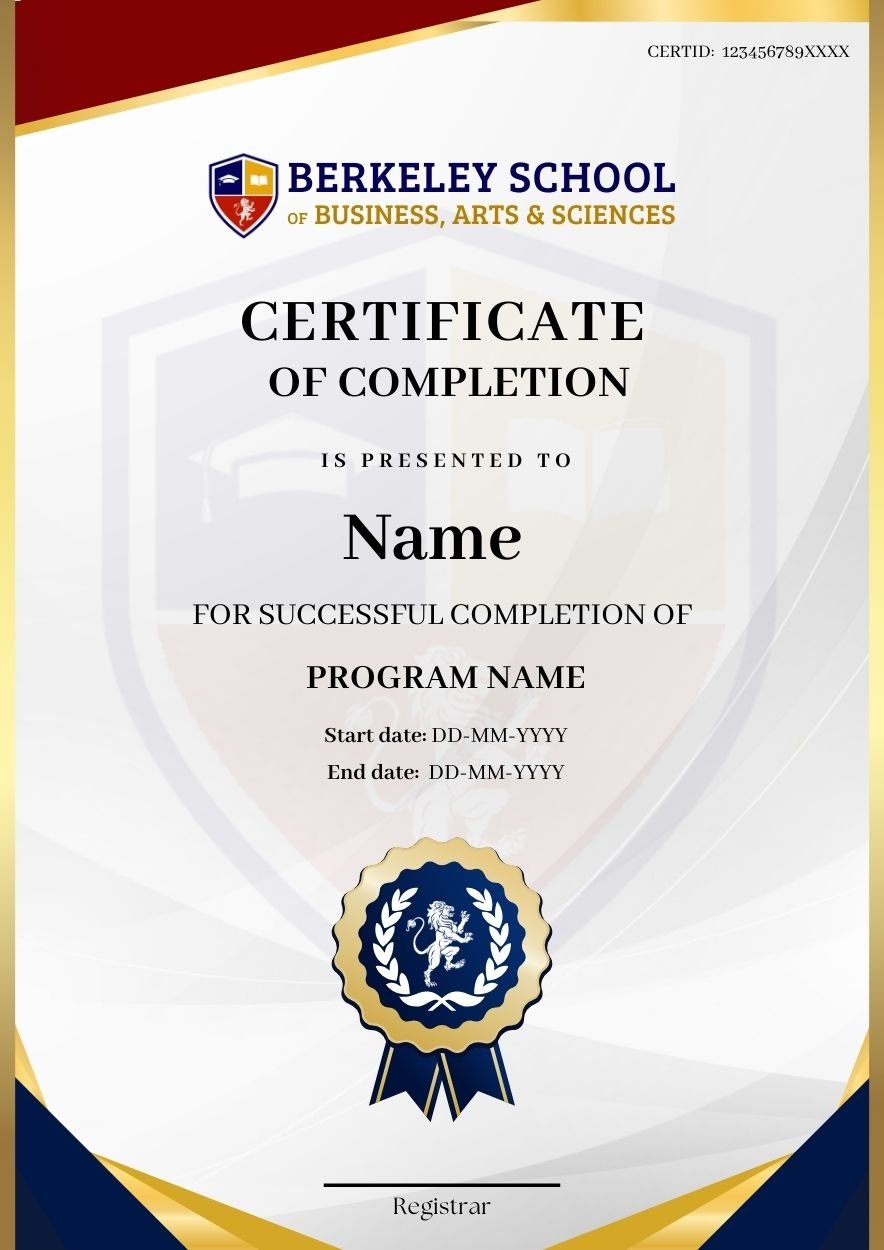
You will receive a certificate of completion from EDUBERKELEY, recognized by employers across IT auditing, cybersecurity, governance, and compliance industries.

Fundamental Knowledge
Develop expertise in IT auditing, cybersecurity, governance, risk management, compliance, and information systems controls to support secure and efficient business operations.

Career Advancement
Enhance your career opportunities and earning potential in IT auditing, cybersecurity, governance, compliance, and information security roles.

Technical Skills
Learn to identify, assess, and manage risks associated with information systems, cybersecurity frameworks, and enterprise technology environments.

Industry Relevance
Gain professional credibility and recognition in IT auditing, cybersecurity, governance, compliance, and enterprise risk management sectors.

Future Trends
Increasing demand for professionals with expertise in cybersecurity, cloud security, AI-driven risk management, digital governance, regulatory compliance, and information systems auditing.

Related Courses


CIMA Fast-Track – Chartered Institute Of Management Accountants


Accelerate your professional accounting career with the CIMA Fast-Track programme designed for experienced finance and management professionals.

Read More

CMA USA – Certified Management Accountant


Develop expertise in financial planning, strategic management, performance analysis, and decision-making through the globally recognized CMA USA certification.

Read More

CPA USA – Certified Public Accountant


Gain advanced knowledge in accounting, auditing, taxation, and financial reporting with the internationally respected CPA USA qualification.

Read More

Certified Blockchain Professional


Build expertise in blockchain fundamentals, cryptography, decentralized systems, and emerging digital technologies through practical learning.

Read More

Management of Risk (M_o_R)


Learn structured risk management principles and frameworks to support organizational resilience, governance, and strategic decision-making.

Read More


FAQ: CISA – Certified Information Systems Auditor in Chicago, United States

What is the CISA certification and why is it valuable in Chicago, United States?
+
Who can enroll in CISA training in Chicago, United States?
+
Are online CISA classes available for professionals in the United States?
+
What career opportunities are available after completing CISA certification in Chicago?
+
Where can candidates take the CISA examination?
+
Is the CISA certification internationally recognized and valid worldwide?
+

Contact Us

Facebook Twitter Instagram Linkedin Youtube Tiktok
Cart

Cart (0)